Blog
Choosing a Fence for the Right Reason: Privacy, Security, Pets, and Pools in DFW
Most DFW homeowners approach fence installation with a general idea of what they want — a fence that looks good and does its job. What gets skipped too often is the more specific question underneath that: what job, exactly, does this fence need to do?
The fence that's ideal for keeping a large dog contained is not the same fence that's ideal for a pool enclosure. The fence that delivers maximum privacy on a rear yard boundary isn't the right choice for a front yard where HOA guidelines and sightlines matter. The fence that provides strong security for a commercial property has different requirements than one that defines a decorative garden border.
Purpose-first fence selection — choosing material, height, and style based on what the fence actually needs to accomplish — produces installations that perform as expected and avoid the frustration of discovering too late that the fence isn't doing the job it was installed to do. Here's a practical guide to fence selection by primary purpose for DFW homeowners.
Privacy Fencing: Maximum Visual Barrier on the DFW Lot
Privacy is the most common primary purpose for residential fence installation in the Dallas-Fort Worth area — and it's the use case that board-on-board cedar privacy fencing was essentially designed for. Understanding what makes a fence genuinely effective for privacy helps DFW homeowners specify the installation correctly rather than discovering gaps in coverage after the contractor has left.
Height matters more than material for privacy: A six-foot privacy fence delivers effective visual screening for most DFW residential applications. A four-foot fence — even a solid panel style — doesn't. If genuine privacy from neighbors, pedestrians, or adjacent properties is the goal, six feet is the practical minimum in North Texas neighborhoods where lots are often narrow and houses are relatively close together.
Board-on-board construction for true privacy: Standard fence construction with gaps between boards lets sightlines through at angles even when the fence appears solid from straight on. Board-on-board construction — where each board overlaps its neighbor — eliminates these angled sightlines and delivers true visual privacy from any viewing angle. For homeowners whose primary purpose is privacy rather than boundary definition, board-on-board is worth specifying explicitly rather than accepting whatever standard construction a contractor defaults to.
Cedar for DFW privacy fencing: Cedar is the recommended wood species for privacy fence boards in North Texas — natural insect resistance, natural moisture resistance relative to pine, and the dimensional stability that produces straight, flat boards that maintain their profile over time. Privacy fence boards that warp and bow create gaps that defeat the purpose of the fence regardless of how well it was built initially.
Security Fencing: Deterrence and Access Control
Security fencing serves a different purpose than privacy fencing — it's about controlling access and creating deterrence rather than blocking sightlines. The right fence for security is often the opposite of the right fence for privacy.
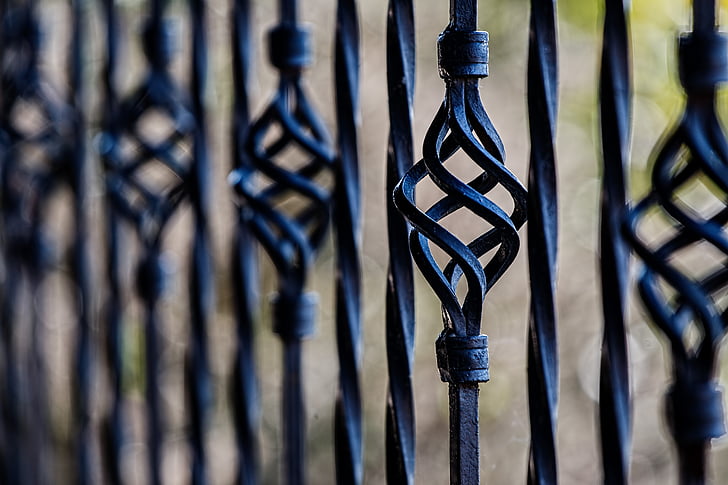
Visibility as a security feature: Ornamental metal fencing — wrought iron or aluminum — provides strong security while maintaining visibility through the fence. For front yard boundaries, commercial perimeter fencing, and any application where monitoring the space inside the fence is important, a fence that allows sightlines is often more secure than a solid privacy fence that creates concealment inside.
Height and top profile for deterrence: Security fencing relies partly on physical barrier effect and partly on deterrence — the perception that getting over the fence is difficult. Spear-top or flat-top ornamental metal fencing at six feet or more provides strong deterrence. The height and pointed top profile communicate that access is controlled in a way that a low decorative fence doesn't.
Gate security: The gate is the security-critical component of any fence installation. A security-focused fence with a weak gate undermines the entire perimeter. Gate hardware specification for security applications should prioritize load rating, latch security, and the option for padlock or access control integration. For commercial security fencing, automated gate operators with appropriate access control systems turn a static barrier into an active access management tool.
Pet Containment: What Dog Owners Need to Get Right
Pet containment is one of the most specific and most commonly under-specified fence purposes in DFW residential installations. A fence that fails at pet containment fails immediately and visibly — and fixing containment failures after installation is significantly more expensive than specifying the fence correctly before the first post is set.
Height by dog size and athleticism: The right fence height for pet containment depends on the specific dog. Most medium dogs are adequately contained by a four-foot fence. Large athletic breeds — Labs, huskies, German Shepherds — need a six-foot fence minimum. Some high-drive breeds can clear six feet and need coyote rollers or inward-angled extensions on top of a six-foot fence to prevent jumping escape.
Bottom gap management: Dogs that don't jump escape by digging under or squeezing through bottom gaps. The gap between the fence base and grade level is the most common containment failure point in DFW residential fence installations. Specifying minimal bottom gap — boards set as close to grade as practical — and addressing any grade variation along the fence line that creates larger gaps in low spots is critical for dog containment.
Chain link considerations for dogs: Chain link is commonly used for pet containment because of its cost efficiency on large rear yards. The specific chain link gauge and mesh size matters for dog containment — smaller, stronger dogs can push through or bend lighter gauge chain link at post connections. Specifying appropriate gauge and mesh size for the dog's size and strength, and ensuring posts are set with adequate concrete footings that prevent the fence from being pushed outward, makes chain link an effective containment option.
Gate latches for smart dogs: Some dogs learn to work simple gate latches. For dog owners with particularly intelligent breeds, double-action latches that require two separate movements to open — rather than a single lever or spring latch — eliminate the escape route that smart dogs can exploit.
Pool Enclosure Fencing: Where Safety and Code Compliance Intersect
Pool enclosure fencing in DFW has requirements that go beyond aesthetics and personal preference — it's one of the fence applications with the most specific legal and safety obligations attached to it.
Texas pool fencing requirements: Texas state law and most DFW municipality codes require pool enclosure fencing that meets specific height and gate requirements. The standard requirement is a minimum four-foot fence that completely encloses the pool area, with self-closing, self-latching gates that open away from the pool and have latches positioned out of reach of small children. Specific municipality requirements may be more stringent than the state minimum — confirming local code requirements before installation is essential.
Ornamental metal for pool enclosures: Aluminum ornamental fencing is the most commonly specified material for residential pool enclosures in DFW — and for good reason. Aluminum doesn't rust in the pool chemical environment the way iron and steel do. The open profile of ornamental fencing allows visual supervision of the pool area from the house and yard — a safety feature that solid privacy fencing eliminates. And the four-foot height standard for pool enclosures is naturally suited to ornamental panel sizing.
No footholds on pool enclosure fencing: Code requirements and safety best practices specify that pool enclosure fencing should not have horizontal rails or other footholds that a child could use to climb the fence. Ornamental metal fencing with vertical pickets and no horizontal mid-rails is specifically suited to this requirement. Wood privacy fencing with horizontal rails is not appropriate for pool enclosure — the rails create climbing footholds that defeat the child safety purpose of the enclosure.
Gate specification for pool enclosures: Pool enclosure gates are the highest-specification component of the enclosure. Self-closing hinges — spring-loaded to return the gate to closed position when released — and self-latching hardware that catches automatically when the gate closes are both required by most codes and are critical to the safety function of the enclosure. These aren't optional upgrades for pool gates — they're the specification that makes the enclosure work as intended.
Combining Purposes: When One Fence Needs to Do Multiple Jobs
Many DFW homeowners need their fence to serve more than one purpose — privacy and pet containment, security and aesthetics, pool enclosure and rear yard boundary. Understanding how multiple purposes interact helps avoid specifications that optimize for one purpose at the expense of another.
Privacy and pet containment: Board-on-board cedar privacy fencing at six feet with minimal bottom gap serves both purposes well for most dogs. The solid construction provides privacy and also creates a visual barrier that reduces fence-running behavior in dogs that react to seeing activity outside the fence.
Security and privacy: A combination approach — ornamental metal fencing on the front yard for security and visibility, solid wood privacy fencing on the rear and side yards — addresses both purposes without compromising either. Many DFW properties use exactly this combination, specifying by purpose for each fence section rather than applying a single material across the entire perimeter.
Pool enclosure within a larger fenced yard: Pool enclosures within already-fenced rear yards can use a separate ornamental metal enclosure around the pool area specifically — meeting code requirements for the pool itself while the surrounding yard uses whatever fencing best serves the broader yard's purposes.
Professional Fence Installation for Every Purpose Across DFW
DFW Pressure Washing & Fence Staining LLC installs wood, vinyl, wrought iron, aluminum, chain link, and steel panel fencing — along with custom gates — for residential and commercial properties throughout the Dallas-Fort Worth area, including Kennedale, Arlington, Mansfield, Fort Worth, Grand Prairie, and surrounding communities.
Every installation starts with a free on-site estimate that includes a purpose-first conversation — what the fence needs to accomplish, which materials and specifications serve that purpose in DFW conditions, and what the right approach is for your specific property and budget.

Want to make sure your DFW fence is specified for what it actually needs to do — not just what looks right on a quote sheet? DFW Pressure Washing & Fence Staining LLC walks through your fence purpose, property conditions, and HOA requirements during the estimate visit and recommends the material, height, and construction approach that delivers on the specific job your fence needs to perform.
Get Your Free Estimate → dfwpressurewashing.net/contact-us

DFW Pressure Washing & Fence Staining LLC


