Blog
Concrete Sealing After Pressure Washing in DFW: Why the Order of Operations Matters
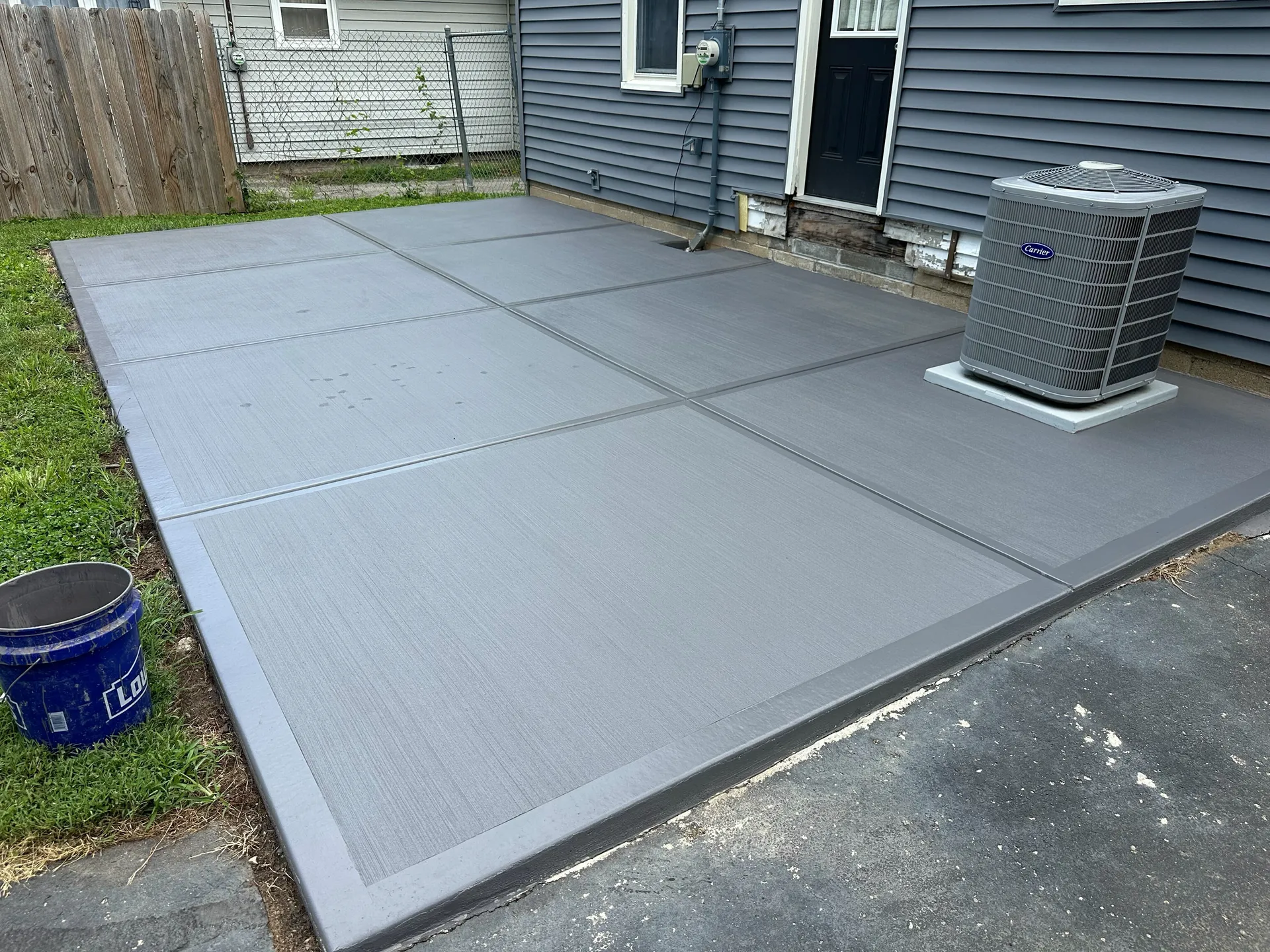
Every concrete sealing project in the Dallas-Fort Worth area involves two services in a specific order — pressure washing first, sealing second — with a required interval between them. This sequence isn't a preference or a contractor habit. It's the fundamental requirement that determines whether the sealer bonds correctly and delivers its intended service life or fails within months in ways that require stripping and reapplication.
Most DFW homeowners understand that washing before sealing makes sense in general terms. What fewer homeowners understand is the specific mechanism that makes each step in the sequence non-negotiable — why washing without adequate drying produces the failures it produces, why sealing without washing produces the adhesion problems it creates, and why the specific interval between washing and sealing matters as much as completing both steps.
Step One: Why Pressure Washing Is Required Before Every Sealing Project
Sealer bonds to whatever is on the concrete surface at application time. This is the fundamental fact that makes pressure washing before sealing non-negotiable — not a preparatory nicety, but the step that determines what the sealer actually bonds to.
What's on unsealed or depleted-sealer concrete before cleaning:
Biological growth — algae, mildew, and mold — has rooted into the concrete pore structure. These organisms aren't sitting on the surface as loose deposits; they have attachment structures in the pores that anchor them to the concrete. Sealer applied over active biological growth bonds to the organisms rather than to the concrete substrate beneath them.
Atmospheric deposits — pollen, particulate from DFW's urban environment, organic material from surrounding vegetation — accumulate as a bonded layer on the concrete surface over time. This layer has a different chemical composition than concrete, a different surface energy than clean concrete, and a weaker bond to the concrete beneath it than properly applied sealer would have to clean concrete. Sealer bonds to this contamination layer rather than to the concrete.
Oil and vehicle fluid contamination in parking positions has penetrated into the concrete pores and altered the surface chemistry in affected areas. Sealer applied over oil contamination bonds poorly in these areas — the petroleum compounds create a barrier between the sealer and the calcium compounds in the concrete that normal sealer adhesion requires.
Mineral deposits from irrigation water have accumulated as calcium carbonate scale on concrete surfaces in irrigation spray paths. These mineral deposits have a different chemical structure than concrete and don't provide the adhesion surface that clean concrete provides.
What pressure washing accomplishes for sealing preparation:
Thorough professional pressure washing with appropriate pre-treatment removes each contamination type specifically — biocidal treatment kills and removes biological growth at the root level, alkaline degreaser breaks down petroleum contamination, acid treatment dissolves mineral deposits. The result is concrete in its actual surface condition — not covered by seasons of accumulated contamination — which is the substrate that sealer is designed to bond to.
The quality of pressure washing prep is the quality ceiling for everything that follows. A sealer applied to thoroughly prepared concrete can deliver its full service life. A sealer applied to inadequately prepared concrete fails at the rate of the weakest contamination bond present on the surface.
The Drying Interval: Why Timing Between Washing and Sealing Determines Application Success
After professional pressure washing, the cleaned concrete contains more moisture than it did before washing — the high-volume water application of pressure washing saturates the surface and penetrates into the concrete pore structure. This moisture needs to dissipate before sealer application for reasons specific to each sealer type.
Why moisture prevents correct penetrating sealer application:
Penetrating sealers work by entering concrete pores and chemically reacting with the concrete to create a hydrophobic barrier inside the material. For this reaction to occur and for the sealer to reach its designed penetration depth, the pores need to be available — not already occupied by water from recent pressure washing.
Concrete pores that are filled with water from washing contain no space for penetrating sealer to enter. The sealer is applied to the surface and finds the pores occupied — it sits near the surface rather than penetrating to the depth that creates the hydrophobic barrier. The result is surface-level coverage that behaves more like a topical sealer than a penetrating sealer — with the performance limitations of surface application rather than the depth and durability of correct penetrating application.
Why moisture prevents correct topical sealer application:
Topical sealers form a protective film on the concrete surface as they cure. For this film to form correctly and bond to the concrete surface, the concrete needs to be dry — the surface moisture content needs to be below the threshold specified by the sealer manufacturer.
Topical sealer applied to concrete with moisture content above the product threshold produces the most immediately visible sealing failure: white hazing or cloudiness in the cured sealer film. The mechanism is moisture vapor that tries to escape through the curing sealer film, disrupting the film formation process and creating the milky or hazy appearance that indicates moisture-compromised application.
This hazing is often permanent — the sealer film has cured in its disrupted state. The hazing may partially clear as remaining moisture eventually escapes through imperfections in the film, but complete clearing is inconsistent and the adhesion quality of a moisture-compromised application is never what it would have been with correct drying.
The correct drying interval for DFW conditions:
In standard DFW spring or fall conditions — moderate temperature, moderate humidity — pressure-washed concrete typically needs 24 to 48 hours before sealing is appropriate. In warm, dry summer conditions with direct sun, drying may be adequate in 24 hours or less. In cool, humid conditions or on overcast days when evaporation is slower, 48 to 72 hours may be needed.
These are guidance ranges — not precise timers. The specific drying time for any concrete surface depends on how much water the pressure washing introduced, the porosity of the specific concrete, the air temperature and humidity during the drying period, and whether the surface is in sun or shade.
Moisture meter verification:
The accurate way to confirm that concrete has dried adequately for sealing is moisture meter measurement rather than visual assessment or fixed waiting periods. A concrete moisture meter measures the moisture content below the surface rather than just assessing surface dryness — concrete that looks dry at the surface can still have moisture content too high for correct sealing.
Professional sealing contractors who use moisture meters before application are doing the verification that accurate assessment requires. Contractors who assess readiness by appearance or by waiting a fixed number of hours regardless of conditions are making assumptions that may not hold for specific concrete, specific weather conditions, and specific timing.
What Goes Wrong When the Sequence Is Violated
Understanding the specific failures that result from each sequence error helps DFW homeowners recognize whether they're looking at a contamination problem, a moisture problem, or both.
Sealing without prior washing — contamination adhesion failure:
Sealer applied to unclean concrete bonds to the contamination present rather than to the concrete substrate. The failure mode depends on what contamination is present and how well it's bonded to the concrete.
Biological growth below the sealer continues to produce acids that degrade the sealer-contamination bond from below. The sealer delaminates in patches as the biological organisms underneath release from the concrete surface they were attached to, taking the sealer with them. This delamination typically begins within one to two seasons and produces the peeling, flaking sealer appearance that makes the concrete look worse than it did before sealing.
Oil contamination below the sealer creates weak bonding in affected areas that doesn't provide the water resistance the sealer was applied to create. Water that would have beaded on correctly applied sealer over clean concrete penetrates through the adhesion-compromised areas over oil deposits. The performance failure is invisible — the concrete looks sealed but isn't actually protected in contaminated areas.
Sealing over wet concrete — moisture adhesion failure:
White hazing in topical sealers is the most immediately visible moisture-failure symptom. The milky or cloudy appearance in areas where the concrete was too wet during application may cover the full surface or may concentrate in lower spots where water pooled longer after washing.
Bubbling or blistering in topical sealers indicates moisture that built enough pressure under the curing film to physically disrupt it — creating raised areas in the sealer surface that range from barely visible to dramatically obvious.
Reduced penetration depth in penetrating sealers produces a surface that looks correctly sealed but provides less than designed moisture resistance — the depth and uniformity of the hydrophobic barrier are compromised without visible indication. The performance failure reveals itself over time as water absorption in areas that should bead consistently, and as sealer depletion that occurs faster than the designed service life.
The Sequence Applied: What Correct Coordinated Service Looks Like
For DFW homeowners scheduling concrete sealing, understanding the correct sequence and its timing implications helps plan projects that deliver the results sealing is designed to provide.
Same-day washing and sealing is not appropriate:
Any service offering same-day pressure washing and sealing is either not providing true professional pressure washing — using light rinse rather than thorough cleaning — or is applying sealer to concrete that hasn't dried adequately. Same-day combination services may be convenient, but they're not producing correct preparation or correct application conditions.
Minimum two-day project:
A properly executed pressure washing and sealing project for standard DFW conditions is a minimum two-day project — washing on day one, verification and sealing on day two or three. Some homeowners receive quotes for same-day service at lower cost and assume the two-day approach is unnecessary overhead. The difference in results between same-day and correctly sequenced service is the difference in sealer service life — not just the next few months, but the full two to three year cycle that correctly applied sealer provides versus the premature failure of incorrectly applied sealer.
Weather contingency between steps:
Rain between washing and sealing resets the drying clock — concrete that was approaching adequate dryness after 24 hours and then received rain needs another full drying period before sealing is appropriate. DFW's spring storm activity makes weather contingency planning relevant for any project in the peak spring maintenance window. Professional contractors who schedule washing and sealing as a connected project with appropriate weather monitoring between steps are managing the sequence correctly. Contractors who schedule each step without weather coordination between them leave the homeowner to manage what happens if rain falls between steps.
Professional Concrete Washing and Sealing Across the DFW Metroplex
DFW Pressure Washing & Fence Staining LLC provides professional concrete pressure washing and seal and protect services throughout the Dallas-Fort Worth area — including Kennedale, Arlington, Mansfield, Fort Worth, Grand Prairie, and surrounding communities.
Every sealing project follows the complete sequence: surface assessment, appropriate pre-treatment for identified contamination types, professional pressure washing, moisture meter verification before sealing is scheduled, and sealer application in confirmed appropriate conditions. Same-day washing and sealing is not offered — because correct sequence and drying time are non-negotiable for results that actually hold.

Want to make sure your DFW concrete sealing project follows the correct washing-to-sealing sequence — with thorough preparation, adequate verified drying, and application in conditions that produce the full-service-life results that properly applied sealer delivers? DFW Pressure Washing & Fence Staining LLC manages every step of the sequence correctly because the sequence is what determines whether sealing works.
Get Your Free Estimate → dfwpressurewashing.net/contact-us
DFW Pressure Washing & Fence Staining LLC


