Blog
Concrete Sealing After Pressure Washing: Why the Order of Operations Matters
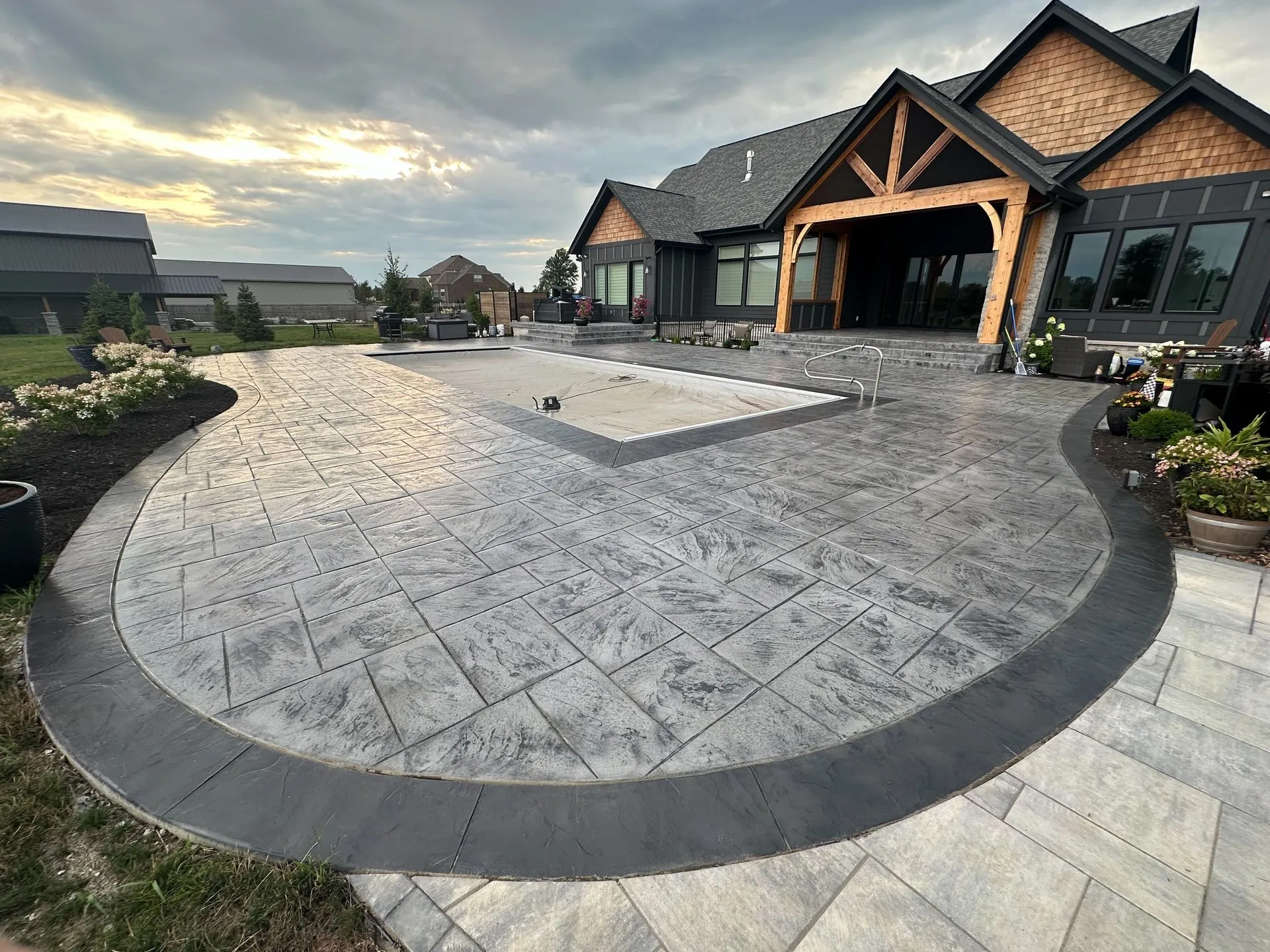
There's a right way and a wrong way to approach concrete sealing on a DFW driveway or patio — and the difference between the two comes down less to product selection or application technique than it does to sequence and timing. Getting the order of operations right is what separates a sealer application that performs for two to three years from one that fails within a season, bubbles on the surface, or never bonds correctly in the first place.
Most homeowners who've dealt with a failed concrete sealing job made one of the same handful of mistakes: sealed before pressure washing, sealed too soon after pressure washing, or sealed without addressing specific surface contaminants that needed pre-treatment before the wash. Every one of those mistakes is avoidable — and understanding why the sequence matters makes it easy to avoid them.
Here's a complete walkthrough of the correct order of operations for concrete sealing on DFW residential properties, why each step matters, and what happens when the sequence gets skipped or rushed.
Why Sequence Matters More Than Product for Concrete Sealing
Before getting into the specific steps, it's worth establishing why sequence matters as much as it does for concrete sealing in the North Texas climate.
Concrete is a porous material. Its surface is covered in microscopic pores and channels that connect to a network of capillaries running through the material. Penetrating sealers work by entering those pores and chemically reacting with the concrete to create a hydrophobic barrier inside the material. Topical sealers work by bonding to the concrete surface and forming a protective film over those pores.
Both mechanisms depend on the same thing: direct contact between the sealer and clean, open concrete. Anything sitting on or in those pores — dirt, oil, algae, mildew, mineral deposits, or moisture — blocks the sealer from reaching the concrete it needs to bond with. The sealer doesn't penetrate cleanly. It bonds to whatever is sitting on the surface rather than to the concrete itself. And when that contaminant releases — as it inevitably does — the sealer releases with it.
This is why sequence matters. Pressure washing before sealing removes the contaminants that would prevent proper bonding. Adequate drying time after washing removes the moisture that would block penetrating sealers and cause topical sealers to cloud or bubble. These aren't bureaucratic steps in a process — they're the conditions that make the sealer chemistry work correctly.
Step One: Assess the Surface Before Anything Else
The first step in a concrete sealing project isn't pressure washing — it's assessment. Understanding the specific condition of the concrete surface determines what prep steps are needed before sealing can be effective.
A standard driveway that's been maintained reasonably well and has primarily surface dirt and biological growth needs pressure washing and drying time — straightforward prep that most surfaces require. A driveway with significant oil staining near the garage needs chemical degreaser pre-treatment before pressure washing — the pressure wash alone won't extract oil that's bonded into the concrete pores. A patio with heavy hard water mineral deposits from an irrigation system needs acid-based pre-treatment before washing to break down the calcium compounds.
Skipping the assessment step and going straight to pressure washing is one of the most common causes of sealing problems — not because pressure washing causes damage, but because some surface conditions need specific chemical pre-treatment that pressure washing alone doesn't address. A sealed surface that looked clean after pressure washing but still had oil or mineral contamination in the pores will show those problem areas as adhesion failures after the sealer cures.
Surface assessment also identifies any concrete damage — cracks, spalling, or structural issues — that needs repair before sealing. Sealing over damaged concrete doesn't repair the damage — it traps moisture in existing cracks and can make freeze-thaw damage worse rather than better. Repair comes before sealing, always.
Step Two: Chemical Pre-Treatment for Specific Contaminants
Once the surface assessment identifies any specific contamination types that need pre-treatment, those treatments happen before the pressure wash — not after.
Oil and grease pre-treatment: Commercial concrete degreasers with alkaline or solvent-based formulas are applied directly to oil-stained areas and given dwell time to break down the petroleum compounds before pressure washing. The pre-treatment loosens the oil from the concrete pores so the pressure wash can extract it effectively. Pressure washing oil staining without pre-treatment pushes the surface oil around without extracting what's bonded into the pores — the staining looks lighter after washing but the oil contamination remains in the concrete and blocks sealer bonding in those areas.
Algae and mildew pre-treatment: Sodium hypochlorite-based solutions kill biological growth at the root level before pressure washing removes it. Pressure washing algae and mildew without a biocidal pre-treatment removes the visible surface growth while leaving the root structure in the concrete — the growth returns faster, and any remaining biological material under the sealer continues to degrade.
Mineral deposit pre-treatment: Acid-based treatments — oxalic acid for rust-based mineral deposits, phosphoric or citric acid for calcium carbonate scale — dissolve mineral compounds so they can be rinsed away during pressure washing. Pressure washing mineral deposits without acid pre-treatment typically moves the surface layer of deposits without reaching the bonded mineral layer underneath.
Each of these pre-treatments has specific application instructions — concentration, dwell time, and rinsing requirements — that need to be followed correctly for the treatment to be effective without damaging the concrete surface. Professional applicators select the right treatment for each specific contamination type and apply it at the correct concentration.
Step Three: Pressure Washing — The Non-Negotiable Prep Step
After any required pre-treatments have been applied and given appropriate dwell time, pressure washing removes the loosened contaminants, the pre-treatment chemicals, and the general surface accumulation that has built up on the concrete.
Pressure washing for concrete sealing prep is different from pressure washing for general cleaning appearance. The goal isn't just to make the surface look clean — it's to open the concrete pores for sealer penetration and create the cleanest possible bonding surface. That requires adequate pressure and flow to flush contaminants from the surface pores, not just remove visible surface grime.
Professional concrete pressure washing for sealing prep typically uses pressure in the 2,500 to 3,500 PSI range for standard residential concrete, combined with hot water for any surfaces with oil or grease contamination. The combination of appropriate pressure and hot water temperature is more effective at extracting contaminants from concrete pores than cold water at the same pressure.
Surface profile matters for topical sealer adhesion. Pressure washing creates a slightly etched surface texture on concrete that gives topical sealers more surface area to bond with. This mechanical bonding advantage adds to the chemical adhesion of the sealer and contributes to longer service life for topical applications on pressure-washed concrete versus concrete that was only chemically cleaned.
The pressure washing step also reveals the true condition of the concrete after surface contamination has been removed. Surface defects — hairline cracks, areas of spalling, joint deterioration — that weren't visible under accumulated grime become apparent after a thorough pressure wash. Identifying these before sealer application gives the opportunity to address them before they're locked under the sealer coating.
Step Four: Drying Time — The Most Skipped Step in DFW
Adequate drying time between pressure washing and sealer application is the step that gets skipped most frequently in DIY concrete sealing projects — and the most common cause of failed sealer applications in North Texas.
Concrete is hygroscopic — it actively absorbs and holds moisture. After pressure washing, concrete that looks dry at the surface can still hold significant moisture deeper in the slab. That subsurface moisture is what causes problems when sealer is applied too soon.
For penetrating sealers, moisture in the concrete pores blocks the sealer from fully penetrating and reacting with the concrete. The sealer sits in the upper portion of the pore structure rather than reaching the full penetration depth the product is designed for, reducing the effectiveness and longevity of the protection.
For topical sealers, moisture trapped beneath the sealer film causes the visible failures that frustrate homeowners — cloudiness, white hazing, bubbling, and areas where the sealer appears to have lifted off the surface. These aren't product failures — they're the predictable result of applying a topical coating over a surface that contained moisture the coating sealed in rather than allowing to evaporate.
In the DFW climate, adequate drying time after pressure washing before sealer application is typically 24 to 48 hours of dry weather with temperatures above 50°F. Factors that extend the required drying time include higher humidity, lower temperatures, concrete in shaded areas that receives less sun for evaporation, and thicker concrete slabs that hold more total moisture. Factors that reduce it include direct sun exposure, low humidity, and warm temperatures that accelerate evaporation.
The reliable way to confirm concrete is dry enough for sealer application — rather than guessing based on appearance — is a moisture meter reading. Professional concrete sealing contractors use moisture meters as part of their application process to verify the concrete is at an appropriate moisture level before any sealer goes down.
Step Five: Sealer Application — The Finishing Step That Builds on Everything Before It
With the surface properly cleaned, pre-treated for specific contaminants, pressure washed, and fully dried, sealer application is the final step — and when the previous steps have been done correctly, it's the most straightforward part of the entire process.
Sealer application technique varies by product type. Penetrating sealers are typically applied by low-pressure sprayer and spread evenly across the surface — the application process is primarily about even distribution, as the penetration into the concrete pores happens through the material's natural absorption rather than requiring mechanical working into the surface.
Topical sealers require more careful application technique to achieve the even film thickness that produces consistent appearance and performance. Too thin in some areas and too thick in others creates an uneven finish that's visually apparent once the sealer cures. Multiple thin coats applied correctly consistently outperform a single heavy coat — even film builds up through layers rather than being applied all at once.
Application in the correct temperature and humidity window is as important for sealer application as it is for fence staining. Most concrete sealers specify application temperatures between 50°F and 90°F, with moderate humidity. Applying sealer in direct DFW summer sun when surface temperatures exceed 90°F causes the sealer to dry on the surface before it has fully penetrated or leveled, creating the same kind of premature failure that rushing the drying time causes.
Spring and fall are the ideal application windows for concrete sealing in the DFW area — the same seasonal windows that work best for fence staining and other exterior finishing treatments.
What Happens When the Sequence Gets Skipped
For DFW homeowners who've experienced a failed concrete sealing job, the failure mode almost always traces back to one of the sequence steps being skipped or rushed.
Sealing without pressure washing first: The sealer bonds to surface contamination rather than to the concrete. Adhesion is weak and uneven. The sealed surface looks good initially but fails — peeling, flaking, uneven wear — significantly faster than a properly prepped surface. In areas with oil contamination, the oil continues to leach through the sealer from below, creating dark staining that wasn't visible before sealing.
Sealing too soon after pressure washing: Moisture trapped beneath the sealer causes clouding, bubbling, and adhesion failure. These failures are often permanent — removing a failed topical sealer requires chemical stripping or mechanical grinding to get back to a clean surface for reapplication.
Pressure washing without pre-treating oil or mineral contamination: The surface looks clean after washing but contamination remains in the pores. The sealer fails to bond correctly in contaminated areas, creating visible weak spots in the finished surface that become apparent as differential wear over time.
Each of these failures requires more work to fix than doing the process correctly the first time would have required. Sealer removal, re-preparation, and reapplication costs more in total than the original project would have cost done properly.
Why Professional Concrete Sealing Delivers Better Results in DFW
The sequence discipline described in this guide is exactly what separates professional concrete sealing results from DIY results in North Texas. A professional contractor brings the assessment knowledge to identify pre-treatment needs, the equipment to clean effectively and extract contaminants properly, the process discipline to wait for correct drying time, and the application experience to apply sealer in the right conditions with the right technique.
DFW Pressure Washing & Fence Staining LLC handles concrete sealing as a complete service — assessment, pre-treatment where needed, professional pressure washing, proper drying time, and sealer application in the correct conditions. We don't rush the process to get to the next job faster, because we know that rushing any step produces results that reflect on the work and don't hold up the way they should.
Every concrete sealing project we complete is part of our broader commitment to doing exterior surface work correctly from start to finish — the same commitment that underlies our fence staining, soft washing, and fence installation work across the DFW Metroplex.

Want to make sure your driveway or patio is properly prepped, cleaned, and sealed in the right sequence before the next North Texas season puts it to the test? DFW Pressure Washing & Fence Staining LLC assesses every concrete surface during the property walkthrough, identifies any pre-treatment needs, and completes the full pressure washing and sealing process in the correct sequence — with the drying time the surface actually needs before a drop of sealer goes down.
Get Your Free Estimate → dfwpressurewashing.net/contact-us
DFW Pressure Washing & Fence Staining LLC


