Blog
Concrete Sealing for DFW Commercial Parking Lots: What Property Owners Need to Know
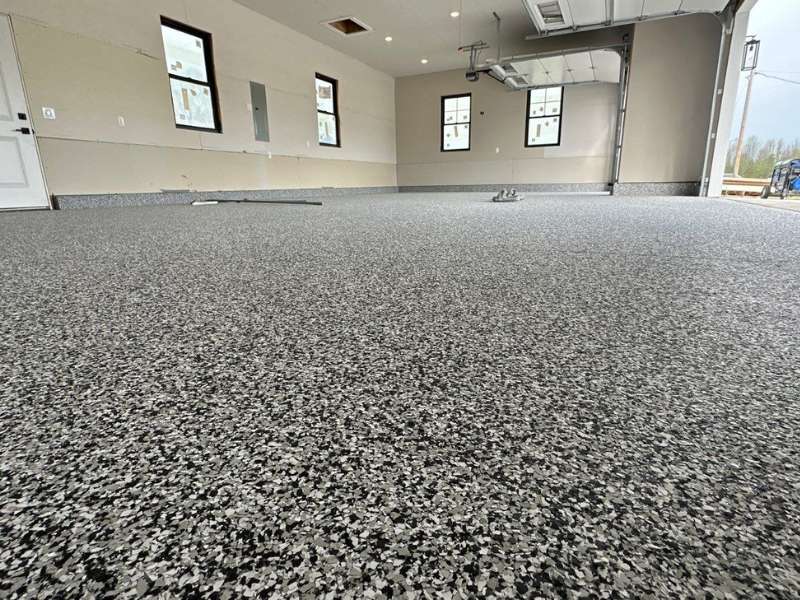
Commercial parking lots in the Dallas-Fort Worth area take more punishment per square foot than almost any other concrete surface in the residential and commercial property spectrum. Constant vehicle traffic, heavy load-bearing from commercial vehicles and delivery trucks, oil and fluid deposits from hundreds of vehicles, the full force of DFW's UV intensity and seasonal moisture, and the freeze-thaw cycling that North Texas winters deliver — all concentrated on a surface that represents significant capital investment and that directly affects how customers, tenants, and employees experience the property.
Professional concrete sealing for commercial parking lots isn't a luxury maintenance item — it's one of the most cost-effective asset protection investments available to DFW commercial property owners. Here's what every owner of commercial property with concrete parking surfaces needs to understand about seal and protect services and what they deliver.
Why Commercial Parking Lot Concrete Faces More Demanding Conditions Than Residential Driveways
The comparison to residential driveways is useful because most property owners have intuition about driveway sealing needs — but commercial parking lots face meaningfully more demanding conditions than residential concrete in several specific ways.
Vehicle volume and weight diversity: A residential driveway handles a handful of vehicle passes per day from standard passenger vehicles. A commercial parking lot handles dozens to hundreds of passes daily from vehicles that range from standard passenger cars to delivery trucks, service vehicles, and in some cases light commercial equipment. The heavier vehicles create significantly more bearing stress per pass than passenger vehicles — accelerating both surface wear and sealer depletion in high-traffic zones.
Oil and fluid concentration: More vehicles mean more oil drips, more brake fluid deposits, and more chemical exposure from vehicle fluids than residential driveways face. Oil contamination that might appear in one or two concentrated spots on a residential driveway appears across multiple parking positions in a commercial lot — creating widespread chemical attack on the sealer surface rather than the isolated spots that residential driveways manage.
Turning and maneuvering stress: Commercial parking lots involve more vehicle turning and maneuvering than residential driveways — vehicles entering parking spaces, backing out, and navigating the lot create more lateral tire scrubbing than the straight-line traffic of a residential driveway. Lateral tire movement creates more surface abrasion on the sealer than straight rolling contact — concentrating wear in the areas of highest maneuvering activity.
Chemical exposure beyond vehicle fluids: Commercial properties introduce chemical exposure that residential driveways rarely face — cleaning chemicals from building maintenance, de-icing compounds in winter, fertilizer and landscaping chemicals from adjacent maintenance, and the specific chemical exposure from the business operations of tenants. Each of these compounds interacts with concrete and sealer chemistry in ways that accelerate surface deterioration compared to residential weather exposure alone.
What Unsealed Commercial Parking Lot Concrete Faces Season by Season
Understanding what specifically happens to unsealed commercial concrete in the DFW climate through each season frames why sealing isn't optional maintenance for commercial property owners who want to protect their asset.
Spring: DFW's spring rain events are intense and frequent — the highest moisture exposure period of the year for exterior concrete surfaces. Unsealed parking lot concrete absorbs maximum moisture during spring's wet periods, creating the saturation conditions that drive biological growth establishment and that provide the moisture load that freeze-thaw cycling in the following winter acts on. Spring is also pollen season — DFW's intense pollen concentrations deposit organic material across parking surfaces that feeds biological growth and bonds into unsealed concrete pores.
Summer: DFW's summer heat bakes the oil, chemical, and organic deposits that accumulated through spring into unsealed concrete pores — driving them deeper with each heat cycle and making them progressively harder to remove. UV intensity at DFW's latitude degrades the concrete surface through the same mechanisms it degrades residential driveways, but at a higher rate on commercial parking lots where surface temperatures are elevated by the heat island effect of large paved areas.
Fall: Leaf and organic debris accumulation from surrounding landscaping deposits on parking surfaces throughout fall — tannin staining from leaves that sit against concrete, organic material that feeds biological growth, and the debris that packs into surface cracks and joint lines. Fall is also when biological growth that established in spring reaches its maximum coverage before winter's cooler conditions slow growth.
Winter: DFW's freeze-thaw cycling acts on the maximum moisture load that unsealed concrete absorbed through spring and held through the year. Water in unsealed concrete pores freezes and expands, creating the surface scaling and microcracking that's the most visible structural deterioration on DFW commercial concrete. Each winter's freeze events move previously formed cracks further apart and create new microcracks in areas that were sound before.
The Seal and Protect Process for Commercial Parking Lots
The fundamental sequence for commercial parking lot sealing follows the same clean-dry-seal process as residential concrete sealing — with adjustments for the larger scale, the heavier contamination, and the operational requirements of commercial properties.
Commercial pressure washing as prep: Commercial parking lot sealing requires thorough pressure washing that addresses the specific contamination types present — vehicle oil and fluid deposits with alkaline degreaser pre-treatment, biological growth with biocidal pre-treatment, and any specific contamination from the property's operations. Commercial pressure washing equipment operates at higher flow rates than residential equipment, allowing efficient coverage of large parking areas within reasonable service windows.
The pre-treatment step is more important on commercial parking lots than on residential driveways because the contamination volume is higher and more varied. Standard pressure washing without specific pre-treatment for oil contamination produces a surface that looks clean but retains petroleum compounds bonded into the concrete pores — which compromises sealer adhesion in contaminated areas and allows continued chemical attack on the concrete substrate beneath a failed sealer layer.
Drying period management: Commercial lots present a practical challenge for the drying period that sealing requires — keeping a parking lot out of service for 24 to 48 hours between pressure washing and sealing, and then for the sealer cure period after application, requires coordination with the property's operational requirements. Section-by-section service — washing and sealing portions of the lot while maintaining access to the remainder — allows commercial properties to remain operational during the service while ensuring adequate drying time for each section before sealing proceeds.
Product selection for commercial applications: Commercial parking lots benefit from penetrating sealers that provide strong oil resistance and moisture protection without the surface film wear issues that topical sealers face under constant vehicle traffic. Penetrating silane-siloxane sealers with specific oil-resistant additive packages provide the most appropriate protection profile for high-traffic commercial concrete — delivering moisture resistance, biological growth inhibition, and oil penetration resistance without a surface film that vehicle traffic quickly abrades.
For commercial parking lots with decorative elements — entrance plazas, branded hardscape features — topical sealers with UV stabilizers and appropriate traffic-grade formulations provide both appearance enhancement and protection. Anti-slip additives are appropriate for any pedestrian-traffic areas where sealed surfaces might otherwise reduce traction.
The Liability Dimension of Commercial Parking Lot Condition
For DFW commercial property owners and managers, concrete condition in parking lots and pedestrian areas carries specific liability implications that go beyond the asset protection argument.
Slip and fall risk from biological growth: Parking lots that have developed biological growth — particularly in shaded areas near building entrances, around drainage features, and in any areas that stay moist — create slippery surfaces that are genuine slip-and-fall hazards. Texas property owners have a duty of care to maintain premises in reasonably safe condition for business invitees — the customers, clients, and employees who use the property for its intended commercial purpose.
A documented regular sealing and cleaning program demonstrates proactive maintenance that reduces both the physical hazard and the legal exposure when incidents occur. A parking lot with no maintenance history is in a significantly weaker liability position than one with documented professional sealing and cleaning services.
Trip hazard from surface deterioration: Concrete that has developed significant surface scaling, joint deterioration, or crack widening creates trip hazard conditions that represent the same premises liability exposure as biological growth slip hazards. Surface deterioration that regular sealing would have slowed or prevented — the scaling and cracking that develops on unsealed concrete through DFW's freeze-thaw cycling — is documented negligence when it results in injury without a maintenance history that demonstrates proactive care.
How Often Should Commercial Parking Lots Be Sealed in DFW
Commercial parking lot sealing frequency depends on traffic volume, vehicle types, sun exposure, and the specific operations of the property.
High-traffic retail and restaurant properties: Annual or biennial sealing as a baseline — the combination of high vehicle volume, diverse vehicle types, and the specific contamination from food service and retail operations depletes sealer protection faster than lower-traffic applications. Annual pressure washing with sealing every 12 to 18 months is appropriate for the highest-traffic commercial parking applications.
Office and professional service properties: Biennial sealing cycle as a baseline for moderate-traffic office parking. Lower vehicle volume and fewer heavy vehicles means sealer depletion is slower than retail or restaurant applications. Annual pressure washing with sealing every two years is appropriate for most office property parking conditions.
Industrial and warehouse facilities: Annual assessment with sealing frequency driven by water bead test results rather than fixed schedule. Industrial facilities have variable contamination profiles — some are relatively clean, others have heavy vehicle fluid exposure from fleet operations — that make condition-based scheduling more accurate than calendar-based.
Mixed-use and multi-tenant properties: Sealing frequency set by the highest-traffic component of the property — a strip center with restaurant tenants should be scheduled based on the restaurant-level traffic impact rather than the average across all tenants.
Connecting Commercial Sealing to Pressure Washing Programs
Commercial concrete sealing delivers its best results and longest service life when it's integrated into a regular pressure washing program rather than applied as a standalone service.
Commercial parking lots that are cleaned annually and sealed every one to two years maintain consistently cleaner surfaces at each sealing cycle — less biological growth contamination to address, less oil penetration to pre-treat, and a cleaner surface for sealer to bond to. The sealing service for regularly cleaned commercial concrete produces more uniform results and longer protection intervals than sealing over heavily contaminated concrete that accumulated multiple seasons of deposits.
DFW Pressure Washing & Fence Staining LLC provides both commercial pressure washing and seal and protect services throughout the Dallas-Fort Worth area — coordinating cleaning and sealing as an integrated commercial property maintenance program rather than as separate services requiring separate scheduling and vendor management.
Professional Commercial Concrete Sealing Across the DFW Metroplex
DFW Pressure Washing & Fence Staining LLC provides commercial parking lot cleaning and seal and protect services throughout the Dallas-Fort Worth area, including Kennedale, Arlington, Mansfield, Fort Worth, Grand Prairie, and surrounding communities.
Every commercial sealing project starts with a surface assessment that evaluates specific contamination types, existing sealer condition, and any specific conditions from the property's operations that affect product selection and prep requirements. We coordinate scheduling around the property's operational requirements — section-by-section service, early morning or overnight scheduling for customer-facing properties — and provide documentation of service visits for the property's maintenance records.

Want to make sure your DFW commercial parking lot concrete is properly cleaned, assessed, and sealed with the preparation and product selection that commercial traffic conditions actually require? DFW Pressure Washing & Fence Staining LLC delivers commercial seal and protect services that protect your parking lot investment, reduce liability exposure, and maintain the professional appearance that your property and your tenants deserve.
Get Your Free Estimate → dfwpressurewashing.net/contact-us
DFW Pressure Washing & Fence Staining LLC


