Blog
Concrete Sealing for DFW Homeowners Who Just Bought a House With Neglected Concrete
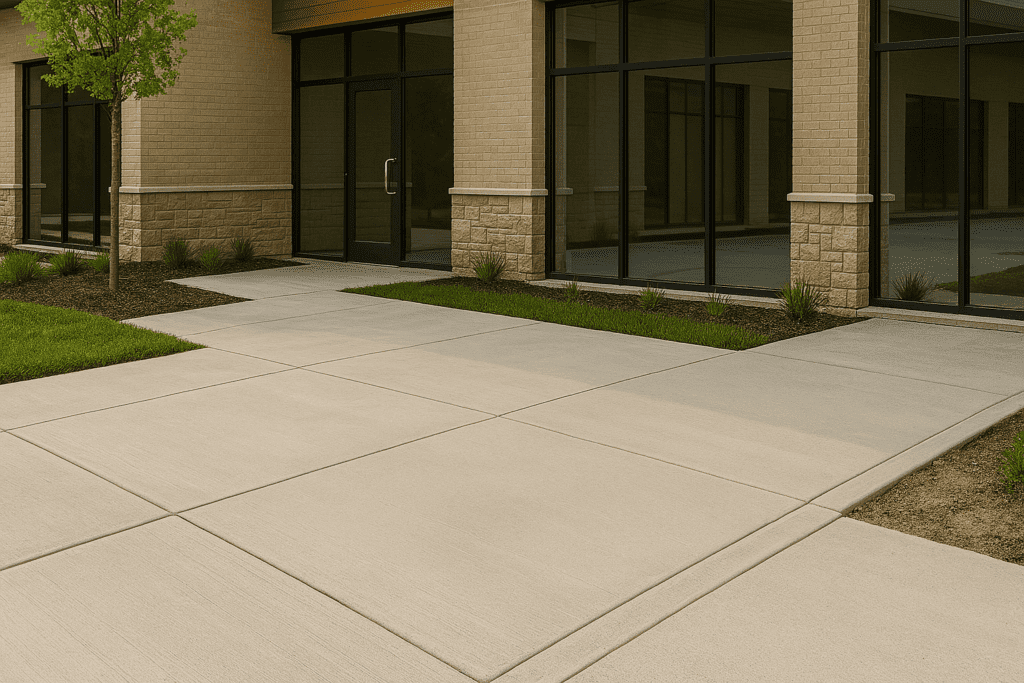
Buying a DFW home with neglected concrete — a driveway that's been through five winters without sealing, a patio with significant oil staining and biological growth, walkways with tannin staining from years under mature oak trees — is a more common starting condition than most new homeowners expect. The previous owner may have sealed once when the home was new and never followed up, or may have never addressed concrete maintenance at all during a decade of ownership.
The question for the new homeowner isn't whether to address the concrete — it's where to start, what restoration is actually possible, and how to build the maintenance program going forward that protects what's been inherited and prevents continued deterioration.
Assessing What You Inherited
Before any cleaning or sealing service is scheduled, a systematic assessment of the concrete surfaces across the property establishes the baseline condition and identifies what intervention each surface needs.
The water bead test on every surface:
Apply water to multiple sections of each concrete surface. On the driveway, test the turning zone near the garage, the entry apron at the street, and any parking positions where vehicles have been regularly parked. On the patio, test the areas under any previous furniture positions and the full surface including shaded areas.
Water that soaks immediately indicates completely depleted or absent sealer protection. Water that beads — even slightly — indicates that some protection may remain. For inherited concrete where sealing history is unknown, the most common finding is no sealer remaining on any section — the surface has been unprotected for multiple seasons.
Staining types and extent:
Walk each surface and identify the specific staining types present — oil dark spots near parking positions, rust-orange deposits from fertilizer or metal contact near landscape beds, dark brown tannin patterns from leaf deposits, and the general gray-green discoloration of biological growth. The type and extent of staining determines what pre-treatments the cleaning will need and what realistic restoration outcome looks like.
Surface condition assessment:
Look specifically for surface scaling — the pitting and flaking that indicates freeze-thaw damage from multiple winters without sealing. Note the extent and severity. Light scaling that hasn't exposed aggregate can be stabilized with sealing after thorough cleaning. Moderate scaling with visible aggregate exposure may warrant resurfacing before sealing. Severe scaling with significant surface layer loss requires assessment of whether resurfacing or replacement is more cost-effective.
Check control joints for deteriorated sealant — the flexible material that fills expansion joints needs periodic replacement, and joints that have lost their sealant are moisture entry pathways. New homeowners often discover deteriorated joint sealant during their first concrete assessment.
Realistic Restoration Expectations for Neglected DFW Concrete
Setting honest expectations before cleaning and sealing services begin prevents disappointment and produces better decisions about what level of intervention is warranted.
What professional cleaning and sealing will accomplish:
Biological growth — completely removable with thorough professional cleaning that includes biocidal pre-treatment. The surface will look dramatically better after cleaning.
Recent to moderately aged oil staining — significantly reduced with professional degreaser treatment and pressure washing. Recent deposits may remove almost completely. Deposits through multiple DFW summers will improve substantially but may leave some residual discoloration.
Tannin staining from leaf deposits — largely removable from sealed surfaces; on unsealed concrete that has absorbed tannin through multiple seasons, professional treatment produces significant improvement with possible residual staining in heavily affected areas.
Mineral deposits from irrigation — removable with acid pre-treatment.
What professional cleaning and sealing cannot fully reverse:
Deep oil staining that has been baking into concrete through many DFW summers — treatment produces meaningful improvement but permanent residual discoloration may remain in the oldest, deepest deposits.
Surface scaling damage — physical damage to the concrete surface layer doesn't reverse with cleaning. Sealing prevents future freeze damage but doesn't restore the surface texture that existing scaling has altered.
Long-standing biological acid etching — the surface roughness created by years of biological growth chemical attack remains after the growth is removed.
The First Service: What Comprehensive Restoration Cleaning Involves
For inherited concrete with multiple seasons of accumulated neglect, the first professional cleaning service involves more intensive treatment than maintenance cleaning of regularly serviced concrete.
Multi-treatment pre-treatment:
Multiple contamination types are typically present simultaneously on neglected concrete — oil at parking positions, biological growth across shaded areas, mineral deposits near irrigation zones, tannin staining under trees. Each requires specific pre-treatment chemistry applied and given adequate dwell time before pressure washing.
Professional service for neglected concrete applies each pre-treatment in the appropriate sequence — alkaline degreaser for oil, biocidal solution for biological growth, acid treatment for mineral deposits and tannin staining. These treatments can't all be applied simultaneously because some interact adversely with others. Proper sequencing that addresses each contamination type specifically produces more thorough results than single-product cleaning that addresses some conditions while missing others.
Extended dwell time:
Multi-season established biological growth with deep root structures needs more biocidal treatment dwell time than recent-season growth. Professional service for neglected concrete allows adequate dwell time for the treatment chemistry to reach the root structure rather than rushing to pressure washing before thorough kill has occurred.
Crack and joint assessment after cleaning:
Thorough cleaning removes the organic coating that was obscuring crack systems and joint conditions. The clean concrete after first cleaning is the best available opportunity to assess crack extent, joint sealant condition, and any surface conditions that should be addressed before sealing proceeds.
Building the Going-Forward Maintenance Program
After the first comprehensive restoration cleaning and sealing establishes the baseline, the ongoing maintenance program for the inherited concrete is the standard DFW concrete maintenance cycle — annual spring cleaning, water bead test assessment, resealing every two to three years as indicated.
The first sealing after restoration cleaning is particularly important — it's applying sealer to a surface that may have never been sealed or hasn't been sealed in many years, and the concrete's porosity at this first application may require higher coverage rate than subsequent resealing cycles.
For new DFW homeowners building their property maintenance program, including all concrete surfaces in the annual spring cleaning assessment from the first spring after purchase establishes the maintenance habit that prevents inherited neglect from continuing under new ownership.

DFW Pressure Washing & Fence Staining LLC provides initial restoration cleaning and seal and protect services for newly purchased DFW homes throughout the Dallas-Fort Worth area — including Kennedale, Arlington, Mansfield, Fort Worth, Grand Prairie, and surrounding communities. Every restoration project starts with surface assessment that sets honest expectations before any service is scheduled.
Get Your Free Estimate → dfwpressurewashing.net/contact-us
DFW Pressure Washing & Fence Staining LLC


