Blog
Custom Gates in DFW: What to Consider Before You Install One
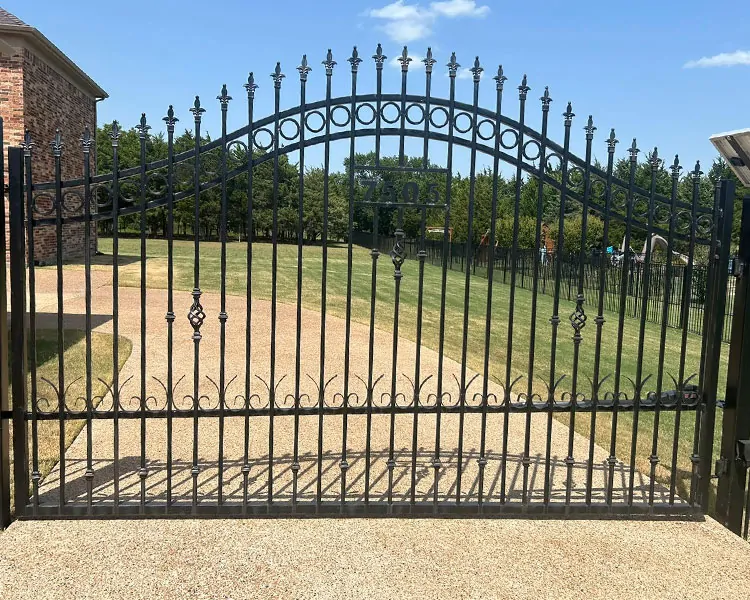
A custom gate is one of those exterior features that seems straightforward until you start getting into the details. The gate opens the fence. It closes. It latches. How complicated can it be?
The answer depends entirely on what the gate needs to do, how heavy it is, what it's made of, how the post supporting it is set, and whether it's being automated. Get those decisions right and a custom gate functions reliably for the life of the fence. Get them wrong and you have the most frustrating component on your entire property — sagging, binding, not latching, pulling the post out of plumb, or failing its automation system within a few seasons.
DFW Pressure Washing & Fence Staining LLC installs custom gates across all fence types — wood, vinyl, wrought iron, aluminum, chain link, and steel panel. Here's what every DFW homeowner should think through before a gate goes in.
Gate Purpose Drives Every Other Decision
The first and most important gate decision is what the gate needs to do — because purpose determines size, weight, material, hardware specification, and post requirements.
Pedestrian walk gates are the most common residential gate type — a single gate in a wood privacy fence that allows foot traffic access to the rear yard. These are relatively lightweight, typically three to four feet wide, and the hardware and post requirements are straightforward compared to larger gate types.
Double drive gates allow vehicle access through a fence line — typically eight to twelve feet wide total, split into two panels that swing inward or outward. The weight of two large wood or metal gate panels, combined with the leverage they exert on their hinge posts, makes double drive gate installation significantly more demanding than a walk gate. Post specification, footing depth, and hardware selection for double drive gates need to account for the substantially higher loads involved.
Single cantilever or swing drive gates provide vehicle access in a single panel — typically used where space constraints or driveway layout make a double gate impractical. Single large gates concentrate all the swing weight and leverage on a single hinge post, which makes that post the most load-critical component in the entire fence installation.
Automated gates add the mechanical and electrical requirements of a gate operator system to all of the above considerations. Automation changes hardware specifications, adds electrical infrastructure requirements, and introduces ongoing maintenance needs that manual gates don't have.
Getting clarity on exactly what the gate needs to do — before material and hardware are selected — produces a specification that's matched to the actual use rather than one that looks right in a quote but underperforms in daily operation.
Gate Material: Matching the Gate to the Fence and the Application
Gate material selection follows the same logic as fence material selection — with additional consideration for how the gate material performs under the specific stresses that gate operation creates.
Wood gates are the natural complement to wood privacy fences and are the most common gate type in DFW residential installations. Cedar is the standard material recommendation for the same reasons it's recommended for fence boards — natural moisture resistance, dimensional stability, and the staining compatibility that allows a wood gate to be finished to match the surrounding fence.
The structural challenge with wood gates is weight management. A large wood gate — particularly a double drive gate or a tall single gate with solid board construction — is heavy, and that weight exerts significant leverage on hinges and hinge posts with every open and close cycle. Wood gate construction for larger openings needs internal framing — typically a diagonal brace within the gate frame that prevents the gate from racking — and hardware specification that accounts for the actual gate weight rather than defaulting to standard residential hardware.
Metal gates — wrought iron and aluminum are commonly used as standalone decorative gates or as complementary elements to ornamental metal fencing. Metal gates are dimensionally stable in ways that wood isn't — they don't expand and contract with moisture and temperature changes — which produces more consistent latch alignment over time than wood gates in DFW's seasonal conditions.
Aluminum gates offer the rust-resistance advantage over wrought iron that aluminum fencing offers — relevant for pool area gates and any application where moisture exposure is significant.
Vinyl gates complement vinyl fence installations and share vinyl's low-maintenance characteristics. The structural limitation of vinyl gates is flex — larger vinyl gate panels have less rigidity than comparable wood or metal gates, and the hinge hardware needs to be specified to account for this flex rather than treating vinyl gates as structurally equivalent to wood.
Hardware Specification: Where Most Gate Failures Start
Gate hardware is the most consistently under-specified component in residential gate installation — and the source of the majority of gate failures that DFW homeowners deal with within a few seasons of installation.
Hinge selection by load rating: Every hinge has a weight rating that reflects how much gate weight it can support across its operational life. Residential gate hinges are available in ranges from light-duty products rated for small walk gates to heavy-duty products rated for large drive gates. The failure mode of under-specified hinges is predictable — the hinge deflects under the gate weight it can't support, the gate begins to sag, and the sag progressively worsens with each open-close cycle.
Specifying hinges by load rating — using the actual weight of the gate as the specification input rather than the appearance of the hinge or its cost — is the single most impactful hardware decision for gate longevity. For wood gates, the weight per square foot of the gate construction needs to be calculated and matched to appropriately rated hardware. For metal gates, the manufacturer can typically provide panel weight specifications.
Latch selection by use pattern: Latch selection should account for how the gate will be used. Standard spring latches work adequately for low-traffic walk gates where the primary requirement is simple closure. For high-traffic gates or gates where children or pets create containment requirements, double-action latches that require deliberate two-step operation provide security that single-action latches don't. For pool enclosure gates, self-latching hardware that catches automatically when the gate swings closed is a code requirement in most DFW jurisdictions.
Rust protection in DFW conditions: DFW's seasonal moisture cycle makes hardware rust resistance a meaningful specification consideration. Standard zinc-plated hardware provides limited rust resistance that degrades within a few seasons of DFW weather exposure. Stainless steel or hot-dipped galvanized hardware provides significantly better corrosion resistance — worth the modest cost premium for any gate where moisture exposure is regular.
Post Specification: The Foundation That Everything Depends On
The gate post is the single most structurally critical component in any gate installation — and it's the component that's most often installed identically to a standard fence line post when it should be specified differently.
Gate posts carry loads that line posts don't. Every time the gate is opened to its full swing position, the gate weight is cantilevered off the hinge post — the full weight of the gate acting at the end of a lever arm equal to the gate width. For a large wood drive gate, this load is substantial. For an automated gate that reaches full open position quickly, the dynamic load from the gate's momentum adds to the static weight load.
Deeper post setting: Gate posts in DFW should be set deeper than standard line posts — a minimum of 42 inches below grade for walk gates, 48 inches or more for drive gates and larger openings. DFW's expansive clay soil adds to the post depth requirement because the lateral force from gate swinging in clay soil conditions needs more below-grade engagement than minimum-depth posts provide.
Larger post dimensions: Gate posts should be dimensionally larger than line posts — 6x6 lumber for wood gate posts supporting any gate wider than three feet, rather than the 4x4 posts appropriate for standard line post applications. The larger dimension provides more resistance to the bending moment that gate weight and swing create.
Concrete footing volume: Gate post footings need more concrete than standard line post footings — the higher loads require more bearing area to transfer forces into stable soil. Belled footings that are wider at the bottom than at the top provide additional resistance to vertical movement from gate swing dynamics in DFW's clay soil.
Automation: What DFW Homeowners Need to Know
Automated gate systems are increasingly popular in DFW residential and commercial installations — the convenience of remote or automatic vehicle access has clear practical appeal. Automation introduces requirements that manual gate installations don't have.
Electrical infrastructure: Gate operators require electrical power at the gate location. For a gate that's some distance from the nearest power source — a driveway gate at the street, for example — running electrical conduit to the gate location adds cost and coordination with an electrician that needs to be planned before the fence and gate installation begins. Solar-powered gate operators are an alternative for locations where running electrical conduit is impractical, though solar operators have power capacity limitations that affect how large a gate they can reliably operate.
Operator selection by gate weight and size: Gate operators are rated for specific gate weight and size ranges. Specifying an operator that's rated for the actual gate rather than defaulting to a standard residential unit ensures reliable operation and appropriate operational life. An underpowered operator working at or above its capacity fails prematurely and creates the frustrating situation of an automated gate that operates unreliably.
Safety features: Automated gates are required by code to have obstruction detection — typically photo eyes or pressure-sensitive edges — that stop and reverse gate movement when an obstruction is detected in the gate path. These features protect vehicles, children, and pets from being struck by the closing gate. Specifying obstruction detection as a standard component of any automated gate system is both a code requirement and a basic safety obligation.
Maintenance access: Automated gate operators require periodic maintenance — lubrication of mechanical components, battery backup testing, photo eye alignment verification, and operator adjustment as the gate hardware settles into its operating position over time. Planning for maintenance access when locating the operator and routing the electrical infrastructure makes ongoing maintenance practical rather than requiring significant effort every time service is needed.
The Gate as a Design Element
Beyond functionality, a custom gate is a visible design element — particularly for front yard entries and driveway gates that are prominent in the home's street-facing appearance.
The design of the gate should reference the fence it's part of and the home it serves. A wood privacy fence gate that's built identically to the surrounding fence panels creates visual continuity — the gate reads as part of the fence rather than an insertion. A decorative wood gate with arched top, capped posts, and hardware details creates a focal point that elevates the entry appearance while connecting to the wood fence material.
Metal gates — particularly custom wrought iron or aluminum designs — offer the widest range of decorative options. Scrollwork, monograms, custom finial designs, and mixed-material combinations are all achievable in custom metal gate fabrication. For homes where the entry gate is a design feature, the investment in custom fabrication produces results that standard panel gate systems don't approach.
Stain color coordination for wood gates follows the same logic as fence staining — the gate should be stained to match the surrounding fence, creating visual continuity across the full fence line. DFW Pressure Washing & Fence Staining LLC handles staining for wood gates as part of every fence staining project, ensuring consistent color from gate face to fence panel.
Professional Custom Gate Installation Across the DFW Metroplex
DFW Pressure Washing & Fence Staining LLC installs custom gates across all fence types — wood, vinyl, wrought iron, aluminum, chain link, and steel panel — throughout the Dallas-Fort Worth area, including Kennedale, Arlington, Mansfield, Fort Worth, Grand Prairie, and surrounding communities.
Every gate installation starts with a purpose and load assessment that determines the correct post specification, hardware rating, and construction approach for the specific gate. We don't default to standard residential hardware on gates that require heavy-duty specification — and we don't set gate posts to standard line post depth when the gate load requires deeper installation.

Want to make sure your custom gate is installed with the post depth, hardware specification, and construction approach that the actual gate load and use pattern require — not the minimum that looks adequate on installation day but fails within a few seasons? DFW Pressure Washing & Fence Staining LLC walks through every gate specification detail during the property estimate and installs gates that function reliably for the life of the fence they serve.
Get Your Free Estimate → dfwpressurewashing.net/contact-us

DFW Pressure Washing & Fence Staining LLC


