Blog
Fence Staining for Investment Properties in DFW: Why It Matters More Than Most Landlords Think
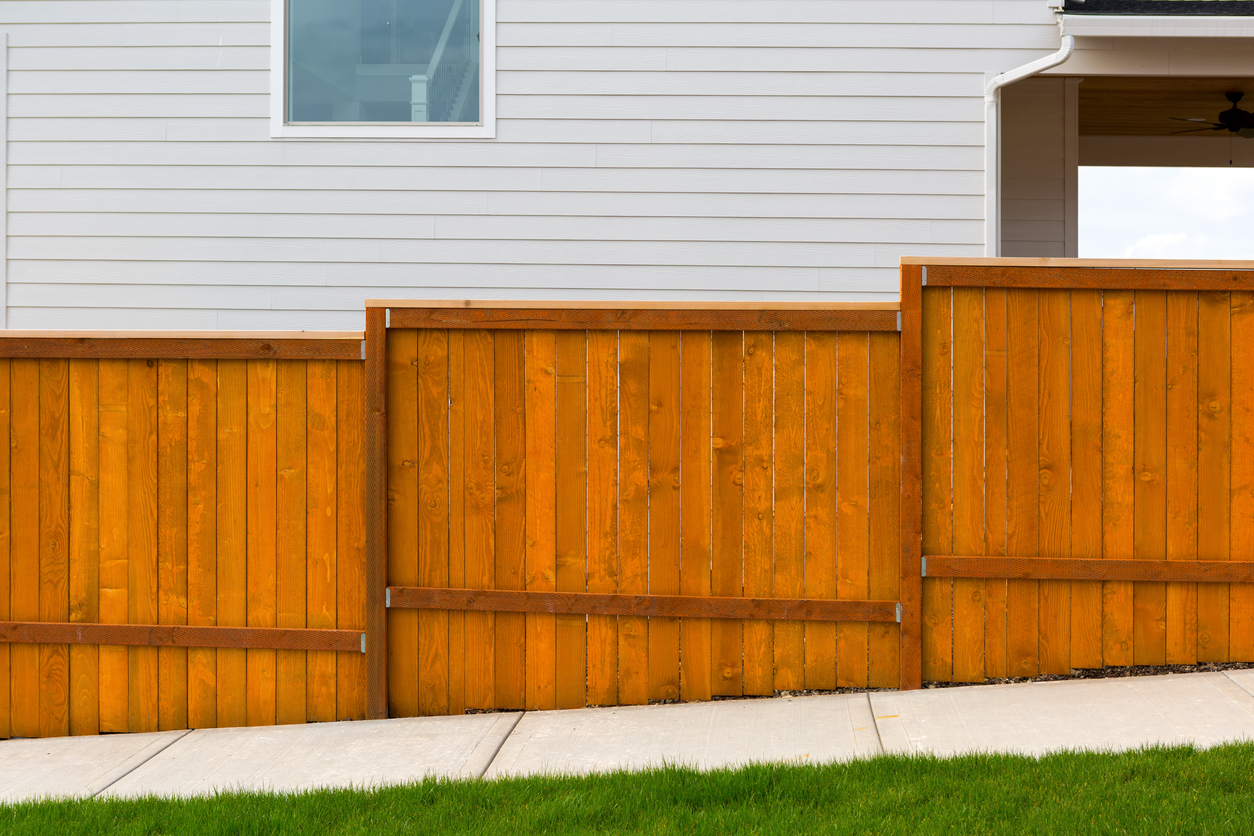
Wood fence staining is one of the most consistently deferred maintenance items on DFW investment properties — and one of the most consequential deferrals a landlord can make. The logic behind deferral is understandable: the fence is still standing, tenants aren't complaining, and staining is an expense that can be pushed to next year. The problem is that next year becomes the year after, and by the time the fence condition becomes impossible to ignore, the cost of addressing it has multiplied significantly from what regular staining maintenance would have required.
For DFW landlords who own single-family rentals, multi-unit properties, or any investment property with wood fencing, here's why fence staining belongs in the regular maintenance budget — and what it costs when it doesn't.
The Asset Protection Argument
A wood fence on a DFW investment property is a physical asset — a component of the property that has replacement value and that contributes to the property's overall condition and market position. Like any asset, its condition is directly related to how well it's maintained, and its replacement cost is directly related to how long it lasts.
In the DFW market, wood privacy fence replacement costs are significant — the material cost of cedar boards, rails, and hardware combined with professional installation labor represents a meaningful capital expenditure that most investment property budgets would rather defer as long as possible. Regular staining maintenance every two to three years costs a fraction of that replacement cost and extends the fence's service life by years — potentially decades.
The math is consistent: a fence that receives professional staining on schedule reaches its full service life potential of 15 to 20 years. A fence that receives no staining deteriorates significantly faster in DFW's climate — the UV exposure, moisture cycling, and biological growth that staining prevents have unimpeded access to the wood, compressing the service life to seven to ten years or less in many cases.
For a landlord who owns the property for a twenty-year investment horizon, the difference between a fence that needs replacement twice in that period versus once is the difference between paying for fence installation once and paying for it twice — plus the additional maintenance complexity of managing a fence in poor condition during the period between when it needed replacement and when replacement actually happened.
How Fence Condition Affects Tenant Quality and Retention
Beyond the direct asset protection argument, fence condition has a specific impact on the tenant relationship that DFW landlords often underestimate.
Initial tenant attraction: In the DFW rental market, prospective tenants evaluate properties through listing photography and in-person showings. A wood fence that's gray, weathered, and visibly deteriorating photographs poorly and creates a negative first impression at showings — regardless of the property's interior condition. A freshly stained fence photographs well, signals a well-maintained property, and contributes to the curb appeal that attracts quality tenant applications.
The tenant quality argument matters beyond the emotional satisfaction of having good tenants. Quality tenants are more likely to care for the property, less likely to cause damage that reduces the property's condition at turnover, more likely to renew leases, and less likely to create the turnover costs that represent one of the biggest expenses in rental property management.
Tenant satisfaction and complaint frequency: Tenants who live in a property with a visibly deteriorating fence — boards falling off, sections leaning, gray cracked wood throughout the yard — notice the condition and form opinions about the management quality based on what they see. Tenants in well-maintained properties with properly stained fencing are more satisfied and generate fewer maintenance complaints than those in deferred-maintenance properties where visible deterioration signals that maintenance isn't a priority.
Lease renewal likelihood: Tenant satisfaction with property condition is one of the factors that influences whether a tenant renews their lease. Properties that are demonstrably well-maintained — and a stained fence is one of the most visible exterior maintenance signals — have better lease renewal rates than properties where tenants perceive deferred maintenance. Each avoided turnover event saves the landlord the costs of vacancy, cleaning, marketing, tenant screening, and lease preparation — costs that easily exceed the annual maintenance investment that prevents them.
The Inspection and Liability Dimension
DFW investment properties with wood fencing face specific inspection and liability considerations that make fence condition a more consequential maintenance factor than the cosmetic argument alone suggests.
Property inspection compliance: Most DFW municipalities have basic property maintenance codes that address fence condition — fences that are structurally unsafe, leaning significantly, or creating safety hazards can trigger code violation notices that create compliance obligations with associated costs and timelines. A fence maintained in good condition through regular staining and repair is consistently within code compliance. A fence that's been deferred into structural failure creates compliance risk that arrives at the worst time — during a tenant complaint or a municipal inspection.
Security deposit disputes: Tenant turnover often produces security deposit disputes, and fence condition is occasionally the subject of these disputes — tenants claiming that fence damage occurred during their tenancy when the condition was present before they moved in, or landlords claiming damage that predates the tenancy. Documented fence maintenance records — professional staining service receipts, before and after photographs — create a condition baseline that resolves these disputes definitively. A well-maintained, recently stained fence at the start of a tenancy is clearly documented as a maintained asset rather than a deteriorating one.
The Deferred Maintenance Compounding Problem
The financial argument for regular fence staining on investment properties isn't just about the replacement cost of the fence itself — it's about the compounding costs that deferred fence maintenance creates as deterioration progresses.
A fence that's three years past its staining schedule in DFW's climate has accumulated weathering that requires more aggressive prep before staining can be effective — the gray surface layer needs to be removed by thorough pressure washing before stain can penetrate correctly, and established biological growth needs biocidal treatment that wasn't needed on a properly maintained surface. The staining service for a deferred fence costs more than the service would have cost on schedule because the prep requirements are more extensive.
A fence that's six years past its staining schedule may have boards with soft spots that need replacement before staining — adding material and labor cost to what should have been a straightforward staining service. Posts that have been receiving unmitigated moisture for years without stain protection may be showing early rot development at the base, adding the possibility of post replacement to the project scope.
Each year of deferred maintenance adds to the scope and cost of the eventual service — the total cost of deferred maintenance always exceeds the cumulative cost of the maintenance that was deferred, often by a significant margin.
Building Fence Staining Into the Investment Property Budget
The most effective approach to fence staining on DFW investment properties is treating it as a scheduled operating expense rather than a discretionary capital expenditure that can be deferred when budgets are tight.
A two to three year staining cycle should be built into the property's operating budget as a predictable annual or biennial line item — alongside HVAC servicing, pest control, and other scheduled maintenance that owners recognize as non-discretionary. The cost per year, amortized across the staining cycle, is modest relative to the total operating cost of an investment property.
For multi-property portfolios, coordinating staining schedules across properties allows volume efficiency — a staining contractor who does multiple properties for the same owner typically offers more favorable pricing than one-off services, and coordinating the schedule reduces the administrative overhead of managing each property's maintenance separately.
What Professional Fence Staining Delivers for Investment Properties
DFW Pressure Washing & Fence Staining LLC provides professional wood fence staining for investment properties throughout the Dallas-Fort Worth area — including single-family rentals, multi-unit properties, and commercial investment properties in Kennedale, Arlington, Mansfield, Fort Worth, Grand Prairie, and surrounding communities.
Every investment property staining project includes the full service scope — pressure washing to remove biological growth and weathered surface layer, adequate drying time verified with moisture meters, application of Wood Defender oil-based stain formulated for Texas climate conditions, and documentation of the service for the property's maintenance records. Every project is backed by a three-year limited warranty.
For landlords managing multiple DFW properties, we coordinate staining schedules across the portfolio — maintaining service history records for each property and providing advance notice when each property's staining cycle is approaching.

Want to make sure your DFW investment property's wood fencing is properly maintained — protecting the asset, supporting tenant quality, and preventing the compounding repair costs that deferred staining produces? DFW Pressure Washing & Fence Staining LLC provides investment property fence staining services throughout the DFW Metroplex with the documentation and scheduling coordination that multi-property landlords need.
Get Your Free Estimate → dfwpressurewashing.net/contact-us

DFW Pressure Washing & Fence Staining LLC


