Blog
How Concrete Sealing Saves DFW Homeowners Money on Driveway Repairs Over Time
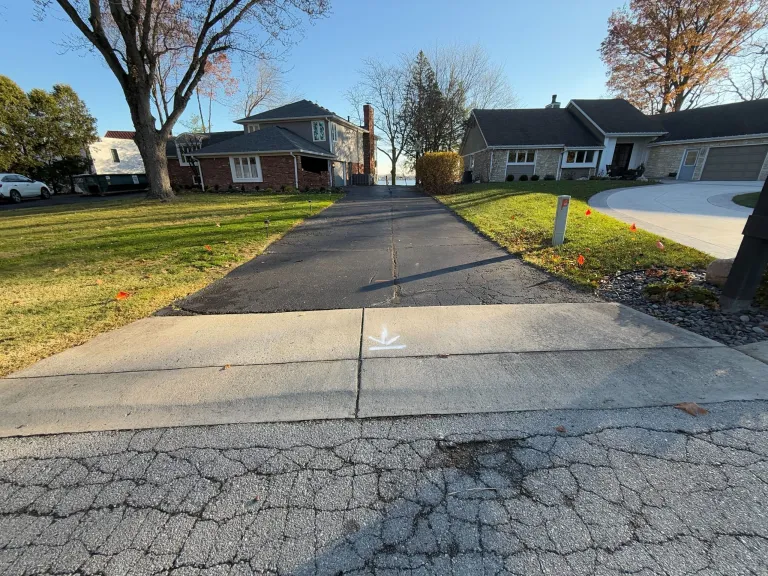
The financial case for concrete sealing in the Dallas-Fort Worth area doesn't require complex math. It requires honest accounting of what happens to unsealed concrete in North Texas over time — and what that eventually costs to address — compared to what a consistent sealing program costs across the same period.
Most DFW homeowners who skip concrete sealing aren't making a considered financial decision. They're deferring a cost they can see — the sealing service — to avoid a cost they can't yet see — the repairs and eventual replacement that unsealed concrete in DFW conditions progressively requires. The deferred cost is consistently larger than the avoided cost. Here's the specific financial picture.
What Unsealed DFW Concrete Accumulates — And What It Costs to Address
Year one to two — surface contamination:
Unsealed concrete in its first years without sealing accumulates biological growth in the open pore structure, oil deposits from vehicle contact, and pollen and organic material that bonds into the surface with each heat cycle. These conditions are cleanable at this stage — professional pressure washing with appropriate pre-treatment addresses them effectively.
Cost to address at this stage: standard professional pressure washing service. The cleaning is straightforward because contamination hasn't penetrated deeply and biological growth hasn't rooted extensively.
If sealing had been applied at year one: the same contamination that now requires cleaning and pre-treatment would have been resisted by the sealed surface — biological growth can't root into closed pores as effectively, oil penetration is slowed by the hydrophobic barrier, and organic deposits are easier to clean before they bond permanently. The sealed surface arrives at year two in significantly better condition than the unsealed surface.
Year three to five — deeper contamination and surface degradation beginning:
Without cleaning and sealing, the contamination that was manageable at year two has compounded. Oil deposits have been through two to three summers of DFW heat — driving petroleum compounds deeper into the concrete with each heat cycle. Biological growth has had multiple favorable spring seasons to root deeper into the pore structure. Surface scaling from freeze-thaw cycling may be beginning as concrete that absorbed maximum moisture through unprotected winters experiences the expansion force of freezing water inside its pores.
Cost to address at this stage: professional pressure washing with more intensive pre-treatment (multiple pre-treatment types for different contamination), crack assessment if surface scaling has begun, and sealing — more expensive than year one cleaning and sealing because the contamination scope is greater and the prep requirements are more extensive.
Year five to ten — structural surface damage accumulating:
Beyond year five without protection, unsealed DFW concrete enters the phase where the damage transitions from contamination to structural. Surface scaling that was beginning at year three has progressed — visible pitting, flaking surface layer, and in some cases aggregate exposure. Cracks that were hairline at year two have been widened by biological growth wedging into them, by moisture freezing inside them during winter events, and by the thermal cycling that every DFW season delivers. Oil contamination that has been baking into the concrete through multiple summers has penetrated to depths where degreaser treatment can reduce but not eliminate the staining.
Cost to address at this stage: professional cleaning with aggressive pre-treatment, crack filling before sealing, potential resurfacing before sealing if surface scaling has progressed to significant aggregate exposure, and sealing. Total project cost is significantly higher than year one sealing would have been — and the results are less complete because some conditions are permanent regardless of treatment quality.
Year ten and beyond — replacement approaching:
Concrete that has been unsealed and maintained poorly through ten or more DFW winters has typically accumulated the surface scaling, structural cracking, and contamination depth that makes it a candidate for resurfacing or replacement rather than simple cleaning and sealing. The surface layer that sealing would have protected is physically gone from the areas most affected by freeze-thaw damage. Cracks that crack filling would have managed at year two are now structural cracks with significant width.
Cost to address: resurfacing or replacement — the most expensive intervention in the concrete maintenance spectrum, and the outcome that consistent sealing from year one was specifically designed to prevent.
The Financial Comparison: Sealing Program vs. Deferred Maintenance
Let's put specific cost categories against each approach over a ten-year period for a standard DFW residential driveway.
Consistent sealing program — years one through ten:
Year one: professional cleaning and initial sealing.Years two and three: annual spring cleaning only — sealed surface stays cleaner between cycles, cleaning scope is manageable.Year three: second sealing cycle — cleaning and resealing at the two to three year point when water bead test indicates depletion.Years four and five: annual spring cleaning.Year five to six: third sealing cycle.Years six through eight: annual spring cleaning.Year eight to nine: fourth sealing cycle.Year ten: annual spring cleaning.
Total ten-year cost: four sealing services plus ten annual cleanings. Every service is maintenance scope — straightforward cleaning on a surface that's been protected, sealing on a surface that's clean and in good condition. No intensive pre-treatment, no crack filling, no resurfacing.
The driveway at year ten: clean, sealed, in sound surface condition. No significant scaling. Cracks that may have developed from soil movement are hairline and fillable. Surface looks consistent and maintained.
Deferred maintenance — years one through ten:
Years one through three: no service. Contamination accumulating, surface condition declining.Year three to four: first cleaning — more intensive pre-treatment needed than year-one cleaning would have required. No sealing still.Years four through six: no service. Deeper contamination, surface scaling beginning.Year six: cleaning and sealing — intensive pre-treatment for oil and biological growth, crack assessment, sealing on a surface that has already developed surface damage.Years seven through nine: no service.Year ten: cleaning assessment reveals significant scaling and structural cracks — resurfacing before sealing or replacement planning.
Total ten-year cost: fewer services but each service at significantly higher cost due to scope, plus resurfacing or replacement planning at the end of the period.
The driveway at year ten: surface scaling visible, structural cracking present, oil staining in parking positions that resisted complete removal, approaching the end of serviceable life significantly earlier than the sealed driveway.
The deferred maintenance approach costs more in total. The sealed driveway is in better condition. The sealed approach is the financially superior choice by both measures simultaneously.
The Specific DFW Multipliers That Make Sealing Even More Valuable Here
The financial case for concrete sealing is stronger in DFW than in most other markets because the specific conditions that unsealed concrete faces in North Texas are more aggressive than average.
Freeze-thaw damage is the most direct financial multiplier:
DFW gets hard freeze events several times most winters — brief but intense events that drive significant damage into concrete that has absorbed maximum moisture without sealer protection. The surface scaling that these events produce is permanent structural damage. Sealed concrete absorbs less moisture before each freeze event and experiences less expansion damage during it. The repair cost difference between sealed and unsealed concrete after five to ten North Texas winters is one of the clearest financial arguments for sealing in this specific market.
Oil penetration depth in DFW summer heat:
DFW's summer heat drives oil deposits deeper into concrete pores with each heat cycle. Oil that's been through three or four DFW summers in unsealed concrete has penetrated to depths where degreaser treatment can improve but not eliminate the staining. The permanent discoloration that results reduces the effectiveness of any future sealing because the oil contamination below the sealer continues to affect the concrete chemistry. Sealing before oil penetrates deeply prevents this outcome — which is only possible if sealing happens before the damage accumulates.
Biological acid damage from DFW's aggressive growth conditions:
DFW's spring and fall biological growth conditions are among the most favorable in the country. Biological organisms that establish on unsealed concrete in DFW's climate produce organic acids that chemically degrade the concrete surface over multiple seasons of establishment. This acid damage is cumulative — each season's growth adds to the previous season's chemical degradation. Sealed concrete resists biological establishment from the beginning, preventing the accumulation of acid damage that eventually changes the surface texture permanently.
When Sealing Is Particularly High Value for DFW Homeowners
While every DFW residential driveway benefits from sealing, certain situations make the financial case even stronger.
New driveways: The highest-value sealing opportunity is new concrete — the surface is at its most porous, the contamination is zero, and the full service life is ahead. Sealing at the appropriate post-cure timing establishes protection from the beginning and produces the maximum possible service life extension relative to unsealed alternatives.
Properties with multiple vehicles: Higher traffic volume depletes sealer faster — but it also means more oil exposure, more tire chemical contact, and more mechanical wear that degrades unsealed concrete faster. The protection benefit of sealing is proportionally higher for high-traffic driveways, and the financial case for the sealing investment is stronger.
Properties with significant tree coverage: Leaf tannin staining, organic deposit accumulation, and the moisture retention conditions that tree coverage creates all accelerate unsealed concrete deterioration. The sealing investment on properties with significant mature tree coverage provides proportionally more protection than on open-exposure properties.
Properties approaching sale: The appraisal and buyer perception implications of concrete condition — covered in detail in earlier blogs — make sealing before listing one of the highest-return pre-sale investments available. Clean, sealed concrete supports higher appraised values and stronger buyer confidence at a cost fraction of the value impact it produces.
The Compounding Benefit: Protection That Maintains Itself
One of the less obvious financial advantages of a consistent sealing program is that sealed surfaces maintain their cleanability — which reduces what annual cleaning services need to accomplish, which keeps annual cleaning costs lower than they would be on unsealed surfaces.
Sealed concrete that's cleaned annually has minimal biological growth accumulation between cleaning cycles — the closed pores that sealing creates resist biological establishment, and the contamination that does accumulate on the surface hasn't bonded into the pore structure the way it bonds into unsealed concrete. Each cleaning service on sealed concrete is a lighter-scope service than the same service on unsealed concrete would be.
Unsealed concrete that accumulates contamination without sealer protection between cleanings requires more intensive pre-treatment at each cleaning — more biocidal solution dwell time for more deeply rooted biological growth, more degreaser treatment for more deeply penetrated oil, more pressure to extract the contamination that has bonded more strongly. Each cleaning service on unsealed concrete costs more and delivers less complete results than the same service on sealed concrete.
The protection creates the savings that justify the protection cost — a reinforcing cycle that makes the consistent sealing program progressively more financially advantageous relative to deferred maintenance with each passing year.
Professional Concrete Sealing Across the DFW Metroplex
DFW Pressure Washing & Fence Staining LLC provides professional concrete cleaning and seal and protect services throughout the Dallas-Fort Worth area — including Kennedale, Arlington, Mansfield, Fort Worth, Grand Prairie, and surrounding communities.
Every sealing project follows the complete preparation sequence — surface assessment, specific pre-treatment for identified contamination types, professional pressure washing, moisture verification, and appropriate sealer application in correct conditions. Every project addresses the specific conditions of the DFW climate — the biological growth, oil contamination, and freeze-thaw protection needs that make sealing particularly valuable in North Texas.

Want to start protecting your DFW concrete from the repair and replacement costs that unsealed driveways eventually require — with the professional cleaning and sealing program that delivers maximum financial return on the maintenance investment? DFW Pressure Washing & Fence Staining LLC assesses every concrete surface and delivers the seal and protect service that keeps your driveway in the cost-effective maintenance phase rather than the expensive repair and replacement phase.
Get Your Free Estimate → dfwpressurewashing.net/contact-us
DFW Pressure Washing & Fence Staining LLC


