Blog
How Fence Installation Improves Outdoor Privacy for DFW Homes With Open Rear Yards
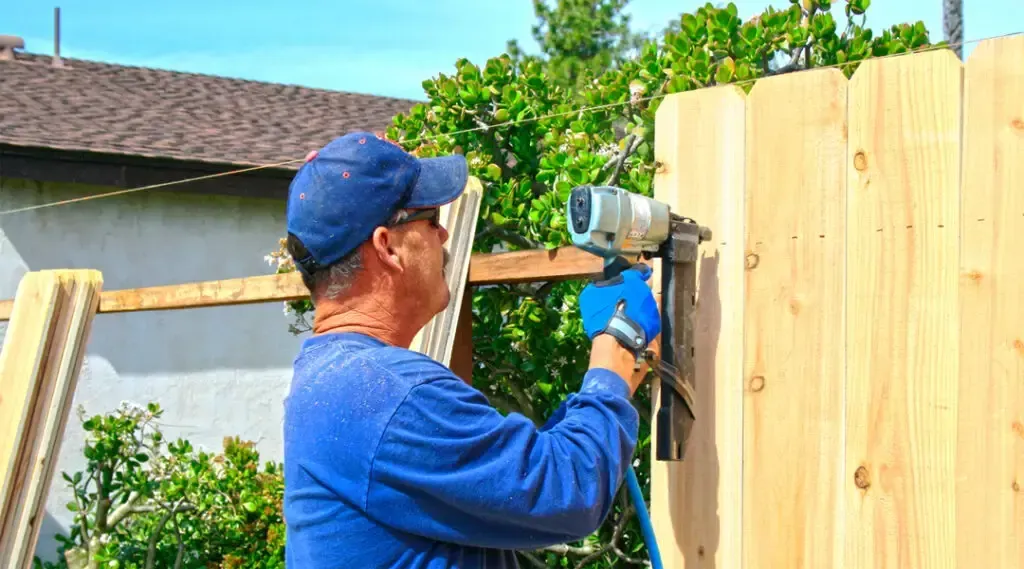
The gap between owning an outdoor space and actually using it is often nothing more than a fence line. DFW homeowners with open rear yards — properties where the back and side yards have no fencing or inadequate fencing — consistently report that the outdoor space they have isn't the outdoor space they use. The patio that should be the center of outdoor living sits underutilized because it feels exposed. The yard where children should play feels too visible from neighbors. The investment in outdoor furniture, landscaping, and outdoor kitchen goes partially to waste because the space doesn't feel private enough to enjoy fully.
Fence installation is the intervention that closes this gap — and for open rear yards specifically, the decisions that go into the fence installation determine how completely it delivers the privacy that makes the outdoor space genuinely usable.
Why Open Rear Yards in DFW Create Specific Privacy Challenges
DFW residential lots — particularly in newer subdivisions and in neighborhoods that developed before privacy fencing became standard — often have rear yard conditions that create multiple simultaneous sightline challenges rather than a single privacy concern.
Neighboring properties at multiple elevations: In established DFW neighborhoods with varied terrain, neighboring homes may be positioned at higher elevations that create sightlines into yards from two-story windows that a standard six-foot fence doesn't address. New construction neighborhoods where homes have similar floor plans but different lot orientations create second-story window sightlines that ground-level fencing only partially addresses.
Multiple adjacent property exposures: A standard residential lot in DFW typically shares boundaries with three neighboring properties — rear and two sides. An open rear yard is open on all three boundaries simultaneously, which means privacy requires fencing that addresses all three boundaries rather than just the most obvious one.
Alley exposure: Many DFW neighborhoods — particularly older established neighborhoods — have alleys that run behind properties. Rear yards with alley exposure have a public access corridor immediately adjacent to the back fence line, which changes both the privacy needs and the security needs of the rear boundary fence.
Fence Height: The First and Most Important Privacy Decision
For DFW homeowners whose primary goal is outdoor privacy, fence height is the most consequential installation decision — more consequential than material, style, or any other specification.
Standard six-foot fence: The most common residential fence height in DFW and the standard that most HOA communities specify as maximum. Six feet provides effective visual screening from ground-level vantage points — neighboring yards, alley foot traffic, and the street. It doesn't address second-story window sightlines in neighboring homes, which at typical DFW residential lot densities can look directly into a six-foot-fenced rear yard from above.
The sightline calculation: Standing in the center of your rear yard and visualizing the sight angle from a neighboring second-story window tells you whether a six-foot fence provides adequate privacy for your specific situation. If the second-story window sightline clears a six-foot fence at the property boundary, additional height or strategic landscaping is needed for complete privacy.
Height extension options within HOA limits: Most DFW HOA communities specify maximum fence heights — typically six feet for rear yards. Within those limits, the upper range of the allowed height provides meaningfully better privacy than the lower range. Confirming the maximum allowed height and specifying to that maximum — rather than defaulting to a lower height — is the most straightforward privacy optimization available within HOA constraints.
Height extension options where HOA allows: Some DFW neighborhoods without HOA restrictions or with HOA guidelines that permit taller rear yard fencing allow seven or eight-foot privacy fence installations. Where this option is available and privacy is the primary concern, the additional height delivers meaningfully better privacy than standard six-foot installations — particularly for properties with neighboring second-story windows.
Board-on-Board Construction: The Privacy Standard for DFW Rear Yards
Not all six-foot fence construction provides equivalent privacy — and the specific construction style determines whether the fence delivers true visual barrier performance or merely the appearance of a privacy fence.
Standard fence construction with boards spaced at installation can develop privacy gaps as the wood weathers — the boards that were tight at installation separate slightly as they dry and cycle through DFW's seasonal moisture changes. The gaps that develop between boards, while individually small, create sightlines that cumulate into meaningful privacy loss.
Board-on-board construction — where each fence board overlaps its neighbor — eliminates this privacy gap development. The overlapping installation means that even as boards move through seasonal moisture cycling, the overlap prevents any through-sightline from developing. A board-on-board fence provides true visual privacy from all viewing angles rather than just from straight-on approaches where gap spacing is less obvious.
For DFW homeowners whose primary motivation for fence installation is privacy, board-on-board specification is worth the modest material premium over standard spaced-board construction. The privacy performance difference is genuine and persistent — not just at installation but through the fence's full service life.
Material Selection for Privacy Fence Performance
The choice between cedar wood, vinyl, and other materials for a DFW rear yard privacy fence has privacy performance implications beyond the aesthetic and maintenance considerations covered in earlier blogs.
Cedar wood board-on-board: The standard and most proven privacy fence material for DFW rear yards. Board-on-board cedar at six feet provides complete visual screening when properly installed. The maintenance requirement — professional staining every two to three years — is real but manageable, and a properly maintained cedar fence delivers decades of privacy performance.
The specific cedar consideration for privacy: board quality matters. Cedar boards with significant knots, warping, or dimensional variation create the gaps and misalignment that reduce privacy fence performance. Specifying quality cedar boards — with attention to dimensional consistency and minimal defects — produces a tighter-fitting fence that delivers better privacy than the same installation with highly variable board quality.
Vinyl privacy fencing: For DFW homeowners who want the visual barrier of a privacy fence without the staining maintenance, vinyl provides equivalent privacy performance with significantly lower ongoing maintenance. Vinyl privacy panels are manufactured to consistent dimensions and don't develop the warping and gap issues that weather-exposed wood develops. The privacy performance remains consistent through the full service life without the maintenance-dependent variation that wood privacy fencing has.
The vinyl consideration for privacy: panel quality variation is significant in the DFW market. Higher-grade vinyl with thicker walls, integrated UV inhibitors, and consistent panel dimensions maintains its privacy performance better than lower-grade vinyl that becomes brittle and potentially warps or cracks under DFW's temperature extremes. The privacy performance of a vinyl fence is closely tied to material grade in ways that the upfront price difference reflects.
Strategic Placement: Where the Fence Goes Matters as Much as What It Is
The fence line placement for a DFW rear yard privacy fence is as important as material and height specifications — and placement decisions that aren't thought through at the planning stage produce results that don't fully deliver the intended privacy.
Property line versus setback placement: Most fence installations place the fence at or near the property line — maximizing the yard space inside the fence. For some DFW properties, placing the fence slightly inside the property line rather than exactly at it provides practical advantages — avoiding property line disputes, leaving access for future fence maintenance from the outside, and in some cases accommodating a drainage easement or utility corridor near the property line that fence placement needs to respect.
Corner lot considerations: Corner lots in DFW neighborhoods have specific privacy challenges — the front yard is typically visible from two streets rather than one, and the side yard fence line that runs parallel to the second street carries different visibility implications than a standard interior side yard boundary. The fence height and construction allowed on corner lot side yard boundaries often differs from what's allowed on rear yard and interior side yard boundaries in DFW HOA communities — confirming the specific requirements for corner lot fence placement before installation prevents compliance issues after the fence is in.
Alley-adjacent rear fence placement: For DFW properties with rear alley access, the fence line placement relative to the alley defines how the alley relates to the rear yard. A fence set at the rear property line with no alley access creates a fully enclosed rear yard. A fence that incorporates an access gate to the alley provides utility access to the rear yard without compromising privacy — the gate closes the opening when access isn't needed. Gate specification for alley-access gates should address both privacy when closed and security to prevent unauthorized alley-to-yard access.
Custom Gate Specification for Privacy Fence Systems
A privacy fence with a poorly specified gate defeats its own purpose — the gate opening, when the gate isn't fully closed and latched, is the gap through which the privacy fence's visual screening is breached.
Solid panel gate construction: Gates in privacy fence systems should use solid panel construction that matches the fence's visual barrier performance when closed. A gate with gaps between boards or a hollow core that allows sightlines through the gate panel compromises the continuous visual barrier that the fence creates. Board-on-board gate construction — matching the fence's board-on-board specification — maintains the privacy standard at the gate opening.
Self-latching hardware for rear yard gates: Self-latching gate hardware — latches that catch automatically when the gate swings to the closed position — ensures that the gate is always latched rather than depending on whoever last passed through it to manually engage the latch. For families with children or pets where gate security is important alongside privacy, self-latching hardware eliminates the risk of the gate standing open inadvertently.
Gate height matching fence height: The gate should be the same height as the surrounding fence panels — a gate that's shorter than the fence height creates a visual and privacy gap at the opening that the fence's height specification was designed to prevent. Custom gate fabrication to match fence height precisely is part of what DFW Pressure Washing & Fence Staining LLC provides for every fence installation — gates aren't afterthoughts in our installations, they're integrated specifications that complete the fence system.
The First Staining Connection for New Privacy Fences
Every cedar privacy fence installed for a DFW rear yard needs its first staining service at the three to six month mark — the timing covered extensively in this blog series. For privacy fence installations specifically, there's an additional reason to prioritize the first staining on schedule: the appearance consistency that fresh staining provides across the full fence line.
New cedar that hasn't been stained begins showing differential weathering — the most UV-exposed sections gray faster than shaded sections, creating visible color variation across a fence that was uniform at installation. For a rear yard privacy fence where the appearance of the fence from the outdoor living space is part of what the fence delivers, maintaining the warm cedar tone through timely first staining keeps the fence looking like the property asset it is rather than developing the gray, weathered appearance that makes it look like a maintenance problem.
DFW Pressure Washing & Fence Staining LLC schedules first staining appointments at the time of fence installation — so the privacy fence that's installed in spring has a staining appointment confirmed for fall, and the fence that's installed in fall has a staining appointment confirmed for spring.
Professional Privacy Fence Installation Across the DFW Metroplex
DFW Pressure Washing & Fence Staining LLC installs cedar wood, vinyl, and other fence types for rear yard privacy applications throughout the Dallas-Fort Worth area — including Kennedale, Arlington, Mansfield, Fort Worth, Grand Prairie, and surrounding communities.
Every privacy fence installation includes HOA requirement confirmation before installation begins, utility locate coordination, post depth specification appropriate for DFW clay soil conditions, board-on-board or equivalent solid-panel construction for true visual privacy performance, and custom gate fabrication that matches fence height and panel construction.

Want to make sure your DFW rear yard privacy fence delivers the complete visual screening that makes your outdoor space actually usable — with the board construction, height specification, and gate integration that a privacy fence requires to perform as intended? DFW Pressure Washing & Fence Staining LLC designs and installs privacy fence systems that close the sightlines your open rear yard currently allows.
Get Your Free Estimate → dfwpressurewashing.net/contact-us

DFW Pressure Washing & Fence Staining LLC


