Blog
How Often Should You Seal Your DFW Driveway? A Practical Guide Based on Real Conditions
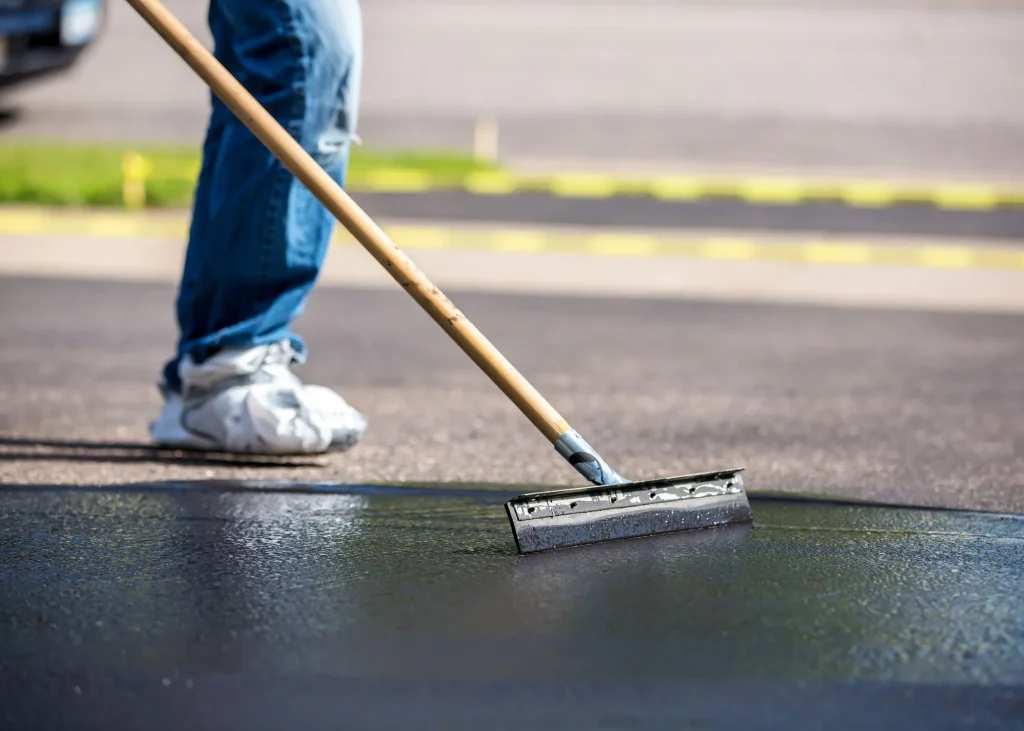
The standard answer to how often a DFW driveway should be sealed is every two to three years. Like most standard answers, it's a reasonable baseline that doesn't apply uniformly to every property. Some driveways in North Texas need resealing every 18 months. Others hold their protection for three years without showing meaningful wear. The difference isn't random — it's driven by specific, identifiable conditions that affect how quickly sealer protection depletes on any given driveway.
Understanding what those conditions are and how they apply to your specific driveway is what converts a generic schedule into an accurate maintenance plan — one that reseals when protection is actually depleted rather than either waiting too long and allowing surface damage to accumulate or resealing unnecessarily before the existing protection has worn out.
Why a Calendar Schedule Isn't Enough
The two to three year sealing recommendation was developed for average conditions — moderate vehicle traffic, typical sun exposure, standard atmospheric contamination, and the general DFW weather cycle. It's a useful starting point but an incomplete maintenance plan because the specific conditions on any given driveway can push the actual depletion timeline significantly earlier or later than the average.
A driveway that's in direct full sun year-round, carries four vehicles daily, sits in an irrigation spray zone, and has a history of oil drips from older vehicles may genuinely need resealing every 18 months to maintain adequate protection. A driveway with similar square footage that's partially shaded, carries one vehicle, sits outside the irrigation zone, and has clean vehicles parking on it may hold sealer protection for the full three years without meaningful depletion.
Applying a uniform two-year schedule to both of these driveways wastes money on unnecessary resealing for the second and allows unprotected deterioration to develop on the first. Condition-based assessment that uses the water bead test and visual evaluation to confirm actual depletion status is a more accurate approach than calendar scheduling alone.
The Variables That Actually Determine Sealing Frequency
Vehicle traffic volume and type: The most direct mechanical wear factor on driveway sealer. Each vehicle pass creates tire abrasion on the sealer surface — the contact between rubber and concrete creates friction that depletes the sealer layer progressively over time. More vehicles, more depletion. Heavier vehicles — trucks, SUVs, commercial delivery vehicles — create more bearing stress per pass than lighter passenger vehicles, accelerating sealer wear in parking positions and turning zones.
The specific areas of highest vehicle wear — turning zones near the garage, the entry apron at the street, and consistent parking positions — deplete sealer faster than the areas between them. Monitoring these high-wear zones specifically between full resealing cycles allows targeted resealing of the areas that need it before the rest of the driveway has depleted.
UV exposure: DFW's sun is among the most intense UV environments in the United States for outdoor surfaces. UV exposure depletes the UV inhibitors in sealer formulations progressively — each hour of intense sun reduces the sealer's UV protection capacity. Driveways that face south or west, or that are in full sun throughout the day, see faster UV depletion than driveways with shade from trees or structures during peak sun hours.
The UV depletion factor is most significant for topical acrylic sealers where UV inhibitor content is a primary performance characteristic. Penetrating sealers have different UV exposure dynamics but are also affected by sustained UV intensity over time.
Oil and chemical contamination: Vehicle oil drips are the most damaging chemical contamination for driveway sealer in DFW. Petroleum compounds attack the sealer chemistry directly — not just mechanically as tire abrasion does, but through chemical degradation that breaks down the sealer's protective properties in contaminated areas faster than UV or traffic wear alone. Driveways with vehicles that drip oil — older vehicles, vehicles between service intervals — show accelerated sealer wear in the specific parking positions where oil deposits concentrate.
Addressing fresh oil deposits promptly — cleaning them with degreaser treatment before they penetrate through the sealer — extends sealer life more effectively than any resealing schedule adjustment. Oil that penetrates the sealer and reaches the concrete substrate is harder to address and contributes to accelerated overall sealer depletion in affected areas.
Irrigation exposure: Driveways adjacent to irrigation zones that receive regular spray contact are wet and dry more frequently than non-irrigated driveways. The repeated wet-dry cycling stresses the sealer bond with the concrete substrate — each cycle introducing a small amount of mechanical stress at the sealer-concrete interface. Over a DFW summer irrigation season with three to five wetting cycles per week, the cumulative stress from irrigation contact is meaningful and accelerates sealer depletion in spray-affected areas.
For DFW driveways with irrigation heads that spray the driveway surface, adjusting irrigation head direction to eliminate driveway contact — where the landscape coverage allows — is the most effective intervention. Where irrigation contact is unavoidable, shorter resealing cycles for the irrigation-affected driveway sections are appropriate.
Concrete age and condition: Older concrete with more surface porosity absorbs sealer differently than newer, denser concrete. Highly porous older concrete may absorb the first sealer application without fully closing the surface — requiring a second coat at initial application and potentially more frequent resealing to maintain adequate protection. Concrete with existing cracks or spalling provides pathways for sealer degradation from below as moisture moves through the damaged areas.
The Water Bead Test: How to Know When Resealing Is Actually Due
The most reliable indicator of when a DFW driveway actually needs resealing isn't a calendar date — it's the water bead test applied to the high-wear zones of the driveway where depletion occurs first.
Pour or spray water on the turning zone near the garage, on the entry apron at the street, and on any consistent parking positions. Observe the water behavior. Water that beads up into droplets and runs off indicates active sealer protection remaining. Water that soaks into the concrete surface — spreading out and darkening the surface rather than forming beads — indicates depleted protection where moisture is entering the concrete unimpeded.
The test should be applied specifically to the high-wear zones rather than only to the middle of the driveway where traffic is lower — the high-wear zones deplete first, and monitoring them specifically identifies depletion before it has spread across the full surface.
Doing this test annually — or at the 18-month point after the last sealing for high-traffic or high-UV driveways — allows resealing to be scheduled when protection is actually depleted rather than on a fixed calendar regardless of actual condition.
Sealing Frequency by DFW Driveway Condition Profile
Using the variables described above, here's a practical frequency guide for common DFW driveway conditions:
Standard residential driveway — one to two vehicles, moderate sun, no irrigation contact, well-maintained vehicles: Two to three year sealing cycle. Annual water bead test confirms whether the two-year or three-year resealing point is appropriate for the specific conditions.
Higher-traffic driveway — three or more vehicles, south or west-facing sun exposure, possible oil drips: 18-month monitoring point with water bead test on high-wear zones. Resealing at 18 to 24 months depending on test results.
Driveway with irrigation contact — spray zones reaching driveway surface: 18-month monitoring point. Irrigation-affected sections may deplete within 18 months while the rest of the driveway holds protection longer. Targeted resealing of irrigation-affected sections as needed.
New driveway — first sealing application: First sealing within 28 to 90 days of installation after full cure. Subsequent resealing based on water bead test assessment rather than fixed schedule — new concrete that's been properly sealed from the start may hold protection toward the longer end of the range.
Heavily used driveway — commercial vehicle traffic, frequent deliveries, maximum vehicle load: Annual assessment with potential 12 to 18 month resealing cycle. The mechanical and chemical wear from high-volume and heavy-vehicle use depletes sealer faster than standard residential conditions.
What Happens When Resealing Is Delayed Too Long
For DFW homeowners evaluating whether to reseal now or wait another season, understanding what specifically develops on unprotected concrete helps frame the cost of delay accurately.
Oil deposits that would have wiped clean from sealed concrete penetrate the unprotected surface and bond into the pore structure — requiring aggressive degreaser pre-treatment with less-than-complete removal results. Biological growth that wouldn't have established on sealed concrete roots into the open pores — requiring biocidal treatment before pressure washing and producing more persistent regrowth between cleaning cycles. Freeze-thaw damage from DFW's winter events affects concrete that's absorbing full moisture volumes without sealer protection — creating the surface scaling and microcracking that becomes visible in spring after each winter cycle.
Each season of delayed resealing after protection has depleted moves the driveway's condition in the wrong direction — toward the accumulated damage that either requires more aggressive pre-treatment before the next sealing can be effective or, at the extreme end, requires resurfacing rather than simple resealing.
Professional Concrete Sealing Across the DFW Metroplex
DFW Pressure Washing & Fence Staining LLC provides professional concrete cleaning and seal and protect services throughout the Dallas-Fort Worth area — including Kennedale, Arlington, Mansfield, Fort Worth, Grand Prairie, and surrounding communities.
Every sealing service begins with a surface assessment that evaluates specific conditions — vehicle traffic patterns, UV exposure, irrigation contact, oil contamination history, and existing sealer condition — and uses this assessment to determine appropriate product selection, pre-treatment requirements, and coverage rate for the specific driveway's conditions rather than applying standard protocol regardless of what the surface actually needs.

Want an honest assessment of whether your DFW driveway is actually due for resealing — based on real surface conditions rather than a calendar date that may not reflect your driveway's specific wear factors? DFW Pressure Washing & Fence Staining LLC evaluates every concrete surface during the property walkthrough and gives you a straight answer about current protection status and when resealing is actually warranted for your specific conditions.
Get Your Free Estimate → dfwpressurewashing.net/contact-us
DFW Pressure Washing & Fence Staining LLC


