Blog
How to Choose the Right Concrete Sealer for Your DFW Driveway, Patio, or Pavers
If you've decided it's time to seal your concrete driveway, patio, or pavers, the next question is what type of sealer to use — and that question has more to it than most homeowners expect. Walk into any hardware store in the DFW area and you'll find multiple shelves of concrete sealer options with different formulas, finishes, and price points. Picking the wrong one for your surface or your goals leads to disappointing results, premature wear, or in some cases surface damage that's expensive to fix.
This guide breaks down the main types of concrete sealers, what each one is best suited for, and why the DFW climate makes some choices better than others. Whether you're sealing a standard concrete driveway, a decorative stamped patio, or a paver surface, here's what you need to know before you start.
Why Concrete Sealing Matters in the DFW Climate
Before getting into sealer types, it's worth understanding why sealing is particularly important for concrete and paver surfaces in North Texas. The DFW climate puts concrete through more stress than most parts of the country.
Summer heat regularly pushes past 100°F, which causes concrete to expand and accelerates the breakdown of unprotected surfaces. UV exposure at DFW's latitude is intense enough to fade and degrade decorative surfaces noticeably within a couple of seasons. Spring brings heavy rain that drives moisture into porous concrete, and the occasional winter freeze causes that trapped moisture to expand and crack the surface from within.
Add in vehicle traffic, oil and chemical drips, fertilizer runoff from lawn care, and the general wear of daily use, and you've got a surface that degrades significantly faster without a proper protective sealer. Sealed concrete in the DFW area consistently outlasts unsealed concrete by years — and maintains its appearance far better throughout its lifespan.
The Main Types of Concrete Sealers
Not all concrete sealers work the same way. There are two fundamental categories — penetrating sealers and topical sealers — and within those categories, several product types with different characteristics.
Penetrating Sealers
Penetrating sealers soak into the concrete rather than forming a film on the surface. They chemically react with the concrete to create a hydrophobic barrier inside the material itself, repelling water and contaminants from within.
The main advantage of penetrating sealers is durability and subtlety. They don't change the appearance of the concrete surface — there's no sheen or color enhancement — and because they work below the surface, they don't peel, flake, or wear off visibly. They also allow the concrete to breathe, which prevents moisture from becoming trapped beneath the sealer.
Penetrating sealers are the best choice for driveways, sidewalks, and any concrete surface where appearance enhancement isn't a priority and maximum long-term protection is the goal. They're also the right choice for concrete in shaded areas where trapped moisture under a topical sealer can cause adhesion problems.
Acrylic Topical Sealers
Acrylic sealers form a protective film on the surface of the concrete. They come in water-based and solvent-based formulas, and they're available in a range of finishes from matte to high gloss.
The main advantage of acrylic topical sealers is appearance enhancement. They can deepen the color of decorative concrete, add a wet-look or glossy finish to stamped surfaces, and make paver colors more vivid and saturated. For decorative concrete and pavers, an acrylic sealer is often the right choice specifically because of that visual enhancement.
The tradeoff is that acrylic sealers sit on the surface and therefore wear more visibly over time than penetrating sealers. They typically need to be reapplied more frequently — every one to three years depending on traffic and exposure — and they can become slippery when wet in high-gloss finishes unless an anti-slip additive is included.
Epoxy and Polyurethane Sealers
Epoxy and polyurethane sealers are high-performance topical options that offer more durability than standard acrylic sealers. They form a harder, thicker surface film that stands up well to heavy vehicle traffic and chemical exposure.
These products are more commonly used in commercial settings — garage floors, warehouse surfaces, commercial driveways — where heavy use demands maximum surface durability. For residential applications in DFW, they're most appropriate for garage floors and high-traffic areas rather than standard driveways or patios.
Polyurea and Polyaspartic Sealers
Polyurea and polyaspartic sealers represent the premium end of the concrete coating market. They cure extremely fast, offer excellent UV stability compared to standard epoxy, and provide very high durability for high-traffic surfaces. These are increasingly common for residential garage floor coatings in the DFW area.
Matching Sealer Type to Surface in DFW
Here's a practical guide to which sealer type works best for common residential surfaces in the Dallas-Fort Worth area:
Standard concrete driveway: Penetrating silane-siloxane sealer for maximum protection with no appearance change, or a low-sheen acrylic if some color enhancement is desired. Avoid high-gloss topical sealers on driveways — they become slippery under the rain and oil drips that driveways regularly see.
Stamped or decorative concrete patio: Acrylic topical sealer in a satin or semi-gloss finish to enhance color and pattern visibility. UV-stable formulas are particularly important for DFW's intense sun exposure. Include an anti-slip additive for any patio surface that gets wet regularly.
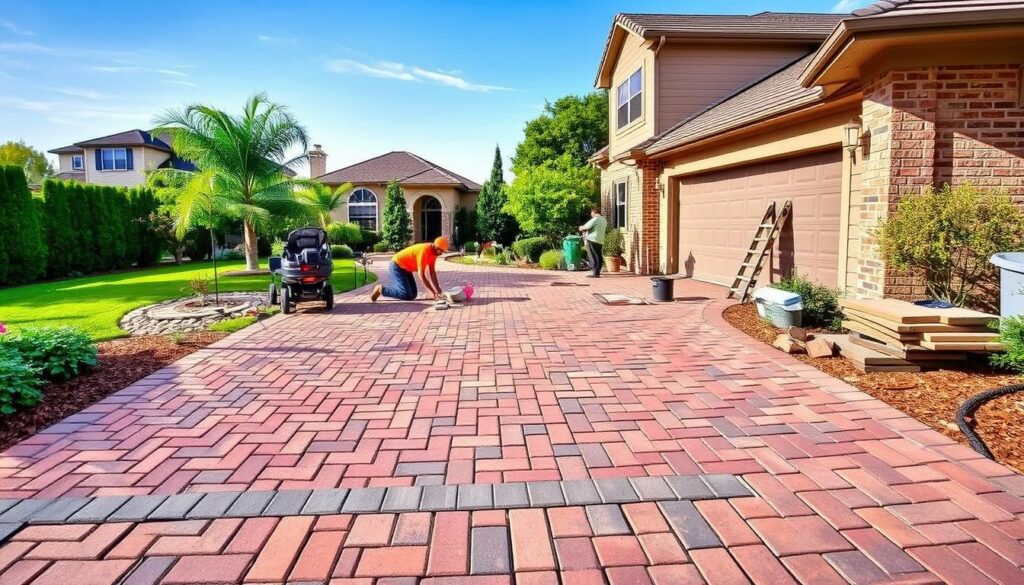
Concrete pavers: Penetrating sealer for basic moisture protection with natural appearance, or an acrylic sealer with a wet-look finish if you want to enhance the paver color and stabilize joint sand at the same time. Joint-stabilizing sealers for pavers are a specific product type that locks in the sand between pavers, reducing weed growth and pest intrusion — a benefit many DFW homeowners find particularly valuable.
Exposed aggregate concrete: Penetrating sealer or a low-sheen topical sealer that highlights the aggregate texture without creating a slippery glossy film.
Garage floor: Epoxy, polyurea, or polyaspartic coating for maximum durability against vehicle traffic, oil, and chemical exposure.
Why Application Matters as Much as Product Selection
Choosing the right sealer is only half the equation. How it gets applied determines how long it performs and whether it adheres correctly in the first place.
The surface must be thoroughly clean and completely dry before any sealer is applied. This sounds obvious, but it's the step most DIY applications fail on. Sealing over a dirty surface traps contaminants under the sealer, causing adhesion failure. Sealing over a damp surface — even slightly damp — can cause cloudiness, bubbling, and peeling, particularly with topical sealers.
This is why the best approach to concrete sealing in the DFW area is pressure washing the surface first and then scheduling the sealing once the concrete has had adequate drying time. For most DFW conditions, 24 to 48 hours of dry weather after pressure washing gives concrete the right moisture level for sealer application.
Application thickness also matters. Applying too much sealer in a single coat — a common DIY mistake — leads to an uneven finish, extended cure time, and in some cases a film that peels rather than adhering properly. Multiple thin coats applied correctly outperform a single thick coat every time.
Professional Sealing vs. DIY: The Honest Comparison
Concrete sealer is available at hardware stores across the DFW area, and the application process isn't technically complicated. So is it worth hiring a professional?
For standard penetrating sealers on a basic concrete driveway, a careful DIYer can get decent results. The main risk is application errors — applying on a damp surface, using too much product, or missing spots — that compromise the finish.
For decorative or stamped concrete, pavers, or any surface where appearance is a priority alongside protection, professional application consistently delivers better results. The combination of correct product selection for the specific surface, proper surface prep, and even application technique makes a visible difference in the final outcome.
DFW Pressure Washing & Fence Staining LLC handles both the pressure washing prep and the sealing application in a single service visit, which removes the risk of the surface getting re-contaminated or picking up moisture between the two steps.
Seal & Protect Services Across the DFW Metroplex
DFW Pressure Washing & Fence Staining LLC provides professional seal and protect services for driveways, patios, pavers, and other concrete surfaces throughout the Dallas-Fort Worth area. We assess your specific surface type and conditions before recommending a product and approach, and we handle the full process from pressure washing prep through final sealer application.
Whether your driveway needs basic penetrating protection, your stamped patio needs a UV-stable acrylic to restore its color, or your pavers need a joint-stabilizing sealer to stop weed growth, we bring the right product and professional application to the job.

Ready to protect your concrete and pavers before the next Texas summer? Request a free seal and protect quote at dfwpressurewashing.net/contact-us — DFW Pressure Washing & Fence Staining LLC serves homeowners across the entire DFW Metroplex.
DFW Pressure Washing & Fence Staining LLC


