Blog
Paver Sealing in DFW: Why Your Outdoor Hardscape Deserves More Protection Than It's Getting
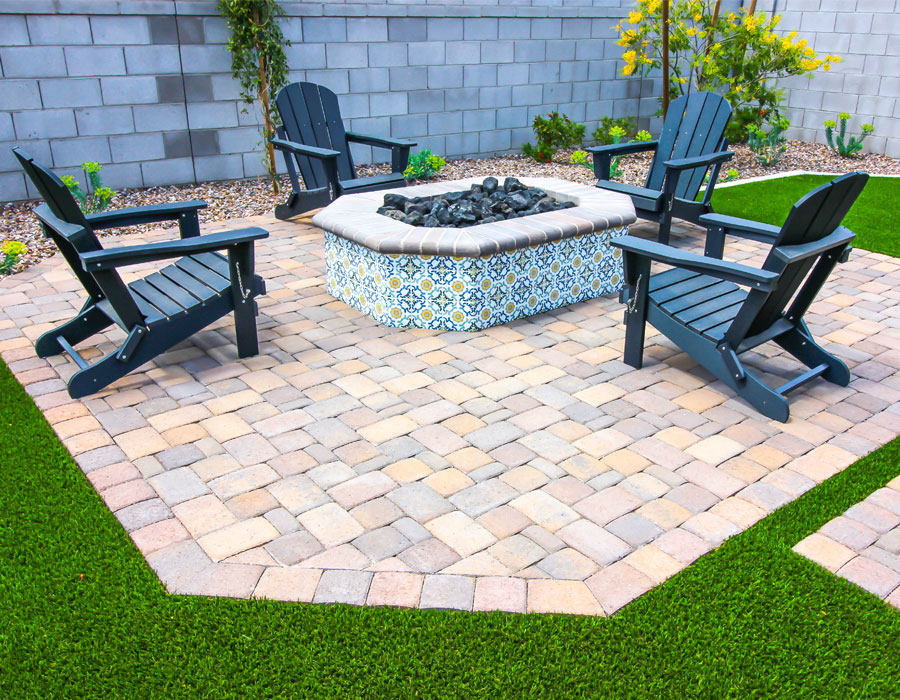
Paver installations represent one of the largest hardscape investments DFW homeowners make — the material cost, the installation labor, and the design value of a well-executed paver driveway, patio, or walkway is significantly higher than comparable poured concrete. Yet paver maintenance gets less consistent professional attention than driveway concrete in most DFW residential maintenance programs, despite pavers having more complex protection needs rather than fewer.
The assumption that pavers are durable and therefore low-maintenance has some truth to it — individual paver units are structurally resilient and don't crack from curing shrinkage the way poured concrete does. What this assumption misses is that paver systems have specific vulnerabilities — joint sand depletion, biological growth in joints, color fading, weed and ant intrusion — that unsealed and inadequately maintained pavers develop progressively in DFW's climate. Professional sealing addresses all of these vulnerabilities simultaneously and delivers protection that goes beyond what standard concrete sealing provides because the paver system has dimensions that concrete doesn't.
What Makes Paver Maintenance More Complex Than Standard Concrete
The structural difference between pavers and poured concrete — individual units set in compacted aggregate with sand-filled joints — creates maintenance requirements that don't exist for monolithic concrete slabs.
Joint sand: the most critical paver maintenance variable:
The sand that fills the joints between paver units serves multiple functions — it stabilizes the individual units against lateral movement, it provides the flexible interlocking that allows the paver system to accommodate ground movement without cracking, and it closes the joint spaces that would otherwise be pathways for water, weed seeds, and insects.
Joint sand in DFW conditions is continuously depleted by rain, irrigation, and the daily erosion of water movement across the paver surface. Each rain event washes some joint sand out. Irrigation cycles contribute to progressive joint sand loss. Over multiple seasons without replenishment, joint sand levels drop below the paver surface — creating the visible recessed joints that allow the weed establishment, ant colony development, and structural looseness that follow.
Unsealed joint sand depletes faster than joint sand that has been stabilized by joint-stabilizing sealer — because the sealer binds the sand particles together and to the surrounding paver faces, creating resistance to the erosion that unsecured loose sand doesn't have.
Paver color fading in DFW's UV environment:
Manufactured concrete pavers are colored during production using integral pigments or surface color hardeners. DFW's UV intensity is one of the most aggressive color-fading environments for paver surfaces in the country — the same overhead sun that depletes stain protection on wood surfaces and fades stamped concrete color acts on paver surface pigments continuously through the long Texas outdoor season.
UV-stabilized sealers that absorb or block UV radiation before it reaches the paver surface are the primary tool for slowing color fading on DFW paver installations. Unsealed pavers in DFW's sun show meaningful color fading within two to three years — sealed pavers maintain color significantly longer because the UV inhibitors in the sealer are absorbing the radiation that would otherwise be degrading the paver pigments.
Biological growth in joint spaces:
Paver joints provide ideal biological growth habitat in DFW's climate — the recess between units holds moisture longer than the flat paver top surface, organic material accumulates in joint spaces, and the shaded conditions in joint recesses reduce the UV that would otherwise inhibit growth. Algae and mildew that establish in joint spaces are more persistently rooted and more difficult to remove than biological growth on flat surfaces — the joint recess provides shelter for regrowth after cleaning that open surfaces don't provide.
Joint-stabilizing sealer that fills and hardens the upper portion of the joint reduces the accessible biological habitat that paver joints provide — making biological growth establishment slower and easier to address with routine cleaning than the deeply established growth that develops in unsealed open joints.
The Joint Sand Assessment and Replenishment Process
Every professional paver sealing project should begin with a joint sand assessment — confirming that joint sand levels are adequate before sealer is applied. Sealing over depleted joints stabilizes the low-sand condition rather than correcting it, leaving the pavers with sealed but inadequate joint sand that allows the movement and instability that proper joint sand prevents.
How to assess joint sand levels:
Visual inspection at an angle to the paver surface reveals joint sand level relative to the paver top surface. Sound joint sand fill is within 1/8 inch of the paver top — visible in the joint but not significantly recessed below the paver face. Depleted joint sand shows clearly recessed joints where the paver edges protrude above the sand level by more than 1/4 inch.
Running a finger or a key along the joint surface confirms what visual assessment suggests — sound joints feel stable and dense, depleted joints feel loose and give under light lateral pressure.
Polymeric sand for replenishment:
Polymeric sand — sand mixed with binding polymers that activate with moisture — is the appropriate material for joint replenishment before sealing in DFW conditions. Standard sand replenishment provides the volume but not the binding that prevents rapid depletion from subsequent rain and irrigation.
Polymeric sand is swept into depleted joints and compacted to the appropriate level before the activation step — water applied to the surface activates the polymer binders, which cure to hold the sand in a semi-rigid matrix. After polymeric sand has fully cured — typically 24 to 48 hours — sealer application proceeds over joints that now have adequate fill and the binding properties that resist subsequent depletion.
Timing polymeric sand application relative to sealing:
Polymeric sand must be fully cured before sealer is applied — sealing over uncured polymeric sand interferes with the curing process and may compromise both the sand's binding performance and the sealer's adhesion to the paver surface. The minimum 24 to 48 hour cure time for polymeric sand is a fixed interval that adds time to the full sealing project but is non-negotiable for correct results.
For large paver areas, the joint sand assessment, polymeric sand replenishment, cure period, cleaning, drying, and sealing sequence extends the project timeline beyond what standard concrete sealing requires. Planning for this timeline at the scheduling stage prevents the frustration of discovering mid-project that the timeline is longer than expected.
Cleaning Pavers Before Sealing: What's Different From Concrete
Paver cleaning before sealing requires technique adjustments from standard concrete pressure washing because of the joint sand vulnerability and the surface characteristics of manufactured pavers.
Pressure settings for pavers:
As covered in the dedicated concrete versus pavers cleaning blog in this series, pavers require lower pressure settings than standard concrete — typically 1,200 to 1,500 PSI maximum for standard concrete pavers, lower for natural stone pavers. The primary risk of excessive pressure on paver surfaces is joint sand displacement — high-pressure application directed at joint intersections removes joint sand that was supposed to remain in place.
Even with appropriate pressure settings, cleaning should avoid directing the spray nozzle at joint lines from close range — maintaining appropriate standoff distance and using wide-angle fan nozzles distributes cleaning force across the paver face rather than concentrating it at joint lines.
Pre-treatment considerations for pavers:
Biological growth in paver joints requires biocidal pre-treatment that's applied to the full surface including joint spaces — the biological growth in joints needs the same root-level kill that surface biological growth requires. Biocidal solution that's applied and given adequate dwell time to reach growth in joint recesses is more thorough than pressure washing that only contacts the joint opening rather than reaching growth deeper in the joint space.
Efflorescence on paver surfaces — the white mineral deposits that appear as calcium salts migrate to the paver surface — requires acid pre-treatment for effective removal. Paver-specific efflorescence cleaners are available and appropriate for this application — the acid chemistry dissolves calcium deposits without damaging the paver surface or accelerating any remaining joint sand.
Sealer Selection for DFW Paver Applications
Paver sealing product selection involves specific considerations that standard concrete sealing doesn't require — primarily related to joint-stabilizing function and the appearance enhancement options that paver surfaces offer.
Joint-stabilizing sealers:
The most appropriate sealer category for DFW paver installations is joint-stabilizing sealer — products formulated to penetrate into the upper joint space and bind the joint sand while providing surface protection. These products address the joint sand depletion mechanism directly rather than just providing surface protection.
Joint-stabilizing sealers are specific to paver applications and aren't the same as standard penetrating or topical sealers used on concrete. The application approach for joint-stabilizing products includes ensuring adequate penetration into joint spaces rather than just coating the paver top surface.
Wet-look versus natural finish:
Paver sealers are available in wet-look (gloss) and natural (matte or satin) finishes. Wet-look sealers enhance color vibrancy — making the paver colors appear as rich and saturated as they do when freshly wet — while providing surface protection. Natural finish sealers provide the same protection with a less reflective appearance that maintains the paver's original look.
Finish selection is a personal preference and architectural compatibility decision. Wet-look finishes work well for contemporary and formal applications where the enhanced color appearance is an asset. Natural finishes maintain the authentic stone or concrete character of pavers where appearance authenticity is the priority.
Anti-slip for paver applications:
Pavers used in applications that get wet — pool surrounds, water feature walkways, front entry approaches in rain exposure — benefit from anti-slip specification in the sealer. Smooth paver surfaces sealed with gloss sealers without anti-slip additives become slippery when wet — the same concern that applies to pool deck concrete applies to paver surfaces in wet applications.
Sealing Frequency for DFW Paver Installations
Paver sealing frequency in DFW depends on traffic, sun exposure, irrigation contact, and whether the pavers are in an application where joint sand depletion is a primary concern.
Standard residential paver patios and walkways: Two to three year sealing cycle as a baseline, with annual joint sand assessment to confirm levels are adequate even between full sealing cycles. Joint sand replenishment as needed between sealing cycles — when assessment reveals significant depletion — prevents the weed and ant establishment that depleted joints allow.
High-traffic paver driveways: Eighteen-month monitoring with water bead test on high-wear zones. Paver driveways carrying regular vehicle traffic deplete sealer protection faster than walkway and patio pavers with only foot traffic. The mechanical wear of tire contact on paver surfaces abrades the sealer layer progressively.
Pool surround pavers: Annual assessment with anti-slip specification confirmation at each resealing. Pool surround pavers combine high moisture exposure, pool chemical contact, and the foot traffic of pool use — the same accelerated conditions that drive more frequent pool deck concrete sealing.
Professional Paver Sealing Across the DFW Metroplex
DFW Pressure Washing & Fence Staining LLC provides professional paver cleaning and seal and protect services throughout the Dallas-Fort Worth area — including Kennedale, Arlington, Mansfield, Fort Worth, Grand Prairie, and surrounding communities.
Every paver sealing project begins with joint sand assessment and replenishment where needed before sealing proceeds. Cleaning uses paver-appropriate pressure settings and biocidal pre-treatment for joint growth. Product selection is matched to the specific paver application — joint-stabilizing sealer for standard paver installations, anti-slip specification for wet-use applications, finish selection based on appearance goals and architectural context.

Want to make sure your DFW paver installation gets the joint sand assessment, replenishment, and professional sealing that protects against the weed intrusion, color fading, and joint deterioration that unsealed and inadequately maintained pavers develop in North Texas conditions? DFW Pressure Washing & Fence Staining LLC delivers the complete paver maintenance service — assessment, preparation, and sealing — that the investment in your paver hardscape deserves.
Get Your Free Estimate → dfwpressurewashing.net/contact-us
DFW Pressure Washing & Fence Staining LLC


