Blog
Pressure Washing Brick and Stone Surfaces in DFW: What Homeowners Get Wrong
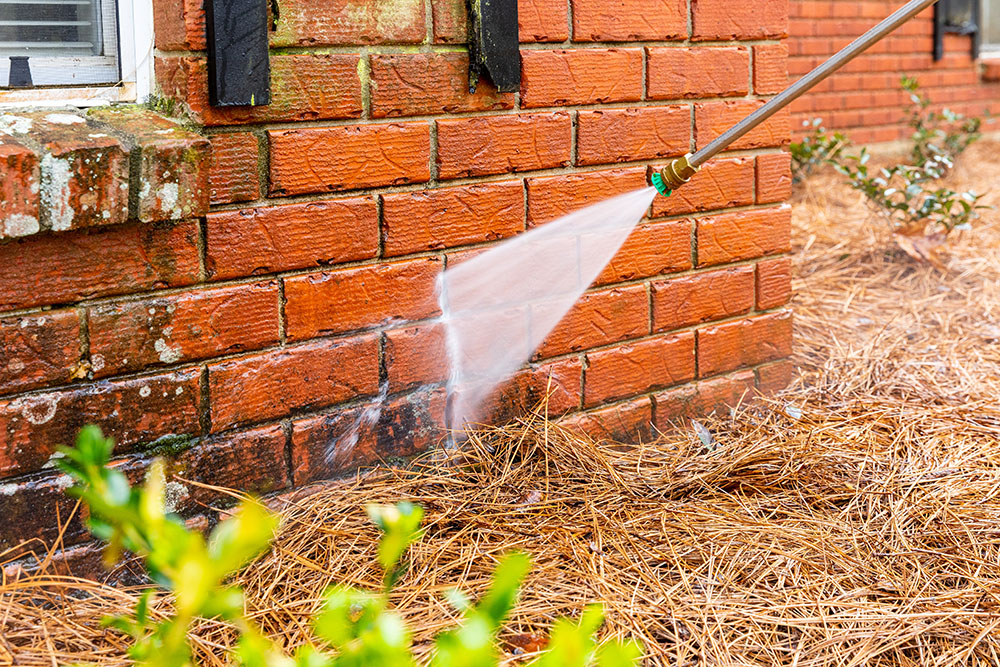
Brick and stone are among the most durable exterior materials on a DFW home — but durable doesn't mean indestructible, and it doesn't mean pressure washing is risk-free. The homeowners who damage their brick facades, stone veneer, or mortar joints during pressure washing almost always made the same set of mistakes — wrong pressure, wrong nozzle, wrong technique, or wrong assumptions about what the surface could handle.
Understanding how brick and stone respond to pressure washing — and what the specific risks are for each surface type — is what separates a cleaning job that restores the appearance of masonry from one that creates repair needs that didn't exist before the cleaning started.
Why Brick and Stone Need Regular Cleaning in DFW
Before getting into technique and risk, it's worth establishing why brick and stone exterior surfaces in the DFW area need regular cleaning in the first place. Both materials are porous — they absorb atmospheric deposits, biological growth, and staining compounds over time in ways that affect both appearance and long-term surface integrity.
Algae and mildew establish themselves on brick and stone surfaces throughout DFW's humid spring and fall seasons — particularly on north and east-facing walls that stay damp longer after rain events. The biological growth that creates the dark streaking and green patches on masonry exteriors doesn't just affect appearance. The organisms produce mild acids as metabolic byproducts that slowly degrade the mortar and surface of the masonry over extended periods.
Atmospheric deposits — road dust, vehicle exhaust particulate, pollen — accumulate on brick and stone surfaces continuously. In DFW's urban and suburban environment, these deposits build into a dull gray coating over several years that flattens the appearance of brick and stone and reduces the visual character that makes masonry an attractive exterior choice.
Efflorescence — the white, chalky deposits that appear on brick and concrete block — is a specific masonry condition where water-soluble salts migrate to the surface as moisture moves through the masonry and evaporates. It's common in DFW's seasonal moisture cycle and is one of the most frequently misidentified masonry conditions homeowners encounter.
The Mortar Joint Problem: Where Most Brick Damage Happens
The most significant pressure washing risk on brick surfaces isn't damage to the brick units themselves — it's damage to the mortar joints between them. This distinction is critical and consistently underappreciated by homeowners approaching brick cleaning for the first time.
Brick is extremely hard and dense. It handles high-pressure water without damage in most conditions. Mortar — the compound that fills the joints between bricks — is significantly softer and more porous than the brick it holds together, and it degrades with age in ways that brick itself doesn't.
New, sound mortar handles pressure washing at appropriate settings without damage. Mortar that has aged, weathered, or begun to deteriorate is a different situation entirely. High-pressure water directed at degraded mortar excavates the joint — physically removing mortar material that was already weakened by weathering. The result is voids in the mortar joints that allow water infiltration into the wall assembly — a moisture intrusion problem that's significantly more expensive to address than the cleaning job that caused it.
Before any pressure washing of brick surfaces, the mortar joint condition should be assessed. Joints that are recessed, crumbling, showing cracks, or where mortar has already been lost need to be repointed — mortar repair — before pressure washing. Cleaning brick with compromised mortar joints is creating a moisture problem while solving an appearance one.
The assessment test: run a key or screwdriver lightly along the mortar joints. Sound mortar resists this easily. Deteriorating mortar crumbles or can be scraped out with minimal force. Any joints that fail this test need repointing before pressure washing proceeds.
Stone Veneer: The Surface Most Likely to Be Damaged
Stone veneer — both natural thin-cut stone and manufactured stone veneer — is one of the most commonly damaged surfaces in DIY pressure washing projects, and the damage is often permanent.
Natural thin-cut stone veneer is typically bonded to a substrate with mortar or adhesive and sealed with a grout or mortar joint material. The thin profile of veneer stone makes it more vulnerable to direct high-pressure water impact than full-thickness stone, and the adhesive bond between the veneer and substrate can be compromised by water forced behind the veneer under high pressure.
Manufactured stone veneer — the concrete-based product that replicates the appearance of natural stone — is more uniformly vulnerable to high-pressure water than natural stone because of its composition. The surface texture and the colorants used to create the natural stone appearance can be stripped or damaged by high-pressure water in ways that natural stone handles better.
Both veneer types should be cleaned with soft washing — low-pressure water with appropriate cleaning solutions — rather than high-pressure washing. The cleaning solution does the work of removing biological growth and atmospheric deposits, and low-pressure rinsing clears the treated surface without the impact force that damages veneer.
Correct PSI Settings for Brick and Stone Cleaning
For brick and stone surfaces that are appropriate for pressure washing — solid brick with sound mortar, natural full-thickness stone — the correct PSI range is meaningfully lower than what's appropriate for concrete.
Concrete driveways and patios can handle 2,500 to 3,500 PSI at appropriate nozzle settings. Brick and natural stone surfaces should be cleaned at 500 to 1,500 PSI depending on the specific surface condition and the type of contamination being addressed. The lower end of that range — 500 to 800 PSI — is appropriate for routine cleaning of brick in good condition. The higher end is appropriate only for heavily soiled brick with sound mortar where biological growth or staining requires more cleaning force.
Nozzle selection matters as much as pressure setting. A narrow-angle nozzle at 1,000 PSI concentrates the cleaning force into a smaller area and delivers more impact per square inch than a wide-angle nozzle at the same pressure. For brick and stone cleaning, a 25 to 40-degree wide-angle nozzle distributes the cleaning force more gently across a larger surface area — reducing the risk of mortar damage while still delivering effective cleaning coverage.
Standoff distance — how far the nozzle is held from the surface during cleaning — is the third control variable. Closer distance increases effective PSI at the surface. For brick and stone cleaning, maintaining 12 to 18 inches of standoff distance at appropriate pressure and nozzle settings produces effective cleaning without the concentrated impact that damages mortar.
Efflorescence: What It Is and How to Address It Correctly
Efflorescence is the white chalky deposits that appear on brick, concrete block, and mortar joints — one of the most common masonry conditions on DFW homes and one of the most frequently mishandled.
Efflorescence forms when water moves through masonry and carries soluble salts to the surface. When the water evaporates, the salts are left behind as white crystalline deposits. It's common after wet seasons — DFW's spring rain cycle drives moisture through masonry repeatedly and leaves visible efflorescence deposits on many homes each year.
The mistake most homeowners make with efflorescence is trying to pressure wash it off. Pressure washing moves efflorescence surface deposits temporarily but doesn't address the salt compounds that are bonded to the masonry surface. The deposits return because the salt source in the masonry is still present.
Correct efflorescence treatment uses diluted acid — typically muriatic acid or a commercial efflorescence remover containing phosphoric acid — that dissolves the salt deposits chemically rather than trying to blast them off physically. The acid treatment is applied, given dwell time to react with the salt compounds, and then rinsed thoroughly with water. This approach removes the deposits at the chemical level and produces results that last significantly longer than pressure washing alone.
Acid treatments on masonry require specific safety precautions — appropriate dilution for the specific product and surface, chemical-resistant gloves and eye protection, pre-wetting the masonry before acid application to prevent excessive absorption, and thorough neutralization and rinsing after treatment. Professional application gets correct dilution and technique that DIY acid treatment frequently doesn't.
Chimney Cleaning: The Overlooked Brick Surface
DFW homes with brick chimneys have an exterior masonry surface that gets less cleaning attention than the home's facade but faces more concentrated biological growth and atmospheric exposure.
Chimney brick is fully exposed to weather from all sides and from above. The horizontal top of chimney caps and the mortar around chimney crowns are particularly vulnerable to moisture intrusion and biological growth. Algae and mildew that establish themselves on chimney brick can be difficult to see from the ground — homeowners often don't realize their chimney has significant biological growth until they're on the roof for another purpose.
Chimney brick cleaning follows the same principles as facade brick cleaning — appropriate low to moderate pressure, wide-angle nozzle, sound mortar assessment before washing — with the additional consideration that chimney cleaning requires safe elevated access that most homeowners shouldn't attempt on a DIY basis.
When Sealing Brick and Stone Makes Sense
Not all brick and stone surfaces benefit from sealing — and applying sealer to masonry without considering the specific conditions can create problems rather than solving them.
Brick and stone that's in good condition with sound mortar and no significant moisture intrusion issues typically doesn't require sealing. The natural porosity of masonry contributes to its durability by allowing moisture to move through and out of the material rather than being trapped. Sealing masonry can interrupt this moisture movement and in some cases cause the moisture that does get into the wall assembly to be trapped rather than evaporating naturally.
Where brick and stone sealing makes sense is in specific conditions — masonry that has been professionally cleaned and where surface protection against future staining and biological growth is desired, masonry in particularly high-moisture exposure situations, and decorative stone or brick elements where long-term color preservation is a priority.
When sealing masonry is appropriate, breathable sealers — products that allow water vapor to pass through while blocking liquid water — are the correct product category. Non-breathable sealers that completely close masonry pores create the moisture trapping problems that damage masonry from within.
Professional Brick and Stone Cleaning Across the DFW Metroplex
DFW Pressure Washing & Fence Staining LLC provides professional brick and stone cleaning as part of comprehensive exterior cleaning services throughout the Dallas-Fort Worth area, including Kennedale, Arlington, Mansfield, Fort Worth, Grand Prairie, and surrounding communities.
Every masonry cleaning project starts with a mortar joint assessment and surface condition evaluation before any equipment is turned on. We use appropriate pressure settings and technique for each specific masonry type, provide efflorescence treatment where needed, and protect surrounding surfaces from cleaning solution contact during the service.

Want to make sure your DFW home's brick and stone surfaces are cleaned correctly — without mortar damage, without veneer risk, and with the right technique for each specific masonry type on your property? DFW Pressure Washing & Fence Staining LLC assesses every masonry surface before cleaning begins and uses the pressure settings and technique that restore appearance without creating the repair needs that incorrect pressure washing causes.
Get Your Free Estimate → dfwpressurewashing.net/contact-us
DFW Pressure Washing & Fence Staining LLC


