Blog
Pressure Washing Concrete Retaining Walls in DFW: Why These Structures Need Regular Cleaning
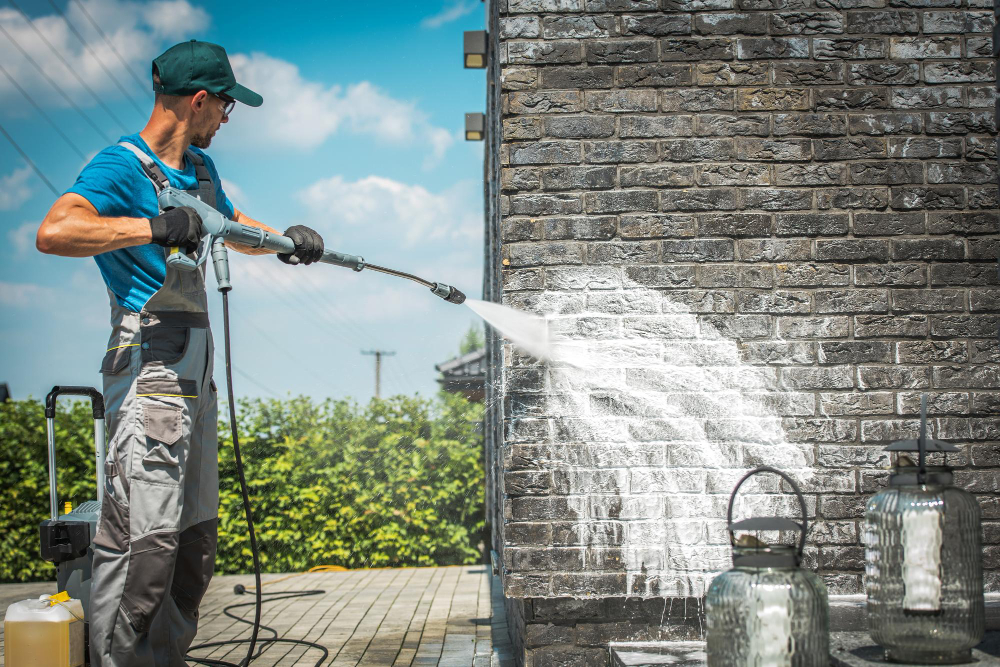
Retaining walls are among the hardest-working structural elements on a DFW residential property — they're managing soil loads, drainage, and grade changes continuously while being exposed to the full range of North Texas weather conditions. They're also among the most neglected exterior surfaces when it comes to professional cleaning. Most DFW homeowners pressure wash their driveways and patios but give little thought to the retaining walls that are simultaneously managing some of the most significant structural responsibilities on the property.
The consequences of neglecting retaining wall maintenance go beyond appearance — and understanding what accumulates on these structures in DFW's climate, and what that accumulation does to both surface condition and structural integrity, is what motivates a maintenance approach that these surfaces deserve.
Why DFW Retaining Walls Face Specific Maintenance Challenges
Retaining walls in North Texas face a specific combination of maintenance challenges that comes from their structural function, their typical positioning, and the specific conditions DFW's climate creates.
Constant moisture from retained soil: The soil side of a retaining wall maintains contact with the wall face continuously — and in DFW's clay-heavy soil that retains moisture significantly longer than sandy soils, that contact means sustained moisture exposure on the wall's primary face. Moisture that migrates through the wall from the soil side emerges at the exposed face — and the combination of soil minerals, organic compounds from soil biology, and the moisture itself creates conditions for both biological growth and mineral deposit accumulation that surfaces not in contact with soil don't face.
Drainage concentration: Retaining walls by design manage water flow along grade changes — they concentrate drainage from the landscape above them at the wall face and along the wall base. This drainage concentration means retaining wall surfaces are regularly wetted by water running from the retained area above, carrying organic material, soil compounds, and biological spores from the landscape it passes through.
Shaded, north-facing exposure: Many DFW residential retaining walls are positioned in shaded areas — along property boundaries shaded by houses and fences, in low areas that receive less direct sun, or along north-facing slopes where direct sun is limited. These shaded conditions are ideal for the biological growth that DFW's climate supports — less sun means less natural UV that would otherwise inhibit biological growth establishment.
Efflorescence from internal moisture migration: The moisture that moves through concrete and masonry retaining walls carries dissolved minerals from the concrete and the surrounding soil. When this moisture reaches the exposed face and evaporates, it deposits those minerals as the white chalky efflorescence that is one of the most characteristic and most persistent visual conditions on DFW retaining walls. Efflorescence isn't just a cosmetic condition — it indicates ongoing moisture migration through the wall structure that, in significant quantities, can signal drainage problems behind the wall that warrant investigation.
What Accumulates on DFW Retaining Walls Without Regular Cleaning
The specific accumulation on DFW retaining walls in the absence of regular cleaning reflects the unique exposure conditions these structures face.
Biological growth from persistent moisture: The combination of sustained moisture from retained soil, organic material in drainage water, and shaded positioning creates some of the most favorable biological growth conditions on any residential surface. Algae, mildew, and lichen establish on retaining wall faces — particularly in the mortar joints of block walls and in any surface texture that holds moisture — and spread progressively if they're not addressed.
Lichen — the combination of algae and fungi that appears as flat, crusty patches in gray, orange, or green tones — is particularly common on DFW retaining walls and particularly persistent in removal. Lichen attaches to masonry with root-like structures that physically penetrate into the surface, and its removal requires both biocidal treatment to kill the organisms and adequate time for the killed lichen to release from the surface before pressure washing removes it.
Efflorescence accumulation: Efflorescence that develops continuously without cleaning builds up in progressive layers — early deposits that weren't removed are covered by subsequent deposits from continued moisture migration. Multi-season efflorescence buildup creates heavy white scale deposits that are more difficult to remove than fresh deposits would have been with regular cleaning. The calcium carbonate compounds bond progressively more strongly to the masonry surface as they age.
Soil and organic staining from drainage: Water running over the retained soil and across the wall face deposits clay particles, organic matter, and soil compounds that stain the masonry surface. In DFW's iron-rich clay soil, drainage that contacts retaining walls deposits the rust-tinted iron compounds that create orange and brown staining — particularly concentrated at drainage points and along wall bases where runoff collects.
Vegetation in joints and cracks: Weeds and other plants that establish in mortar joints, in surface cracks, and at wall bases create both visual problems and structural concerns. Plant root systems that penetrate into masonry joints and cracks exert force as they grow — the same root expansion force that cracks sidewalks and foundations operates in retaining wall joints. Vegetation that's allowed to establish in retaining wall joints grows progressively more difficult to remove and creates progressively more joint damage as root systems develop.
The Structural Dimension: Why Cleaning Matters Beyond Appearance
The most important argument for regular retaining wall maintenance is not appearance — it's structural integrity. The biological growth, efflorescence, and vegetation accumulation that develops on neglected DFW retaining walls contributes to structural deterioration that professional cleaning addresses before it progresses to repair.
Biological acid attack on masonry: The mild organic acids that algae, mildew, and lichen produce as metabolic byproducts attack the calcium compounds in concrete and mortar — the same mechanism that biological growth uses to attack concrete driveway surfaces. On retaining walls, this biological acid attack affects both the wall face and, more significantly, the mortar joints between masonry units. Mortar that has been subjected to years of biological acid exposure shows progressive degradation — softer texture, reduced bonding capacity, and eventually the crumbling that creates joint voids.
Joint voids in retaining walls are structural concerns rather than just aesthetic ones. Mortar joints are what transfer load between individual masonry units — as joint material degrades and voids develop, load distribution through the wall changes in ways that can accelerate structural movement.
Efflorescence and moisture migration: Persistent efflorescence on a retaining wall is visual evidence of ongoing moisture migration through the wall structure. While modest efflorescence is normal in concrete and masonry construction, heavy or recurring efflorescence indicates moisture movement at levels that can progressively affect structural integrity — particularly if it's associated with hydrostatic pressure from inadequate drainage behind the wall.
Professional cleaning that removes efflorescence deposits also makes the underlying moisture migration patterns visible — allowing assessment of whether the efflorescence pattern indicates normal concrete moisture behavior or drainage conditions that need investigation. Heavy efflorescence concentrated at specific locations, in horizontal bands, or associated with visible efflorescence and cracking together can indicate drain tile failures behind the wall that need attention beyond surface cleaning.
Vegetation root damage: Plant roots that penetrate into mortar joints and masonry cracks grow in diameter as the plant matures — exerting expanding force against the masonry surrounding them. In retaining walls that are already managing soil load, the additional stress from root expansion in joints and cracks adds to the structural loading in ways that can accelerate the joint failure and masonry movement that root-free walls in the same conditions wouldn't experience.
Removing vegetation from retaining wall joints before root systems are well-established is significantly more effective than trying to remove mature root systems later — both in terms of the effort required and in terms of the joint damage that mature root removal causes compared to early removal.
Professional Pressure Washing Technique for Retaining Walls
Retaining wall pressure washing requires specific technique adjustments from standard concrete driveway cleaning — because the surface characteristics of retaining walls differ from standard flatwork in ways that affect both cleaning effectiveness and the risk of surface or structural damage.
Pressure settings for masonry walls: The appropriate pressure for retaining wall cleaning depends on the specific masonry type and the condition of the mortar joints. Standard concrete block walls with sound mortar can typically handle pressure in the 1,500 to 2,500 PSI range with appropriate nozzle settings. Natural stone walls require lower pressure — typically 800 to 1,500 PSI — because stone surface characteristics are more variable and some stone types are vulnerable to surface etching at higher pressure. Brick walls with sound mortar handle moderate pressure well but require specific attention to mortar joint condition assessment before cleaning.
The critical pressure assessment for retaining walls is mortar joint condition — deteriorated or receding joints require lower pressure than sound joints to avoid excavating mortar from already-compromised joints. Running a key or screwdriver lightly along mortar joints before pressure washing reveals whether the mortar is sound or soft — sound mortar resists this easily, deteriorating mortar shows crumbling with light force.
Lichen treatment: the patience requirement: Lichen on retaining walls requires a treatment approach that accounts for how lichen attaches to masonry. Biocidal solution applied to lichen kills the organisms, but the killed lichen doesn't immediately release from the surface — it may take days to weeks for the dead lichen to release enough that pressure washing can remove it cleanly.
Professional lichen treatment for retaining walls typically involves biocidal application and a waiting period before pressure washing — not the same-visit application and immediate rinse approach that works for algae and mildew. Pressure washing before the lichen has released from the surface pushes lichen material into surface texture and joint lines rather than removing it cleanly.
Efflorescence pre-treatment: Efflorescence removal from retaining walls uses the same acid-based pre-treatment approach as efflorescence removal from driveways and patios — but with specific attention to the quantity of acid product appropriate for the masonry type and the volume of deposits. Acid applied to retaining wall mortar joints affects mortar chemistry as well as the calcium deposits targeted — appropriate dilution and dwell time management prevents unintended mortar degradation while effectively removing mineral deposits.
Post-cleaning joint inspection: After pressure washing removes the biological growth, efflorescence, and surface deposits that were obscuring the wall face, professional assessment of the mortar joint condition the cleaning revealed determines whether joint repointing is needed before any sealing treatment is applied.
Sealing Retaining Walls After Cleaning
The same seal and protect logic that applies to driveways and patios applies to retaining walls — with specific product considerations for the moisture migration characteristics of retaining structures.
Penetrating sealers for retaining walls: Penetrating sealers appropriate for retaining wall application need to be breathable — allowing moisture vapor to escape through the wall surface while blocking liquid water penetration. Non-breathable sealers on retaining walls trap the moisture that migrates through the wall structure, creating hydrostatic pressure behind the sealer film that eventually causes delamination and potentially accelerates the moisture pressure against the wall structure itself.
Silane-siloxane penetrating sealers that provide water repellency while maintaining vapor permeability are the appropriate product category for most DFW retaining wall applications — they reduce moisture absorption from direct weather exposure without sealing in the moisture from the soil side that the wall structure needs to release.
Not sealing over damaged mortar: Sealing should only be applied to retaining walls with sound mortar joints — sealing over deteriorated mortar traps moisture in damaged joint areas and may accelerate deterioration rather than providing protection. Joint repointing where needed should precede any sealing application.
Professional Retaining Wall Cleaning Across the DFW Metroplex
DFW Pressure Washing & Fence Staining LLC provides professional retaining wall pressure washing throughout the Dallas-Fort Worth area — including Kennedale, Arlington, Mansfield, Fort Worth, Grand Prairie, and surrounding communities.
Every retaining wall service begins with mortar joint assessment and surface condition evaluation before any equipment is turned on — determining appropriate pressure settings, identifying lichen that requires biocidal pre-treatment and waiting period, and assessing efflorescence extent for appropriate acid pre-treatment. We use technique calibrated to the specific masonry type and condition of each wall section rather than standard flatwork settings applied uniformly.

Want to make sure your DFW property's retaining walls are professionally cleaned with technique appropriate for masonry surfaces — addressing the biological growth, efflorescence, and vegetation that affect both appearance and structural integrity without damaging mortar joints or surface material? DFW Pressure Washing & Fence Staining LLC assesses every retaining wall surface before cleaning begins and applies the pressure settings and pre-treatment approach that each wall's specific material and condition requires.
Get Your Free Estimate → dfwpressurewashing.net/contact-us
DFW Pressure Washing & Fence Staining LLC


