Blog
Pressure Washing for Spring Allergies: How Exterior Cleaning Reduces Pollen Buildup on Your DFW Property
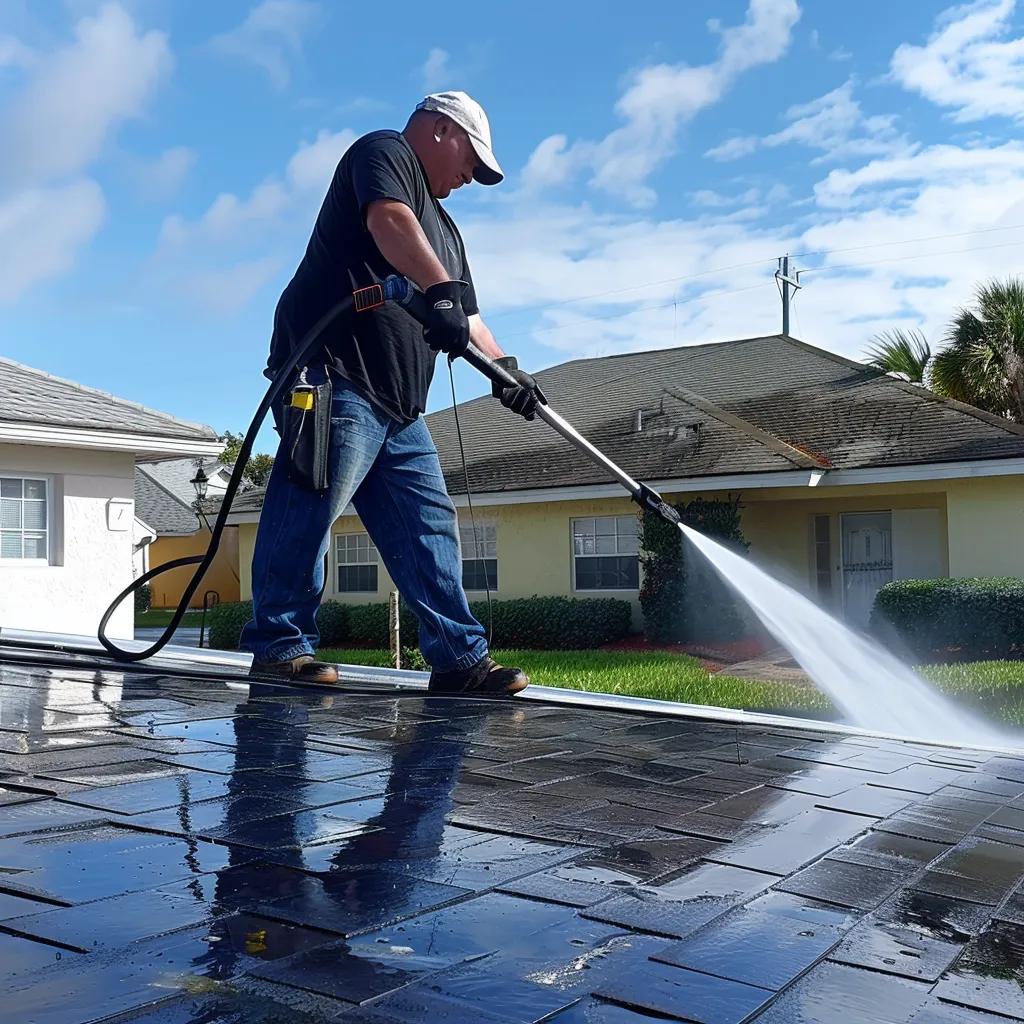
Anyone who has lived in the Dallas-Fort Worth area through a spring season knows what pollen does to outdoor surfaces. The yellow-green film that coats every car, every patio, every fence board, and every inch of concrete between March and May isn't just a nuisance — it's one of the most significant exterior maintenance events of the year. And while most DFW homeowners think about pollen primarily as an allergy problem, it's also a surface problem with real maintenance implications that professional pressure washing addresses directly.
Understanding what pollen buildup does to exterior surfaces — beyond making everything look yellow — helps frame why spring pressure washing is one of the most practically valuable exterior cleaning services available to DFW homeowners.
What DFW Pollen Season Actually Deposits on Your Property
The Dallas-Fort Worth Metroplex sits in one of the highest pollen-producing regions in the United States. The combination of the region's tree species — mountain cedar, oak, elm, ash, and pecan among the most prolific producers — with DFW's wind patterns creates pollen concentrations that regularly rank among the highest recorded in the country.
What lands on your property during pollen season isn't just yellow dust. Pollen grains are organic material — they contain proteins, lipids, and carbohydrates that make them a nutrient source for biological organisms. When pollen settles on moist exterior surfaces and stays there through DFW's wet spring weather, it creates exactly the organic substrate that algae, mildew, and mold need to establish themselves.
The pollen itself is temporary — it stops being produced when the relevant trees finish their pollination cycle. The biological growth it feeds is not temporary. Algae and mildew that establish themselves in spring pollen deposits on siding, concrete, and wood surfaces continue growing through summer and fall, spreading from the initial pollen-fed colonies into progressively larger biological growth patterns that become the dark streaking and green patches that define neglected exterior surfaces in DFW neighborhoods.
How Pollen Affects Specific Exterior Surfaces
Pollen behaves differently on different surface types — and understanding how it interacts with each surface helps frame what pressure washing accomplishes on each one.
Concrete driveways and patios: Pollen that settles on concrete during wet spring conditions is driven into the concrete's porous surface structure by rain. The organic material from pollen grains begins breaking down in the moist concrete environment, and the biological growth that follows roots into the concrete pores rather than sitting on the surface. By late spring and early summer, concrete that was visibly yellow with pollen in March has transitioned to concrete with biological growth colonies that won't respond to rain or rinsing the way loose pollen does.
Professional pressure washing removes both the surface pollen deposits and the early-stage biological growth that has begun establishing in the concrete pores. Combined with concrete sealing after washing, the treated surface provides significantly less hospitable conditions for biological growth to re-establish through the following season.
Home siding: Siding accumulates pollen in the surface texture of vinyl and fiber cement products — the slight surface relief of most siding profiles traps pollen grains effectively. On north and east-facing walls that stay damp longest after spring rain, trapped pollen provides the organic material that feeds the algae and mildew growth responsible for the dark streaking that appears on DFW siding throughout spring and summer.
Soft washing siding in spring removes pollen deposits before they feed biological growth establishment — killing any early-stage growth with biocidal cleaning solution and removing the organic substrate that would otherwise support continued growth through the season.
Wood fences: Pollen deposits on fence boards contribute to the mildew establishment that's one of the most consistent wood fence maintenance challenges in DFW. Fence boards with rough surface texture from UV weathering trap pollen more effectively than smooth, recently stained boards — another reason staining maintenance produces compounding benefits beyond the direct UV and moisture protection it provides.
Pressure washing wood fences in spring removes pollen deposits along with mildew growth and weathering residue — preparing the surface for staining assessment and providing a clean baseline for the season ahead regardless of whether staining is immediately due.
Patio furniture, pergolas, and outdoor structures: Pollen accumulates on horizontal surfaces of outdoor structures — pergola beam tops, patio cover rafters, outdoor furniture — more heavily than on vertical surfaces because horizontal surfaces catch pollen falling through the air rather than just what wind deposits against vertical surfaces. Washing outdoor structures in spring removes this pollen accumulation and prevents it from feeding biological growth on the wood or metal surfaces of outdoor features throughout the season.
The Allergy Reduction Benefit of Spring Pressure Washing
Beyond the surface maintenance benefits, spring pressure washing delivers a practical allergy exposure reduction that's worth understanding for DFW households with allergy sufferers.
Pollen that accumulates on exterior surfaces doesn't stay there permanently — it gets tracked inside on shoes and clothing, redistributed by foot traffic on patios and walkways, and resuspended by wind and activity. Every time someone walks across a pollen-covered patio or sits on a pollen-covered outdoor chair, they're carrying that allergen load with them.
Professional pressure washing removes the accumulated pollen from hardscape surfaces and siding, reducing the allergen reservoir that continues contributing to indoor and outdoor exposure after the active pollen season has ended. For households where pollen allergy affects daily quality of life during DFW's spring season, eliminating accumulated surface deposits is a practical contribution to reducing total allergen exposure — not a complete solution, but a meaningful reduction in one significant allergen source.
This benefit is particularly relevant for patio and outdoor living areas where allergy sufferers spend time during the spring months. A professionally pressure washed patio has significantly less accumulated pollen than one that hasn't been cleaned — and the difference in surface allergen load is meaningful for how comfortable those spaces are during peak season.
Why Spring Timing Matters for Maximum Benefit
The timing of spring pressure washing relative to pollen season affects how much benefit the service delivers — both for surface protection and for allergen reduction.
Timing for surface protection: The most effective timing for spring pressure washing from a surface protection standpoint is after the peak pollen season has concluded — when the majority of pollen production from the relevant tree species has ended and the surface deposits represent the season's full accumulation rather than a mid-season partial deposit. In DFW, this typically means late April through May for tree pollen, though grass pollen continues into early summer.
Washing before pollen season ends removes deposits that will be replaced by continued pollen production — reducing but not eliminating the biological growth substrate until the season concludes. Washing after peak season removes the full accumulation and addresses any early biological growth establishment before it has a full summer to spread.
Timing for allergen reduction: For households prioritizing allergen reduction over surface protection scheduling, washing when pollen counts are highest — even during peak season — delivers the most immediate allergen exposure reduction. The tradeoff is that surface deposits will re-accumulate during the remaining pollen season and a follow-up service or thorough rinse may be warranted after peak season ends.
The practical DFW approach: For most homeowners balancing both surface protection and allergen reduction, scheduling spring pressure washing in late April or early May captures most of the season's deposit accumulation, addresses early biological growth establishment, and provides clean surfaces for the outdoor living season that follows in late spring and summer.
Combining Spring Pollen Cleaning With Annual Exterior Maintenance
Spring pressure washing for pollen removal integrates naturally with the annual exterior maintenance tasks that the same service window supports — making it one of the most efficient seasonal investments a DFW homeowner can make.
Pressure washing the driveway and concrete surfaces for pollen and biological growth removal creates the clean surface needed for concrete sealing assessment and scheduling. Soft washing siding for pollen and mildew removal addresses the most visible exterior maintenance need while preparing the surface for any painting or coating work planned for spring. Pressure washing the fence for pollen and weathering removal creates the clean baseline needed for staining assessment and scheduling.
All of these tasks benefit from the same service visit — a single spring exterior cleaning appointment that removes pollen deposits, addresses biological growth, and sets up every surface for whatever treatment or assessment follows. DFW Pressure Washing & Fence Staining LLC handles the full scope of spring exterior cleaning — pressure washing, soft washing, fence staining, and concrete sealing — in a coordinated service that makes the most of the spring maintenance window without requiring multiple separate appointments across multiple weeks.
What Spring Cleaning Doesn't Fix — and What to Do About It
Spring pressure washing removes surface pollen deposits and early-stage biological growth effectively. What it doesn't address is biological growth that has been establishing for multiple seasons without treatment — deeply rooted mildew in concrete pores, active algae colonies that have spread across large siding sections, or wood fence surfaces where biological growth has been working into the board fiber for a year or more.
These more established biological growth conditions need the biocidal treatment that's part of professional soft washing and pressure washing with pre-treatment — the chemical treatment that kills growth at the root level rather than just removing the visible surface layer. Early-stage spring deposits respond to standard pressure washing. Established multi-season growth responds to the pre-treatment and soft washing approach that professional exterior cleaning applies.
For DFW properties that haven't had professional exterior cleaning in two or more years, spring pollen season is the right trigger to schedule comprehensive service — not just for pollen removal but for the full biological growth treatment that brings every surface back to a clean, protected baseline.

Want to make sure pollen deposits, early biological growth, and spring weathering accumulation are fully cleared from every exterior surface on your DFW property before the outdoor living season gets underway? DFW Pressure Washing & Fence Staining LLC provides comprehensive spring exterior cleaning — pressure washing, soft washing, fence staining, and concrete sealing — throughout the Dallas-Fort Worth area, including Kennedale, Arlington, Mansfield, Fort Worth, Grand Prairie, and surrounding communities.
Get Your Free Estimate → dfwpressurewashing.net/contact-us
DFW Pressure Washing & Fence Staining LLC


