Blog
Pressure Washing Safety: What Every DFW Homeowner Should Know Before Picking Up the Wand
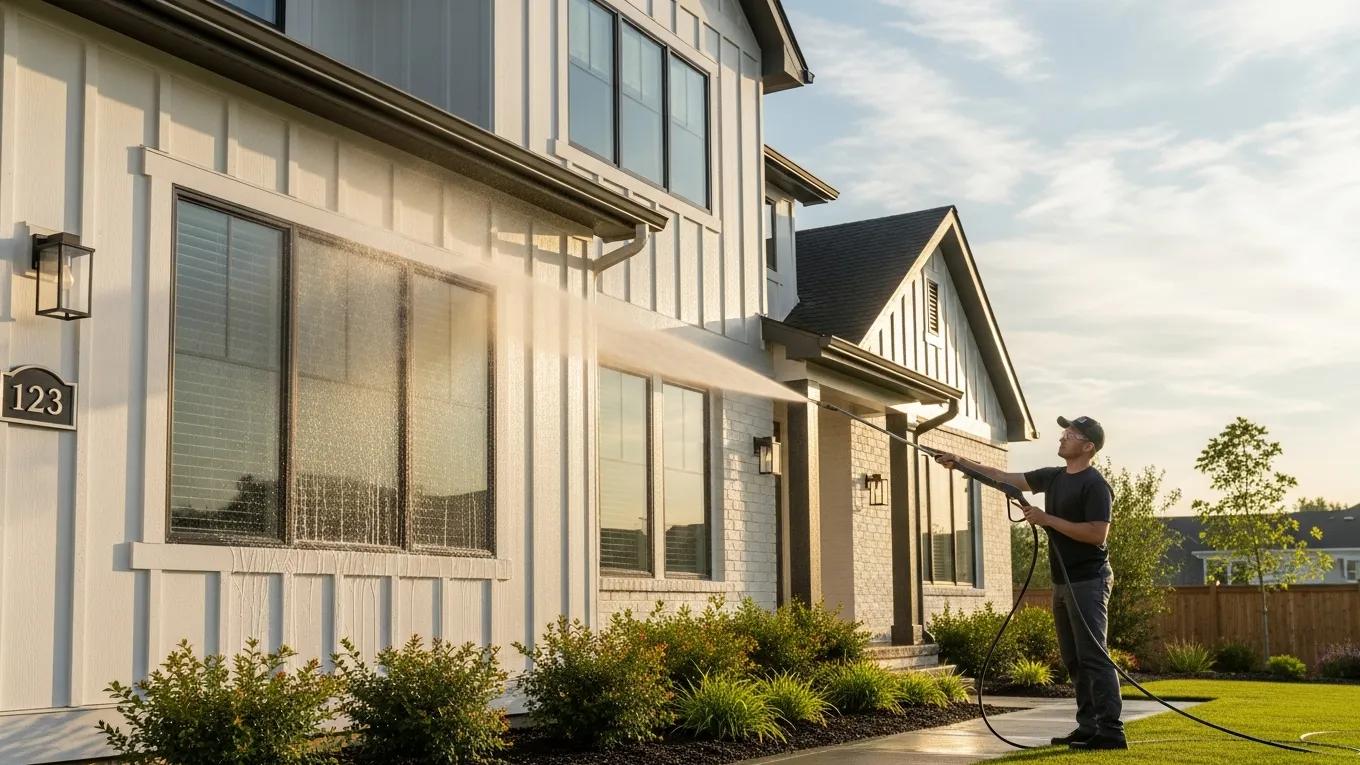
Consumer pressure washing equipment is available at every DFW hardware store and equipment rental center — and the accessibility of this equipment leads many homeowners to attempt pressure washing projects without fully understanding the risks that high-pressure water creates. Professional pressure washing operators develop skill and safety awareness through experience that the homeowner renting equipment for a Saturday project doesn't have.
This isn't a case against DIY pressure washing for every application — straightforward concrete cleaning with appropriate equipment and technique is achievable for careful homeowners. It's a case for understanding specifically what the risks are so they can be managed rather than discovered after an injury or surface damage.
The Physical Injury Risks
Injection injuries from direct contact:
The most serious injury risk from pressure washing is injection injury — high-pressure water that contacts skin at close range doesn't just cause bruising or cuts. At 2,000 PSI and above, water penetrates skin and introduces contaminants directly into tissue. Injection injuries from pressure washers are medical emergencies that are frequently underestimated because the external wound looks minor while significant internal contamination has occurred.
The standard safety distance for any body part from a pressure washing nozzle is the pressure washer's recommended standoff distance for the surface being cleaned — never in the direct spray path at close range. This applies to hands, feet, and legs — the body parts most commonly injured in DIY pressure washing accidents when the wand slips or the homeowner braces against a surface they're cleaning.
Laceration risk from nozzle angle:
Even at distances where injection injury risk is reduced, high-pressure water at close range can cause lacerations from the mechanical force of water impact. Standard safety equipment for pressure washing includes closed-toe shoes and appropriate clothing that keeps skin covered rather than working in sandals and shorts as many DFW homeowners do when attempting casual exterior cleaning.
Ladder and elevation risks:
Pressure washing from ladders — reaching rooflines, second-story siding, or elevated surfaces — adds ladder safety risks to pressure washing equipment risks. The reaction force from high-pressure water creates unexpected motion that ladder-mounted operators don't anticipate. Professional operations use extension wands and appropriate equipment for elevated surfaces rather than combining ladder risk with pressure washer operation.
Surface Damage Risks From Incorrect Technique
Window and glass damage:
High-pressure water directed at window glass or glass patio doors can break the glass — particularly older or single-pane windows. Pressure washing near glass requires specific technique that keeps spray away from direct window face contact.
Electrical hazard from water intrusion:
Water intrusion into electrical outlets, light fixtures, junction boxes, or any exterior electrical component creates shock hazard and can damage electrical systems. Pressure washing near exterior electrical components requires care about water direction and pressure that prevents intrusion at these points.
Wood surface damage:
Incorrect pressure settings on wood surfaces — using concrete-appropriate PSI on fence boards, deck boards, or wood siding — raises the grain, creates surface furrows, and drives moisture deep into the wood fiber. These effects compromise both the wood's structural integrity and its ability to accept stain correctly after washing.
Paint stripping:
High-pressure water directed at painted surfaces at close range strips paint — sometimes intentionally for paint preparation purposes, and sometimes unintentionally when cleaning painted concrete, painted metal, or painted wood at settings that are appropriate for unpainted concrete but too aggressive for painted surfaces.
When Professional Service Makes More Sense Than DIY
For straightforward concrete driveway cleaning on flat, accessible surfaces without specific contamination challenges, a careful DIY operator with appropriate equipment and safety awareness can achieve adequate results. Several conditions move the calculation toward professional service:
Surface complexity: Wood fencing, siding, brick, and any surface that requires specific pressure settings different from standard concrete should be handled professionally — the risk of surface damage from incorrect settings is high when the operator lacks experience with the specific surface.
Specific contamination: Oil staining, biological growth on siding, efflorescence, and any contamination that requires specific chemical pre-treatment for effective removal benefits from professional service that knows which products to use and how to sequence them correctly.
Elevated surfaces: Any surface that requires ladder work or extended wand reach that puts the operator in an unstable position is better handled by professional operators with appropriate equipment for elevated work.
Scale: Full exterior cleaning that includes siding, concrete, and fence across a full property is a multiple-hour professional undertaking — the time and effort of DIY execution, combined with the risk of surface damage on any of the multiple surface types, typically makes professional service the better value when full-property cleaning is the goal.

DFW Pressure Washing & Fence Staining LLC provides professional residential and commercial pressure washing throughout the Dallas-Fort Worth area — including Kennedale, Arlington, Mansfield, Fort Worth, Grand Prairie, and surrounding communities. Every service uses professional equipment, surface-appropriate technique and pressure settings, and operators experienced with the specific surfaces and contamination conditions of DFW properties.
Get Your Free Estimate → dfwpressurewashing.net/contact-us
DFW Pressure Washing & Fence Staining LLC


