Blog
Pressure Washing, Staining, and Sealing: The DFW Homeowner's Frequently Asked Questions
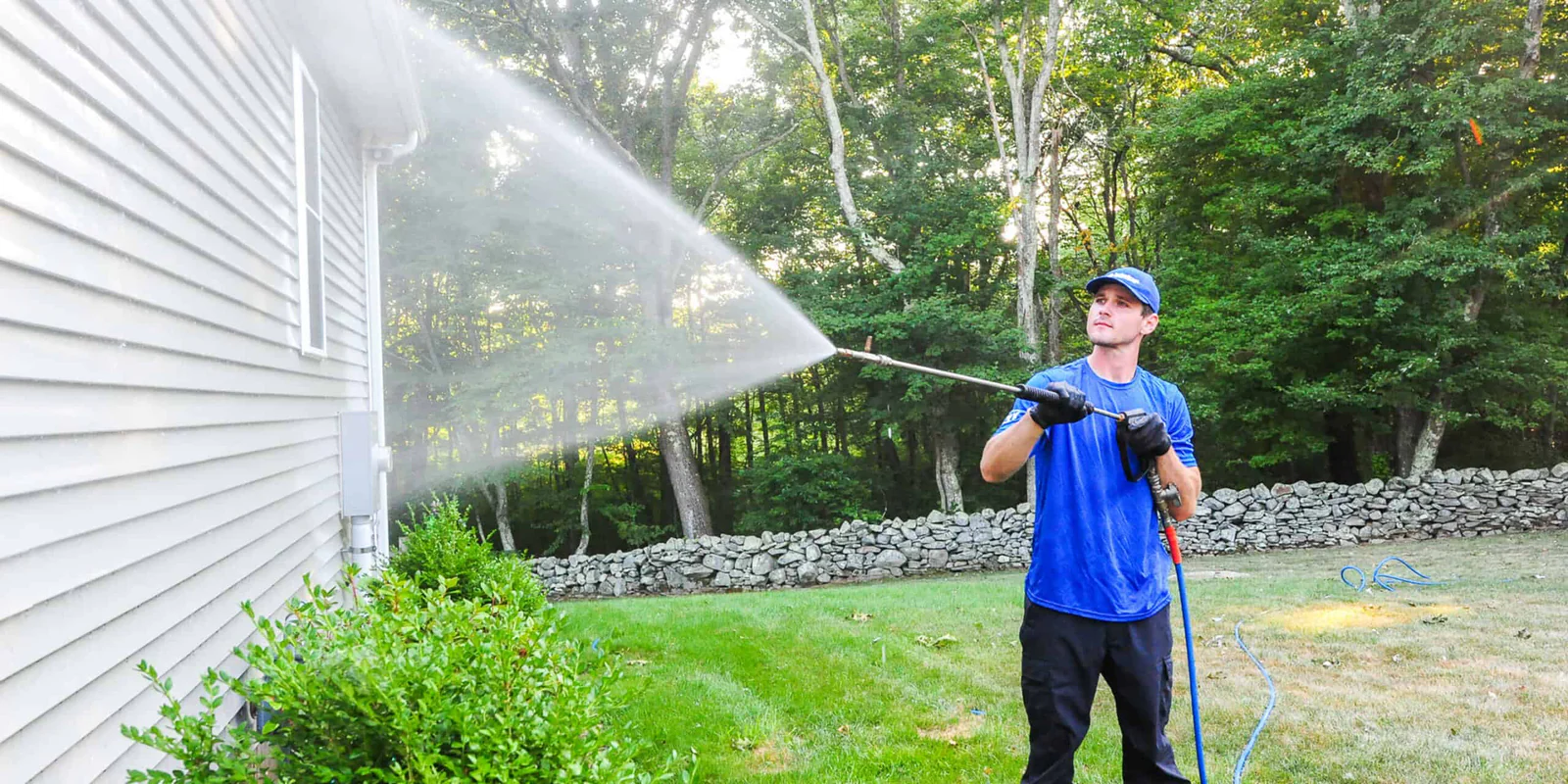
Across hundreds of service visits and thousands of property assessments throughout the Dallas-Fort Worth area, the same questions come up consistently — from first-time customers who have never hired a pressure washing company to longtime homeowners who have been maintaining their properties for years and want to understand something specific. This FAQ compiles the most common and most useful questions with direct, complete answers.
Pressure Washing Questions
How often should I pressure wash my DFW driveway?
Annual spring pressure washing is the right baseline for most DFW residential driveways — it addresses the biological growth established during the winter wet season, the pollen accumulation from spring season, and the atmospheric deposits that built up through the previous year. For driveways under heavy tree canopy or in irrigation spray paths that accelerate accumulation, semi-annual cleaning is appropriate. For standard driveways with modest contamination exposure, annual cleaning is sufficient.
Can I pressure wash my own driveway with a rented unit?
For standard concrete driveways with moderate contamination, a careful DIYer with appropriate technique can get adequate results. The primary risks are using incorrect pressure settings that damage the surface, skipping the biocidal and degreaser pre-treatments that address specific contamination types, and not knowing when the surface is ready for the sealing that should follow. For anything more complicated than a straightforward driveway — wood fencing, siding, decorative concrete, or surfaces with significant contamination — professional service consistently delivers better results.
What's the difference between pressure washing and soft washing?
Pressure washing uses high-pressure water — 1,500 to 4,000 PSI depending on the surface — to physically remove contamination. Soft washing uses low-pressure water — typically under 500 PSI — combined with professional cleaning solutions that kill biological growth chemically rather than blasting it off physically. Pressure washing is appropriate for dense, hard surfaces like concrete. Soft washing is appropriate for siding, stucco, wood, and any surface where high pressure would cause damage or force water into wall cavities.
Will pressure washing damage my fence?
Pressure washing at incorrect settings for wood surfaces can damage fence boards — raising the grain, creating surface furrows, and driving excessive moisture into the wood. Professional fence pressure washing uses settings appropriate for wood — typically under 1,500 PSI with wide-angle nozzle — that clean effectively without causing damage. The PSI that's appropriate for concrete is not appropriate for wood.
How long does pressure washing take for a standard DFW home?
Driveway-only pressure washing for a standard residential driveway typically takes one to two hours. A full exterior service covering driveway, patio, walkways, and fence takes three to five hours depending on property size and surface conditions. Services that include siding soft washing extend the timeline proportionally.
How soon after pressure washing can I walk on or drive on the surface?
For pressure washing without sealing, foot traffic can return within a few hours once the surface is dry to the touch. Vehicle traffic can typically return within a few hours as well — though avoiding unnecessary traffic while the surface is still wet is good practice. For services that include concrete sealing after pressure washing, the cure time before vehicle traffic is 24 to 72 hours depending on the sealer product.
Is pressure washing safe around my landscaping?
Professional pressure washing uses cleaning solutions that can affect plants if they contact foliage in concentrated form. Professional crews pre-wet landscaping adjacent to cleaned areas before applying cleaning solution, keep solution diluted appropriately, and rinse adjacent landscaping after cleaning to remove any residual product. For particularly sensitive plantings, informing the crew before service starts ensures they take specific precautions around those areas.
Fence Staining Questions
How long does fence staining last in DFW?
Professional staining with quality oil-based products in the DFW climate typically lasts two to three years before the protection has depleted enough to warrant restaining. South and west-facing sections in direct afternoon sun deplete closer to two years. Shaded sections with less UV exposure may hold closer to three years. The water bead test — water soaking into the wood surface rather than beading — is the most reliable indicator of when restaining is due rather than a fixed calendar date.
What's the best time of year to stain a fence in DFW?
Spring — March through May — is the primary ideal window. Temperatures are in the optimal 60°F to 85°F range, humidity is manageable, and getting the fence stained before summer's high UV season means the fence enters the most aggressive UV period with full protection. Fall — September through November — is the second ideal window for fences that weren't stained in spring. Summer staining is possible but requires early morning application to avoid surface temperatures that prevent proper penetration.
Can I stain my fence myself?
Small fence sections and simple single gates are reasonable DIY candidates if prep is done correctly. For full residential fence lines, DIY staining consistently delivers shorter-lasting results than professional application — primarily because prep shortcuts (rushing the drying period, skipping biocidal pre-treatment) and application limitations (inconsistent coverage in overlap zones and on end grain) produce stain applications that don't penetrate to the depth professional application achieves. The cost difference between DIY and professional often narrows significantly when the shorter DIY stain cycle is factored into a multi-year comparison.
What stain product does DFW Pressure Washing & Fence Staining LLC use?
Wood Defender oil-based stain formulated specifically for Texas climate conditions. Available in transparent and semi-transparent formulations across a range of colors. The oil base, UV inhibitor content, and penetration chemistry are specifically appropriate for DFW's UV intensity, moisture cycling, and temperature extremes.
My fence is already gray — is it too late to stain it?
Gray coloring indicates UV damage to the surface lignin layer but doesn't necessarily mean the fence is beyond restoration. Professional pressure washing at appropriate settings removes the gray weathered surface layer and exposes the sound wood fiber beneath — and staining can then penetrate correctly into that sound substrate. The timeline matters: a fence that's been gray for one or two seasons is typically fully restorable. A fence that's been gray for five or more years may have developed soft spots and structural deterioration that require board replacement before staining is appropriate.
How long should I wait before staining a new cedar fence?
Three to six months. New cedar needs time to dry to below 15 percent moisture content before oil-based stain can penetrate correctly. The water bead test confirms readiness — if water soaks into the surface rather than beading, the wood is dry enough for staining. Staining before the wood is ready produces surface-level coverage that fails prematurely.
Does stain color affect protection?
Protection level is determined by the product formulation — UV inhibitor content, oil base quality, and penetration chemistry — not by color. Within the same product line, a dark walnut and a light cedar tone provide equivalent protection. Color does affect how visible fading is as the stain cycle progresses (darker colors show fade more dramatically), and color affects heat absorption on sun-exposed sections (darker colors absorb more UV and generate more surface heat). Semi-transparent stains provide better UV protection for the wood than transparent stains because the pigment blocks more UV before it reaches the wood surface.
My fence has been painted — can I stain it?
No — stain can't penetrate through paint. Oil-based stain works by soaking into wood fiber, and paint creates a surface film that blocks access to the wood. To transition from paint to stain, the paint must be fully stripped first — through pressure washing, chemical stripping, or mechanical removal — to expose bare wood. After stripping, the fence can be stained correctly. The stripping process is more labor-intensive than restaining a previously stained fence, but it puts the fence on the staining maintenance cycle that performs better in DFW conditions.
Concrete Sealing Questions
Does my concrete driveway need to be sealed?
In the DFW climate, sealing residential concrete driveways is one of the most cost-effective maintenance investments available. DFW's UV intensity, seasonal moisture cycling, biological growth conditions, vehicle fluid exposure, and winter freeze-thaw events all cause progressive deterioration in unsealed concrete that sealing substantially slows. Sealed driveways stay cleaner, resist staining better, and maintain surface integrity significantly longer than unsealed driveways in the same conditions.
How often should concrete be resealed?
The standard two to three year cycle applies to most DFW residential driveways — confirmed by the annual water bead test rather than by calendar date alone. High-traffic driveways with three or more vehicles, significant irrigation exposure, or oil drip history may deplete closer to 18 months. Lower-traffic driveways in shade with less contamination exposure may hold closer to three years.
What's the difference between penetrating and topical sealers?
Penetrating sealers soak into the concrete's pore structure and create a hydrophobic barrier inside the material. They don't change the appearance of concrete and provide strong moisture and oil resistance without a surface film that traffic wears through. Appropriate for standard residential driveways, walkways, and any surface where protection without appearance change is the goal.
Topical sealers form a protective film on the concrete surface. They provide surface protection plus appearance enhancement — color enrichment and sheen options. Appropriate for decorative and stamped concrete where color enhancement is desired. Require more frequent resealing because the surface film is subject to traffic wear.
Can I seal my own driveway?
For straightforward standard concrete driveways with penetrating sealer, a careful DIYer can get adequate results. The most common failure modes are rushing the drying period (sealing over moisture that causes clouding and bubbling), skipping contamination pre-treatment (sealing over oil deposits that compromise adhesion), and applying in incorrect conditions (high surface temperature from afternoon sun). Professional service is more consistently appropriate for decorative concrete, pool decks requiring anti-slip specification, heavily contaminated surfaces, and any surface where appearance quality matters beyond basic protection.
Why did my concrete sealer cloud and bubble after application?
Clouding and bubbling after sealer application almost always indicates moisture-related adhesion failure — the sealer was applied over concrete that contained more moisture than the product could accommodate. This happens when concrete isn't given adequate drying time after pressure washing, when ambient humidity during application was too high, or when new concrete hadn't fully cured before sealing. The failure is typically permanent — the hazy or bubbled film doesn't clear as it continues to cure. Correction requires stripping the failed sealer and reapplying after proper preparation.
Can I seal concrete in summer in DFW?
Yes, but with specific precautions. Most concrete sealers specify maximum surface temperature for application — typically 90°F. In DFW summer, concrete in direct afternoon sun regularly exceeds this. Summer sealing should be scheduled for early morning before surface temperatures peak, and direct sun exposure should be confirmed as minimal before application begins. Spring and fall provide more consistently appropriate application conditions and are the preferred sealing windows.
Do pavers need to be sealed differently than standard concrete?
Yes — pavers have specific sealing requirements that differ from standard monolithic concrete. Joint-stabilizing sealers that bind the sand between pavers while providing surface protection are the appropriate product type for most DFW residential paver applications. Joint sand levels must be assessed and replenished before sealing if depleted. Application technique needs to account for the textured surface of pavers to ensure coverage in the texture and grout lines rather than only on the high points.
Service and Scheduling Questions
How far in advance should I schedule services?
During peak spring season — March through June — quality DFW exterior maintenance contractors have queues of three to six weeks. Scheduling spring services as early as February or March ensures the work happens at the optimal seasonal timing rather than being pushed into summer by queue delays. Fall services typically have shorter queues of one to three weeks. For urgent situations — storm damage, pre-listing preparation — communicating urgency at first contact sometimes allows earlier scheduling.
Can pressure washing, staining, and sealing all be done in one visit?
Not in a single day — the drying time between pressure washing and staining or sealing (24 to 48 hours in standard DFW conditions) means at least two visits are required for a combined service. But the most efficient approach is to schedule pressure washing and then return for staining and sealing after the appropriate drying period — treating the combined project as a single coordinated service that spans two to three days rather than as two separately scheduled services.
What should I do before the crew arrives?
Move vehicles from areas being cleaned. Remove outdoor furniture, grills, and potted plants from surfaces being washed. Close windows and doors on the side of the house being worked on. Keep pets inside. Disable irrigation systems for the service day and the following 24 to 48 hours. Participate in the arrival walkthrough to point out specific concerns and confirm scope.
Does DFW Pressure Washing & Fence Staining LLC handle commercial properties?
Yes — we provide pressure washing, soft washing, concrete sealing, wood staining, and fence installation for commercial properties throughout the DFW area. Commercial projects include appropriate scheduling flexibility around business operations, commercial-grade equipment for larger surface areas, and service documentation for commercial property maintenance records.
What warranty is provided on staining work?
Every wood staining project is backed by a three-year limited warranty that covers premature adhesion failure and unexpected color failure that occurs significantly before the expected service life. Normal stain fading through the two to three year cycle, pre-existing wood conditions, physical damage from storm events, and fence modifications after staining are not warranty defects. Written warranty terms are provided at project completion.
DFW Pressure Washing & Fence Staining LLC
DFW Pressure Washing & Fence Staining LLC provides pressure washing, soft washing, wood staining, concrete sealing, and fence installation throughout the Dallas-Fort Worth area — including Kennedale, Arlington, Mansfield, Fort Worth, Grand Prairie, and surrounding communities.
Every service starts with an on-site assessment, uses appropriate products and technique for each specific surface, and is backed by the warranty and service standards that have built our reputation throughout the DFW Metroplex.

Have a question about your DFW property's exterior surfaces that wasn't answered here? DFW Pressure Washing & Fence Staining LLC provides free property assessments that answer every surface-specific question for your specific conditions — so you get the information you need to make confident maintenance decisions before any work is scheduled.
Get Your Free Estimate → dfwpressurewashing.net/contact-us
DFW Pressure Washing & Fence Staining LLC


