Blog
Steel Panel Fence Installation in DFW: What This Modern Option Delivers and What Installation Requires
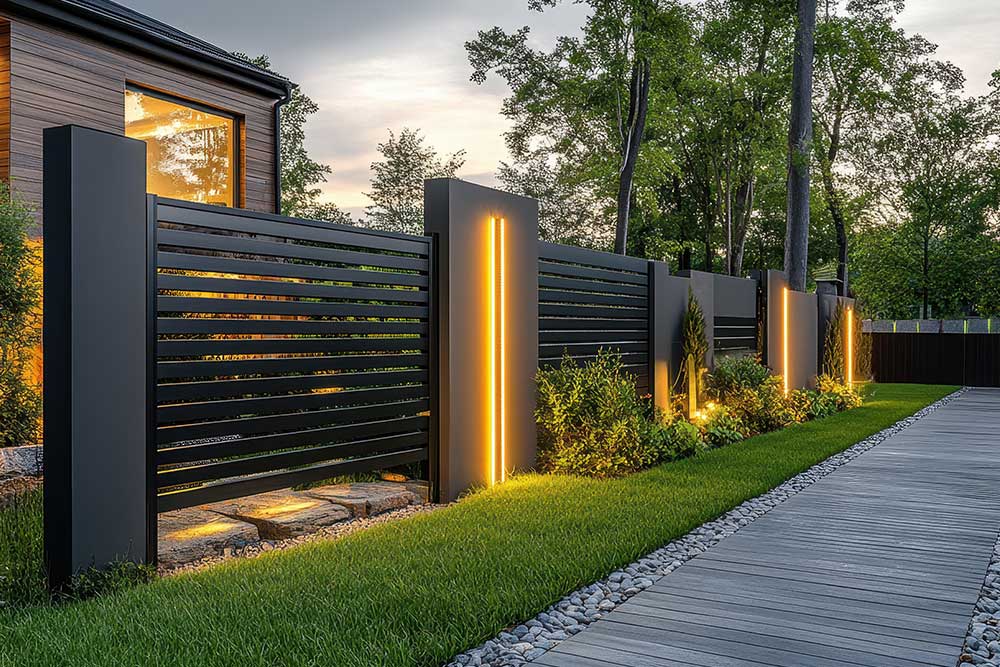
Steel panel fencing has moved from a niche commercial product to one of the most frequently requested residential fence materials in the Dallas-Fort Worth market over the past five to seven years. The combination of contemporary aesthetic, minimal maintenance, and genuine durability has driven adoption across DFW's growing new construction market and into established neighborhood renovation projects where homeowners are replacing aging wood fences with something that won't require staining every two to three years.
The appeal is real. Steel panel fencing in DFW conditions delivers on its promises when it's installed correctly with appropriate material specifications. It fails to deliver — and fails structurally — when it's installed with the shortcuts that budget contractors apply to this newer material category that some DFW fence installers aren't yet fully experienced with.
Here's what quality steel panel fence installation in DFW actually involves, what the material specifications mean for long-term performance, and what separates a well-installed steel panel fence from one that creates problems within a few seasons.
What Steel Panel Fencing Actually Is
Steel panel fencing uses pre-fabricated panels of corrugated, ribbed, or flat steel — typically 14 to 18 gauge galvanized steel with factory powder coat finish — set in a steel post and rail framework to create a privacy fence system. The panels are the same material used in commercial metal building construction and agricultural applications, adapted for residential fence use with residential-appropriate dimensions and powder coat color options.
The key material characteristics that define steel panel fencing performance:
Gauge: Lower numbers indicate thicker steel. 14 gauge steel panel is significantly thicker and stiffer than 18 gauge. The difference in panel rigidity and dent resistance between 14 and 18 gauge is meaningful for residential fence applications where the panel needs to maintain its profile over years of wind loading and incidental contact. Budget steel panel installations often use 18 gauge panels where 14 gauge would be appropriate — the cost difference is real but the performance difference is substantial.
Galvanization: Steel panel's rust resistance depends on the galvanized zinc coating applied before powder coating. Hot-dipped galvanized steel — where panels are dipped in molten zinc to create a thick, metallurgically bonded zinc layer — provides significantly better corrosion resistance than electro-galvanized steel — where zinc is applied through an electrical process that creates a thinner, less durable coating.
In DFW's seasonal moisture — particularly for fences in irrigation spray paths or pool-adjacent locations — the galvanization quality determines how well the steel resists rust at cut edges, fastener holes, and any areas where the powder coat has been compromised. Hot-dipped galvanized steel in DFW conditions maintains corrosion resistance at these vulnerable points significantly longer than electro-galvanized alternatives.
Powder coat quality: Factory powder coat on steel panel fencing is the UV and corrosion barrier that maintains appearance and protects the steel below it. UV-stabilized powder coat formulations specifically designed for exterior fence applications provide better color retention under DFW's intense UV than standard powder coat applied to achieve a color specification rather than exterior durability.
Post and Framework Specifications for Steel Panel in DFW
Steel panel fence installation uses a steel post and rail framework rather than wood posts — the panel attachment and the structural framework are both steel, creating a uniform material system without the wood-to-metal transition that some alternative installation approaches create.
Steel post sizing for DFW conditions:
Standard residential steel panel fence installations use 4x4 inch or 3x3 inch square steel posts. For standard privacy fence heights — six feet — 3x3 posts with appropriate wall thickness are adequate for line post applications in standard conditions. For taller installations — eight feet and above — or for gate posts carrying significant gate loads, 4x4 posts provide the additional structural capacity that height and load increase requires.
Post wall thickness — the thickness of the steel tube making up the post — is as important as outside dimension. Thin-wall posts that meet minimum dimensional requirements but have inadequate wall thickness are structurally weaker than the same dimension posts with appropriate wall thickness. Confirming post wall thickness as part of material specification is worth the specific inquiry before accepting a steel panel fence quote.
Post depth for DFW clay soil:
Steel panel fence posts face the same DFW clay soil conditions as wood fence posts — and require the same depth specification that clay conditions demand. 36 inches minimum for line posts, 42 to 48 inches for gate posts, is the appropriate depth specification for DFW clay regardless of whether the post material is wood or steel.
Budget steel panel installations in DFW sometimes set posts at 24 to 30 inches — adequate for stable soil conditions but insufficient for DFW's expansive clay that exerts the lateral force described throughout this series. Steel posts in shallow footings in DFW clay show the same progressive leaning that shallow wood posts show — the material is steel but the soil conditions are identical.
Concrete footing specifications:
Steel fence posts are set in concrete footings the same way wood posts are — the post is placed in the hole, positioned and leveled, and concrete is poured around it to anchor it in place. The footing diameter and depth should be appropriate for the steel post dimension and the DFW clay conditions — at minimum 10 to 12 inches in diameter for line posts, larger for gate posts.
The distinction for steel panel post footings compared to wood post footings is that concrete should be kept below the finished grade at the post base — not extending to grade level as many standard footing pours do. Steel post bases that are surrounded by concrete to finished grade create a moisture trap at the post-to-concrete transition that accelerates rust development at the post base even on galvanized steel. Leaving 2 to 3 inches of the post base above the concrete surface with gravel backfill to grade allows drainage that reduces moisture concentration at the most vulnerable rust initiation point.
Panel Installation: What Correct Looks Like
Steel panel attachment to the post and rail framework involves specific technique that determines how well the panels maintain their position and appearance over time.
Rail attachment to posts:
Horizontal rails — typically U-channel or tube steel — attach to the vertical posts either through welded brackets, bolted connections, or insertion into post slots. Welded connections are the most rigid and most durable but require field welding capability that not all fence contractors have. Bolted connections provide strong attachment when appropriate hardware is used — bolts should be stainless steel or hot-dipped galvanized to match the corrosion resistance specification of the rest of the system.
Panel attachment to rails:
Panels attach to the rail framework through screws, clips, or channel insertion depending on the specific panel profile and rail design. Fastener material is critical for steel panel fence longevity — standard zinc-plated screws in steel panel fencing corrode within a few DFW wet seasons, and rust from corroding fasteners runs down the panel face creating the orange streaking that makes relatively new steel panel fences look deteriorated. Stainless steel fasteners eliminate this failure mode and are the appropriate specification for all panel-to-rail attachments.
Panel cutting and edge treatment:
Steel panels are often cut to length on-site to fit specific fence run dimensions. Cut edges expose raw steel that was protected by the factory coating — without edge treatment, cut edges in DFW's moisture environment begin developing rust within months of installation. Proper installation applies zinc-rich primer or cold galvanizing compound to cut edges before installation — sealing the exposed steel against the corrosion that bare cut edges develop.
This edge treatment step is one of the most commonly skipped in budget installations and one of the most consequential for long-term appearance. Rust that develops at cut edges doesn't stay at the edge — it runs down the panel face and stains the surrounding powder coat surface, creating the deteriorated appearance that makes a steel panel fence look old before its time.
Gate Installation for Steel Panel Fence Systems
Steel panel fence gates use the same steel framework as the fence, with gate-specific hardware considerations.
Gate frame construction:
Steel panel gates use welded steel tube frames with steel panel infill — the frame provides the structural rigidity that prevents gate racking, and the panel provides the visual continuity with the fence line. Frame tube wall thickness is important for gates — thin-wall tube frames on wider gates flex enough to allow the racking that causes gate alignment problems.
Gate weight and hardware:
Steel panel gates are significantly heavier than comparable vinyl or aluminum gates — a six-foot-tall, four-foot-wide steel panel gate weighs substantially more than the same dimension in other materials. Gate hinges must be rated for actual steel gate weight — undersized hinges on heavy steel gates are the direct cause of the sagging and misalignment that affects poorly specified steel panel installations.
Steel-to-steel hinge connections for steel panel gates should use stainless steel or hot-dipped galvanized hardware — the same corrosion resistance specification as the rest of the system. Standard zinc-plated gate hinges on a galvanized steel panel gate system create galvanic corrosion potential at the hardware connection points that accelerates deterioration at these load-critical locations.
Automated operators for steel panel gates:
Steel panel gates are heavy enough that manual operation of large drive gates becomes burdensome — automated gate operators are more commonly specified for steel panel drive gate installations than for lighter fence materials. As covered in the automated gate blog in this series, operator selection must be rated for the actual gate weight — residential operators rated for light aluminum gates are not appropriate for heavy steel panel gates.
Powder Coat Touch-Up: The Ongoing Maintenance Requirement
Steel panel fencing's primary ongoing maintenance requirement is monitoring and touching up the powder coat at any locations where the finish has been compromised — chips, scratches, and any penetrations that expose the underlying steel.
The powder coat is the primary barrier between the steel and the moisture that causes rust. Any break in the powder coat is a rust initiation point. Small chips and scratches left untreated in DFW's moisture cycle develop surface rust that spreads laterally under the adjacent powder coat — eventually lifting and flaking the surrounding coating and creating progressively larger rust patches from what started as a small chip.
Annual inspection of the full fence surface — looking specifically at cut edges, fastener locations, and any areas of potential impact damage — identifies touch-up locations while they're still small and easily addressed. Touch-up paint application using zinc-rich primer followed by color-matched powder coat touch-up paint seals exposed steel before rust development progresses.
This maintenance requirement is genuinely modest compared to wood fence staining — annual inspection and periodic touch-up rather than full staining cycles — but it's not zero maintenance. Homeowners who expect completely zero maintenance from steel panel fencing and never inspect or touch up the coating will eventually discover rust development at compromised areas.
HOA Considerations for Steel Panel Fencing in DFW
Steel panel fencing's HOA approval situation in DFW neighborhoods has improved significantly as the material has gained market presence — more HOA communities have updated their guidelines to include steel panel as an approved material than was the case five years ago. But a meaningful number of established DFW communities still have fence guidelines that were written before steel panel residential fencing became common, and these communities may not explicitly approve the material.
Confirming HOA approval status for steel panel specifically — not just for metal fencing generally — before committing to installation is the appropriate step. HOA approval for wrought iron doesn't necessarily extend to steel panel, and the visual character of these materials is different enough that some HOAs treat them as distinct categories.
Professional Steel Panel Fence Installation Across the DFW Metroplex
DFW Pressure Washing & Fence Staining LLC installs steel panel fencing throughout the Dallas-Fort Worth area — including Kennedale, Arlington, Mansfield, Fort Worth, Grand Prairie, and surrounding communities.
Every steel panel installation specifies panel gauge appropriate for the application, hot-dipped galvanized substrate, UV-stabilized powder coat, post depth appropriate for DFW clay conditions, stainless steel fasteners throughout, cut edge treatment on all field-cut panel sections, and gate hardware rated for actual steel gate weight.

Want to make sure your DFW steel panel fence installation uses the material specifications and installation technique that delivers the durability and low-maintenance performance steel panel fencing promises — rather than the budget shortcuts that produce rust, misalignment, and premature deterioration? DFW Pressure Washing & Fence Staining LLC installs steel panel fencing with the specifications that North Texas conditions require.
Get Your Free Estimate → dfwpressurewashing.net/contact-us
DFW Pressure Washing & Fence Staining LLC


