Blog
The Real Difference Between Cheap and Quality Fence Staining in DFW
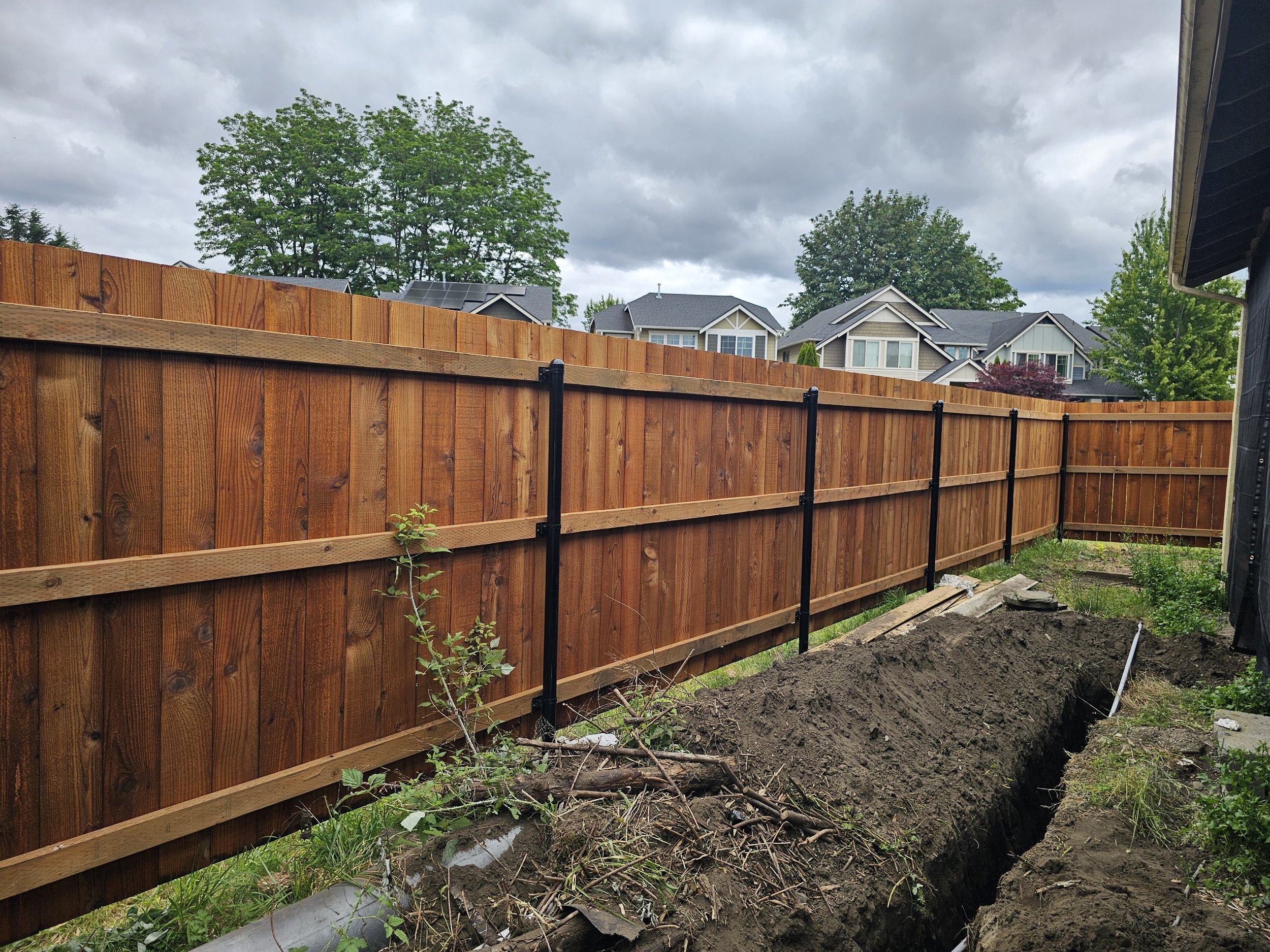
Every spring and fall across the Dallas-Fort Worth area, DFW homeowners get fence staining quotes that range from surprisingly affordable to significantly more than they expected — sometimes for what appears to be the same service. A fence. Some stain. A crew with sprayers. How different can the results really be?
The answer, consistently and predictably, is very different. The gap between a quality fence staining job and a cheap one isn't just visible in the finished appearance — it shows up in how long the stain lasts, how well it protects the wood, and whether the homeowner is calling for a redo within a season or getting the full two to three years of protection a professional staining job should deliver.
Understanding what actually separates quality fence staining from cheap fence staining in the DFW market helps homeowners make better decisions when evaluating quotes — not by always choosing the most expensive option, but by knowing what questions to ask and what answers indicate a company that will deliver results worth paying for.
The Price Difference Is Real — and So Is What Drives It
Before getting into the specific differences between quality and cheap fence staining, it's worth establishing that price variation in the DFW fence staining market reflects real differences in what's being delivered — not just markup variation or contractor profit margins.
The cost of a fence staining job is driven by labor time, product cost, and the scope of prep work included. A company that charges significantly less than competitors is almost always cutting one or more of these elements — less labor time means rushed prep or skipped steps, lower product cost means lower-grade stain that performs worse in the DFW climate, and reduced prep scope means the stain goes down on a surface that isn't properly ready to receive it.
None of these cuts are visible on the day the job is completed. A rushed, under-prepped, low-product staining job often looks similar to a quality job immediately after application. The difference emerges over the following weeks and months as the stain that didn't fully penetrate begins to fail, the mildew that wasn't killed during prep begins to grow back through the stain film, and the color that looked consistent on application day becomes uneven as sections with inadequate coverage wear faster than sections with proper penetration.
Prep Work: Where Quality Staining Jobs Are Won or Lost
The single most significant factor that separates quality fence staining from cheap fence staining in the DFW area is prep work — specifically, how thoroughly the fence is cleaned and prepared before any stain is applied.
What quality prep looks like:
A quality fence staining service starts with a thorough pressure washing that removes all surface contamination — dirt, mildew, algae, weathered gray surface layer, pollen residue, and any loose material from the previous stain application. The pressure washing is done at the correct PSI for wood — sufficient to clean effectively without raising the grain or driving excessive moisture into the wood fiber.
After pressure washing, the fence receives adequate drying time — typically 24 to 48 hours in DFW conditions — before any stain is applied. Professional contractors use moisture meters to verify the wood has reached appropriate moisture levels rather than making a visual judgment that can be wrong.
Any mildew or biological growth identified during cleaning is treated with appropriate biocidal solution to kill the growth at the root level — not just remove the visible surface layer. Staining over living mildew is one of the most common causes of premature staining failure because the mildew continues to grow and pushes the stain film off the wood surface from underneath.
What cheap prep looks like:
Budget fence staining operations cut prep in predictable ways. The most common is skipping or rushing the pressure washing — either applying stain over a surface that was only lightly rinsed rather than thoroughly cleaned, or skipping directly to staining without any cleaning at all on fences that look reasonably clean from a distance.
Another common cheap prep shortcut is skipping the drying period. A crew that pressure washes in the morning and stains in the afternoon on the same day isn't giving the wood the drying time it needs — the stain is being applied over wood that's still holding significant moisture from the wash, which prevents proper penetration and produces the adhesion failures that show up as peeling and flaking within a season.
Skipping biological growth treatment is the third common cheap prep shortcut. It's faster to skip the biocidal pre-treatment and just rely on the pressure wash to remove visible mildew. The result is staining over living growth that continues to develop under the stain — creating the bubbling and stain failure that homeowners notice within the first DFW spring after the work was done.
Product Quality: What Goes on the Wood Matters as Much as How It Goes On
The stain product itself is the second major factor separating quality from cheap fence staining results in North Texas. Not all fence stains perform equally in the DFW climate, and the products available at a consumer hardware store are not the same as the professional-grade products used by quality staining companies.
What quality products deliver:
Professional-grade oil-based penetrating stains — like Wood Defender, which DFW Pressure Washing & Fence Staining LLC uses on every project — are specifically formulated for the demands of Texas climate conditions. They penetrate deeply into wood fiber rather than forming a surface film, provide strong UV blocking appropriate for DFW's intense sun exposure, and are engineered to handle the moisture cycle that North Texas delivers across seasons.
The penetration depth of professional-grade stains is the most important performance characteristic in the DFW climate. A stain that penetrates two to three millimeters into the wood fiber is protected from UV and moisture by the wood surface above it — it lasts significantly longer and fails more gracefully than a stain that sits on the surface and is directly exposed to everything the weather delivers.
What budget products deliver:
Lower-grade stains — the products at the accessible end of the hardware store price range — typically have lower oil content, lower UV inhibitor levels, and thinner viscosity that produces less deep penetration into wood fiber. They look similar to premium products on application day and may appear comparable for the first few months. The performance gap becomes apparent over the first DFW summer as the UV inhibitors in the lower-grade product are depleted faster than in a professional-grade formulation, and the stain begins fading and losing its protective properties significantly sooner.
Cheap staining operations that use budget products pass the product cost savings to themselves — not to the homeowner. The homeowner pays less upfront and gets a stain job that needs to be redone in one to two years rather than two to three. Over a ten-year period, the homeowner who chose cheap staining multiple times has paid more in total than the one who chose quality staining less frequently — and has a fence that's been less protected throughout.
Application Technique: The Craft Element That Budget Operations Skip
Even with quality prep and quality products, poor application technique undermines results in ways that become visible within the first season. Application technique is the craft element of fence staining that experienced crews develop over hundreds of projects — and that budget operations consistently cut short.
Even coverage across every surface:
Quality fence staining covers every part of the fence surface — between boards, the back face of boards where accessible, end grain at top and bottom edges, the areas around post connections and hardware mounting points, and the horizontal rail surfaces that are particularly vulnerable to moisture accumulation.
Budget staining operations cover the visible front face of the fence boards and call it done. The areas between boards, the end grain, and the back-accessible sections that don't see a spray pass remain unprotected — and those unprotected areas are where moisture enters, where mildew establishes, and where deterioration begins.
Correct coverage rate:
Oil-based penetrating stains have a specified coverage rate — typically measured in square feet per gallon — that delivers the film thickness required for proper protection. Applying stain at too low a coverage rate — spreading the product further than specified to reduce product cost per job — produces under-penetrated coverage that fails faster than specified because the wood didn't receive the stain volume needed for full fiber saturation.
Quality staining operations apply stain at the correct coverage rate for the specific product and surface condition. New wood absorbs more and gets more. Previously stained wood that's in good condition needs less. The application is calibrated to what the surface actually needs — not stretched to reduce product cost.
Back-brushing:
Professional staining technique often combines spray application with back-brushing — physically working the stain into the wood surface with a brush or pad after spray application to ensure penetration into the wood pores rather than just surface-level contact. Back-brushing is slower than spray-only application and adds labor time. It's a step that budget operations skip — and that quality operations include because it meaningfully improves penetration and coverage consistency.
Warranty: The Accountability Indicator
One of the clearest practical indicators of quality versus cheap fence staining in the DFW market is whether the company offers a warranty on their work.
A company confident in their prep, their products, and their application technique stands behind the results with a warranty. DFW Pressure Washing & Fence Staining LLC backs every staining project with a three-year limited warranty — because we know the prep is done correctly, the products are appropriate for the DFW climate, and the application technique delivers penetration that lasts.
A company that doesn't offer a warranty is implicitly acknowledging that they can't predict how long their results will last — which usually means they can't control the variables that determine longevity. Prep shortcuts, product variability, and inconsistent application technique produce unpredictable results that no honest company would back with a warranty.
When evaluating fence staining quotes in the DFW market, asking directly whether the company warranties their work is one of the most useful qualification questions available. The answer tells you a lot about what the company knows about its own results.
What Quality Questions to Ask When Getting Staining Quotes
For DFW homeowners getting fence staining quotes, here are the questions that distinguish quality operations from budget ones:
What does the prep process include — specifically, do you pressure wash before staining, and how long do you wait after washing before applying stain? The answer reveals whether prep is being done correctly or skipped.
What stain product do you use and why? A quality contractor knows their product and can explain why it's appropriate for the DFW climate. A budget operation may not know the product name or may use whatever was cheapest available at the supply house.
How do you handle mildew or biological growth on the fence — is there a treatment step before staining? The answer reveals whether the biological growth problem is being solved or painted over.
Do you warranty your staining work, and for how long? The answer is the clearest single indicator of confidence in results.
How do you protect surrounding areas — landscaping, concrete, and siding — during application? A professional operation has a clear answer. A budget operation may not have thought about it.
The Long-Term Math: Quality Staining Costs Less Over Time
The financial case for quality fence staining over cheap staining in DFW is straightforward when the full ownership period is considered.
A quality staining job that lasts three years costs the homeowner one staining service per three-year period — plus the ongoing value of the fence being properly protected throughout that time. A cheap staining job that lasts one season costs the homeowner a redo — either calling the same company back for warranty work they may or may not honor, or paying another contractor to redo the job correctly. Multiple cheap staining cycles across the same period cost more in total than fewer quality cycles — and leave the fence less protected throughout.
The fence itself also fares better under quality staining. Wood that's consistently well-protected by quality penetrating stain maintains structural integrity longer than wood that's been underprotected by repeated cheap staining jobs that didn't fully penetrate. The service life extension of quality staining compared to cheap staining translates into real deferred replacement cost for the fence itself.

Want to make sure your DFW fence gets a staining job that actually lasts — with proper prep, quality products, and results backed by a warranty? DFW Pressure Washing & Fence Staining LLC uses professional-grade Wood Defender oil-based stains, always starts with thorough pressure washing and correct drying time, and backs every staining project with a three-year limited warranty. We don't cut the steps that determine whether a stain job lasts.
Get Your Free Estimate → dfwpressurewashing.net/contact-us
DFW Pressure Washing & Fence Staining LLC


