Blog
What DFW Homeowners Get Wrong About Fence Installation Costs — and How to Budget Correctly
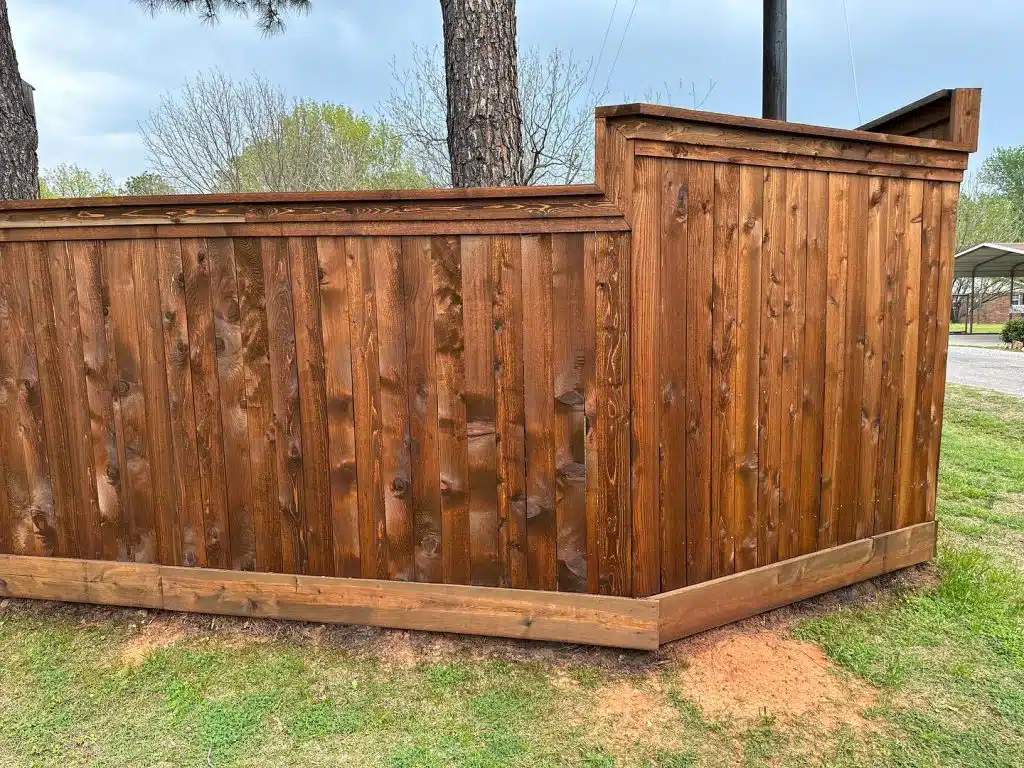
The gap between what DFW homeowners expect to pay for fence installation and what they actually pay is one of the most consistent sources of frustration in the residential fencing market. Most homeowners start with a number in their head — based on a neighbor's fence, an online estimate tool, or a price mentioned casually — and then discover during the quoting process that their budget doesn't cover what they need.
The disconnect isn't random. It traces back to consistent budgeting mistakes — costs that get overlooked, assumptions that don't hold, and the gap between a price-per-foot number and the actual total cost of a complete fence installation project. Understanding what drives fence installation cost in the DFW area, and what the commonly missed budget items are, is what separates a homeowner who gets through a project without financial surprises from one who discovers mid-project that their budget was insufficient.
Mistake One: Using Linear Foot Pricing Without Understanding What It Covers
The most common fence budgeting error starts with linear foot pricing — taking a per-foot rate and multiplying it by the fence length to get a project total. The problem isn't the math — it's what the per-foot rate typically does and doesn't include.
A quoted linear foot rate for wood privacy fencing typically covers the fence boards, rails, and posts for a standard section. What it often doesn't cover, or covers variably depending on the contractor and the quote, includes: gate installation and hardware, existing fence removal and disposal, permit fees, corner and end post upgrades, and any premium for non-standard fence heights above six feet.
When these items are added to the base linear foot cost, the project total is often significantly higher than the initial per-foot estimate suggested. Homeowners who get a linear foot quote and multiply it by their fence length — without asking what specifically that rate includes — consistently build budgets that are insufficient for the complete project.
The right approach is requesting itemized quotes that break out every project component separately — materials, labor, gates, removal, permits — rather than working from a single per-foot number and assuming everything is included.
Mistake Two: Underestimating Gate Costs
Gates are the single most underestimated cost item in DFW residential fence installation budgets. Most homeowners think of gates as a minor addition to the fence — a few boards and some hardware — rather than as significant cost items in their own right.
The reality is that gates represent meaningful cost per opening because of the specific requirements they impose. Gate posts need to be larger dimension and set deeper than standard line posts — the load from gate weight and swing requires more structural capacity than a line post carries. Gate hardware — hinges rated for the actual gate weight, latches appropriate for the security and convenience requirements, self-closing hardware for pool enclosures — costs more than standard fence hardware. And the labor to hang a gate correctly — ensuring it's level, swings freely, latches consistently, and is set on posts that can handle the long-term load — takes more time than installing a comparable section of fence.
A standard walk gate on a wood privacy fence is a meaningful cost addition per opening. A double drive gate is a significant cost addition — the wider opening, heavier panels, larger posts, and more substantial hardware add up to a line item that can represent a meaningful portion of the total project cost.
Homeowners who budget for the fence without budgeting for each gate opening specifically consistently find themselves short when the complete quote arrives. The right approach is identifying every gate opening at the estimate stage — walk gates, drive gates, and any secondary access points — and getting each priced specifically in the project quote.
Mistake Three: Not Budgeting for Existing Fence Removal
A significant percentage of DFW fence installation projects involve replacing a fence that's already there — which means removal of the existing fence is a required step before the new installation can begin. Homeowners who didn't budget for this step discover it as a cost addition when the quote arrives.
Existing fence removal involves more than pulling down boards and rails. Old posts set in concrete footings require excavation to extract — leaving old posts and footings in the ground creates interference for new post placement and affects how solidly the new posts can be set. The removed material needs to be hauled away — fence boards, rails, posts, and concrete footing debris represent a meaningful volume of waste that disposal requires.
The cost of removal and disposal varies based on the fence type being removed, how the posts are set, and site access for equipment. Heavy timber privacy fences with deep concrete footings take more labor to remove than lightweight older fences. Fences in areas with limited equipment access take more labor than those with straightforward access.
Budgeting for removal as a line item — not assuming it's included in the installation quote — prevents the surprise when the complete project scope is priced.
Mistake Four: Ignoring Permit Costs
Most DFW municipalities require a permit for fence installation. Permit fees vary by city — some municipalities charge nominal amounts for standard residential fence permits, others charge more for larger projects or in certain zoning categories. These fees are real project costs that belong in the budget.
Beyond the fee itself, the permit process has timeline implications — as discussed in previous blogs, permit processing in some DFW cities takes one to two weeks, which affects the project schedule. For homeowners who need the fence installed by a specific date, budgeting for and initiating the permit process early is a practical schedule management step as well as a cost one.
Contractors who handle permit coordination as part of their service typically incorporate permit fees into the project cost or pass them through as documented project expenses. Contractors who don't mention permits need to be asked specifically — the answer reveals both whether permits will be pulled and how the cost will be handled.
Mistake Five: Not Accounting for Terrain and Site Conditions
Standard fence installation pricing assumes reasonably flat, accessible terrain with clear fence lines. The DFW area has many residential lots where these assumptions don't hold — and the site conditions that differ from standard create cost premiums that standard pricing doesn't include.
Sloped terrain: Fence lines that run across significant grade change require either stepped or racked installation — both of which take more time and require more careful planning than flat installations. The additional labor for sloped terrain is a real cost premium that site-specific pricing should reflect.
Rocky or difficult soil: Most DFW residential lots have the clay-based soil that creates the fence post challenges discussed throughout this series. Some areas have caliche layers or other soil conditions that make post hole digging significantly more difficult — requiring specialized equipment or more labor time that increases project cost.
Limited access: Fence lines along narrow side yards, through gates, or in areas where equipment can't reach require manual post hole digging and materials handling that is more labor-intensive than standard accessible fence lines.
Tree root interference: Mature trees in established DFW neighborhoods have root systems that sometimes run through planned fence lines. Tree root interference during post hole digging requires root trimming, post relocation, or specialized digging that adds to project labor.
The estimate visit is where site conditions get identified — which is why on-site estimates from contractors who actually walk the fence line produce more accurate quotes than remote estimates that can't account for site-specific conditions.
Mistake Six: Forgetting the Follow-Up Staining Cost for Wood Fences
This cost isn't part of the installation project itself, but it belongs in the budget planning for any DFW homeowner installing a wood fence — because it's a real, near-term cost that needs to be planned for even if it's not due immediately.
New cedar fence boards need three to six months to dry before staining is appropriate. The first staining service — scheduled three to six months after installation — is a cost that belongs in the first-year fence budget even though it's a separate project from the installation. DFW homeowners who plan the installation cost without planning the first staining cost are surprised when the staining invoice arrives for what they thought was a completed project.
Including the anticipated first staining cost in the overall fence project budget — as a deferred line item that will come due in the months after installation — produces a budget that accurately reflects the full first-year cost of the fence rather than just the installation day cost.
Building a Complete DFW Fence Budget
For DFW homeowners building a realistic fence installation budget, here's what the complete budget should include as line items:
Installation: Fence boards, rails, and posts for the total linear footage at the contractor's quoted rate — with material species and dimensions specified.
Gates: Each gate opening priced individually — specifying size, style, hardware specification, and post requirements for each.
Removal and disposal: Existing fence removal, post extraction, and material disposal if an existing fence is being replaced.
Permit fees: Permit costs for the specific municipality, obtained either from the contractor's quote or directly from the city's permit office.
Site condition premiums: Any premiums identified during the estimate visit for terrain, access, soil conditions, or other site-specific factors.
First staining service (deferred): The anticipated cost of the first professional staining service, budgeted as a deferred expense due approximately six months after installation.
Contingency: A five to ten percent contingency buffer for unexpected conditions discovered during installation — utility routing adjustments, soil conditions that require modified post specifications, or scope additions identified as work proceeds.
Professional Fence Installation With Honest Pricing Across DFW
DFW Pressure Washing & Fence Staining LLC provides itemized fence installation quotes throughout the Dallas-Fort Worth area — including Kennedale, Arlington, Mansfield, Fort Worth, Grand Prairie, and surrounding communities.
Every quote addresses every line item described above — material specifications, gate pricing, removal scope, permit coordination, and site condition assessment — so homeowners have the complete cost picture before accepting any scope of work. We also coordinate follow-up staining services for wood fence installations, so the first staining appointment can be planned and scheduled at installation rather than organized separately months later.

Want a complete, itemized fence installation quote for your DFW property that covers every cost item accurately — so you can build a realistic budget before the project starts rather than discovering gaps after it does? DFW Pressure Washing & Fence Staining LLC provides detailed quotes that reflect the actual complete project cost for your specific property and fence requirements.
Get Your Free Estimate → dfwpressurewashing.net/contact-us

DFW Pressure Washing & Fence Staining LLC


