Blog
What Is Soft Washing and Why Do DFW Homeowners Need It for Their Home's Exterior?
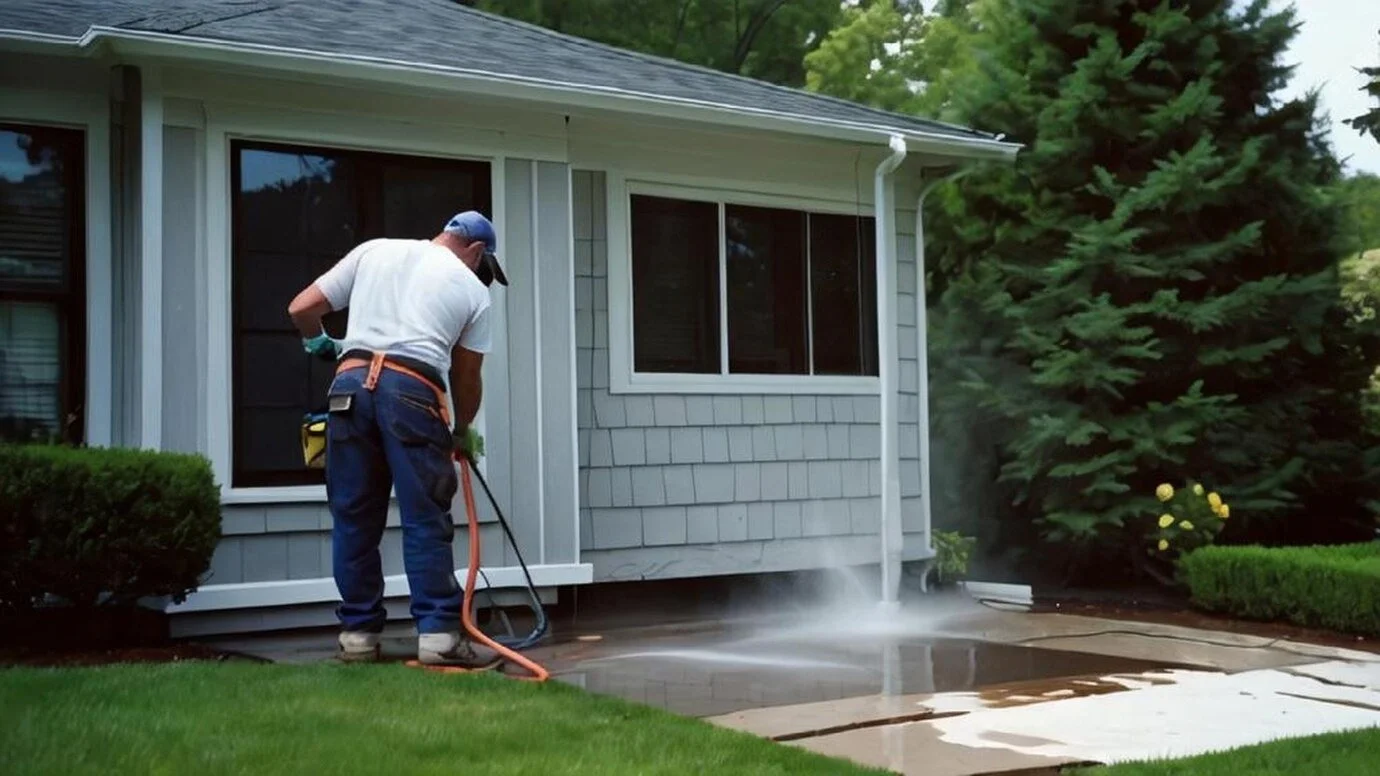
If you've noticed dark streaks on your roof, green patches creeping up your siding, or black discoloration along your home's exterior walls, you're dealing with something that a garden hose — or even a standard pressure washer — isn't going to fix properly. What you're looking at is biological growth: algae, mold, mildew, or a combination of all three. And in the Dallas-Fort Worth climate, it's one of the most common exterior maintenance issues homeowners deal with year after year.
The right solution for biological growth on home exteriors isn't high-pressure washing. It's soft washing — a lower-pressure cleaning method that uses professional-grade solutions to kill organic growth at the source rather than just blasting the visible surface. Here's everything DFW homeowners need to know about soft washing and why it's the safer, more effective choice for most exterior surfaces on your home.
What Soft Washing Actually Is
Soft washing is an exterior cleaning method that uses water at significantly lower pressure — typically under 500 PSI — combined with specially formulated cleaning solutions to remove biological growth, dirt, and staining from exterior surfaces.
The cleaning solutions used in professional soft washing are the key ingredient. They typically contain a diluted sodium hypochlorite base along with surfactants and other compounds that break down and kill algae, mold, mildew, bacteria, and lichen at the root level. Rather than relying on water pressure to physically blast contaminants off the surface, soft washing relies on chemistry to dissolve and kill the growth, with low-pressure rinsing to clear the treated surface afterward.
The result is a cleaner surface that stays cleaner longer — because the biological growth has been killed rather than just temporarily removed.
Why High-Pressure Washing Doesn't Work for Most Home Exterior Surfaces
A lot of homeowners assume that pressure washing is the universal solution for any dirty exterior surface. For hard, dense surfaces like concrete driveways and brick, high-pressure washing is the right tool. For most of the surfaces that make up a home's exterior — siding, roof shingles, stucco, painted wood, screen enclosures — it's the wrong one.
Here's the problem with using high pressure on delicate surfaces. Vinyl siding has seams and overlapping edges. High-pressure water forced against these seams drives moisture behind the panels, where it gets trapped against the wall sheathing and creates exactly the kind of damp environment that encourages mold growth inside the wall cavity. You end up solving the exterior appearance problem while creating a bigger moisture problem you can't see.
On roof shingles, high-pressure washing physically strips the granule coating that protects asphalt shingles from UV damage. Most roofing manufacturers explicitly state in their warranty documentation that pressure washing voids the shingle warranty. The Asphalt Roofing Manufacturers Association recommends low-pressure soft washing as the only acceptable cleaning method for asphalt shingle roofs.
On stucco, painted wood, and other coated or textured surfaces, excessive water pressure chips, cracks, or strips the finish — creating repair problems that are more expensive than the cleaning project that caused them.
Soft washing avoids all of these risks because the cleaning work is done by chemistry, not force. The low rinsing pressure is sufficient to clear treated surfaces without driving water into seams or damaging coatings.
What Soft Washing Treats and Where It Works Best
Soft washing is the appropriate cleaning method for a wide range of exterior surfaces that make up a typical DFW home:
Vinyl and fiber cement siding are among the most common soft washing applications. North Texas homes accumulate algae, mildew, and pollen on siding surfaces rapidly — especially on north-facing walls that receive less sun and stay damp longer after rain. Soft washing removes all of it safely without the moisture intrusion risk that comes with high-pressure cleaning.
Roof shingles are one of the highest-priority soft washing applications for DFW homeowners. The black streaking you see on roofs across the Metroplex is almost always Gloeocapsa magma — a type of algae that feeds on the limestone filler in asphalt shingles. Left untreated, it accelerates shingle degradation. Soft washing kills it completely and is the only manufacturer-approved cleaning method for asphalt shingles.
Stucco and EIFS exterior walls are highly susceptible to damage from high-pressure washing. Soft washing cleans mold and algae from stucco surfaces without cracking the finish or forcing water into hairline surface cracks.
Wood siding, trim, and fences benefit from soft washing or low-pressure cleaning that removes biological growth without raising the wood grain or driving excessive moisture into the wood — which would work against any staining or sealing treatment that follows.
Screen enclosures and lanais require gentle cleaning that soft washing handles without tearing or bending screen material.
Gutters and fascia accumulate algae streaking and oxidation that soft washing removes effectively.
The DFW Climate and Why Biological Growth Is Such a Persistent Problem
Understanding why soft washing matters so much in the Dallas-Fort Worth area starts with understanding what the local climate does to home exteriors.
DFW's combination of heat, humidity, and seasonal rain creates near-ideal conditions for algae and mildew growth on exterior surfaces. Spring in particular brings extended periods of moisture that allow biological growth to establish itself on siding, roofing, and shaded exterior surfaces. Once established, that growth spreads and accelerates — especially on north and east-facing surfaces that stay damp longer after rain events.
The UV exposure that comes with DFW summers also degrades exterior surfaces faster than in cooler climates, which means surfaces that are already being attacked by biological growth are simultaneously losing their UV resistance. The combination accelerates exterior deterioration significantly compared to properties in milder climates.
Regular soft washing — typically on a one to two year schedule for most DFW home exteriors — keeps biological growth from establishing and spreading, extends the life of siding, roofing, and exterior coatings, and prevents the kind of cumulative buildup that leads to permanent staining and surface damage.
How Long Do Soft Washing Results Last Compared to Pressure Washing?
This is one of the most practical questions homeowners ask when comparing soft washing to standard pressure washing for exterior surfaces. The answer is significant.
Because pressure washing physically removes visible growth without killing the biological root structure, regrowth typically begins within weeks to months on surfaces that are prone to algae and mildew. The conditions that caused the growth in the first place — moisture, shade, organic material — haven't changed, and the remaining root structure accelerates regrowth.
Soft washing kills the growth completely. Results on most surfaces last anywhere from one to three years depending on the surface type, sun exposure, and local conditions. For a DFW home exterior, that typically means a soft washing treatment stays clean and clear through at least one to two full seasonal cycles before growth begins returning.
The longer-lasting results of soft washing also make it more cost-effective over time than repeated pressure washing treatments that only address the surface appearance without solving the underlying problem.
Soft Washing as Part of a Complete Exterior Maintenance Plan
For most DFW homeowners, the ideal exterior maintenance approach combines soft washing for biological growth on siding, roofing, and delicate surfaces with pressure washing for hard surfaces like driveways, concrete patios, and brick — and staining and sealing treatments for wood and concrete surfaces that need ongoing protection.
DFW Pressure Washing & Fence Staining LLC provides the full range of these services, which means your entire property exterior can be properly cleaned and treated in a coordinated way without needing to manage multiple contractors with different schedules.
Soft washing the home exterior before staining wood surfaces or sealing concrete also ensures that biological growth isn't trapped under the new treatment — an important detail that affects how long staining and sealing results last.
Fully Insured Soft Washing Service Across the DFW Metroplex
DFW Pressure Washing & Fence Staining LLC provides professional soft washing services for residential and commercial properties throughout the Dallas-Fort Worth area, including Kennedale, Arlington, Mansfield, Fort Worth, Grand Prairie, and surrounding communities. We use professional-grade cleaning solutions applied at the correct dilutions for each surface type, with low-pressure rinsing that leaves surfaces clean without risk of damage.
If your home's siding is streaked, your roof has dark discoloration, or your exterior walls are showing the green or black patches that North Texas homeowners know all too well — soft washing is the solution, and professional application is the most effective and safest way to get it done.

Ready to get your home's exterior properly cleaned and protected? Request a free soft washing quote at dfwpressurewashing.net/contact-us — DFW Pressure Washing & Fence Staining LLC serves homeowners and businesses throughout the DFW Metroplex.
DFW Pressure Washing & Fence Staining LLC


