Blog
Why DFW Homeowners Who Maintain Their Fences Spend Less Over Time Than Those Who Don't
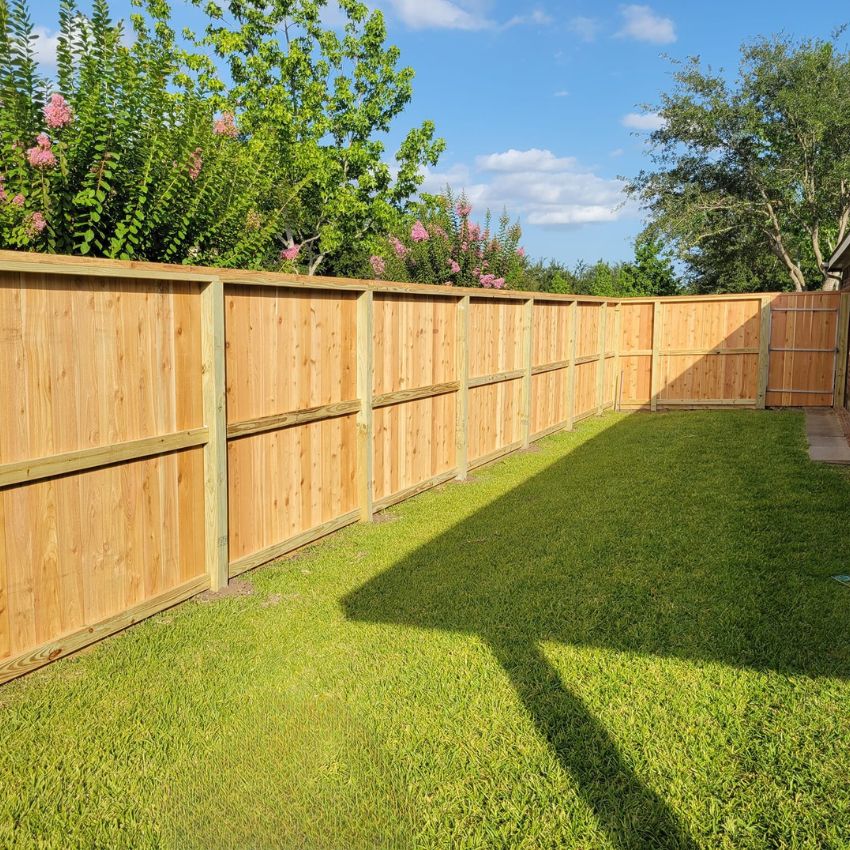
The counterintuitive truth about fence maintenance in the Dallas-Fort Worth area is that the homeowners who spend money on their fences consistently — professional staining every two to three years, annual pressure washing, prompt repair of isolated issues — spend less total money on fence ownership over any ten or twenty year period than the homeowners who defer maintenance until conditions force action.
This isn't a marketing claim. It's the straightforward result of how compounding deterioration works and how the cost of each intervention changes as deterioration progresses. Understanding the math behind this — and seeing what the cumulative cost difference actually looks like — makes the case for proactive fence maintenance in concrete financial terms rather than abstract maintenance philosophy.
The Two Paths: What They Each Look Like Over Ten Years
Consider two DFW homeowners who install identical cedar privacy fences on the same day — same material, same contractor, same specifications. Both fences start at the same condition and face the same North Texas climate. The difference is what happens after installation day.
Homeowner A — proactive maintenance:
Month six: First professional staining service. New cedar properly dried, thorough pressure washing prep, Wood Defender oil-based stain applied professionally. Cost: standard first staining service.
Year two to three: Maintenance restaining. Annual spring pressure washing kept biological growth from accumulating between services, so prep is straightforward. Standard restaining cost.
Year four to five: Maintenance restaining. Two boards identified during annual inspection with developing soft spots — replaced before staining. Staining service plus two board replacements.
Year six to seven: Maintenance restaining. Post bases in irrigation zone inspected specifically — one post showing early base deterioration, stabilized before it becomes structural. Staining service plus one post stabilization.
Year eight to nine: Maintenance restaining. Fence is structurally sound throughout, boards in good condition, posts plumb. Standard restaining cost.
Year ten: The fence looks like a well-maintained 10-year-old fence. It has years of service remaining. Homeowner A has paid for five staining services, annual pressure washing, minor board replacements, and one post stabilization. The fence is approaching the midpoint of its service life in sound condition.
Homeowner B — deferred maintenance:
Years one through three: No staining, no pressure washing. Fence deteriorates through the timeline described throughout this blog series — graying, biological growth establishment, surface checking.
Year four: Homeowner B notices the fence looks bad and schedules a staining service. The service requires more aggressive prep — the weathered surface layer has to be removed, biological growth that's been establishing for three springs needs intensive biocidal treatment, several boards have soft spots requiring replacement before staining. Cost: significantly higher than Homeowner A's maintenance staining due to restoration prep and board replacement.
Year four to six: Homeowner B intends to stay on the staining schedule but life intervenes. No service in year six. The fence that was restored at year four begins deteriorating again.
Year seven: Second service — again with restoration scope rather than maintenance scope. Additional board replacements. One post showing significant base deterioration — re-setting required. Cost: higher again than a maintenance staining would have been.
Year nine to ten: Fence condition has become difficult to maintain. Multiple posts are compromised. Rail deterioration is spreading. The restoration cost is approaching replacement cost. Homeowner B faces a decision between investing in major repair and replacement.
Year ten: The fence that Homeowner A's identical fence has served well for ten years needs either significant repair investment or replacement on Homeowner B's property. The two fences that started identically have diverged dramatically — one is approaching midlife in good condition, the other is approaching end of useful life after ten years.
The Compounding Cost Mechanism: Why Deferred Maintenance Always Costs More
The financial divergence between Homeowner A and Homeowner B isn't random — it's the predictable result of how deterioration compounds and how each stage of deterioration changes the cost of the next intervention.
Stage one deterioration is cheap to address: A fence that's at the right staining timing with surface graying and early biological growth establishment requires standard maintenance staining — pressure washing and stain application on a fence that's weathered but structurally sound. This is the lowest-cost intervention point.
Stage two deterioration is more expensive to address: A fence that's missed one staining cycle and developed more significant weathering, deeper biological growth roots, and early checking requires restoration staining — more aggressive prep, biocidal treatment with longer dwell time, possible board replacement in isolated sections. The prep work alone costs more than stage one, and the board replacements add further.
Stage three deterioration is significantly more expensive: A fence that's missed multiple staining cycles and developed soft spots in boards, early post base deterioration, and established biological growth across most sections requires major restoration — extensive board replacement, possible post re-setting, intensive cleaning before staining can proceed. The total project cost is substantially higher than timely maintenance would have been.
Stage four deterioration approaches replacement cost: A fence that's been neglected for most of its life and developed structural failure in posts, widespread rot in boards, and rail deterioration may cost more to restore than to replace. The homeowner who has deferred maintenance to this stage faces repair quotes that approach or exceed replacement cost — at which point replacement with a new fence that starts the service life over is often the more rational decision.
Each stage transition multiplies the cost of addressing the fence relative to what proactive maintenance at earlier stages would have cost. The homeowner who catches the fence at stage one every two to three years never lets it reach stages two, three, or four — and never pays the multiplied costs those stages require.
The Specific DFW Multipliers: Why North Texas Makes Deferred Maintenance More Costly
The cost penalty for deferred fence maintenance is more severe in DFW than in milder climates — because the specific conditions that North Texas delivers accelerate every deterioration mechanism that deferred maintenance allows to operate.
UV intensity amplifies the deferred staining penalty: DFW's UV is among the most intense of any major metro area in the United States. UV degradation of wood lignin that might take four to five years to reach visible graying in a Pacific Northwest climate reaches the same level in two years in North Texas. This acceleration means the window between "staining was due" and "staining is now significantly overdue with meaningful deterioration accumulated" is shorter in DFW than elsewhere.
Moisture cycling intensity amplifies the checking and splitting penalty: DFW's spring-to-drought cycle creates more wet-dry cycling events per year than more stable-moisture climates. Each wet-dry cycle with unprotected wood produces more checking development than the same cycle with stain-protected wood. The cumulative checking that develops in a single DFW year without staining represents more deterioration than multiple years of checking development in more stable climates.
Biological growth conditions amplify the contamination penalty: DFW's combination of warmth, seasonal moisture, and organic material creates some of the most favorable biological growth conditions in the country. Biological growth that establishes on unprotected surfaces in one DFW spring grows faster, spreads more extensively, and roots more deeply than the same growth in less favorable conditions. The cleaning challenge created by one season of DFW biological growth on unprotected surfaces exceeds the cleaning challenge from multiple seasons of growth in less favorable climates.
Each of these amplifiers means that deferring maintenance in DFW produces faster cost escalation through the deterioration stages than the same deferral produces in milder markets — making the proactive maintenance investment relatively more valuable in North Texas than elsewhere.
The Service Life Extension Value: What Proactive Maintenance Actually Buys
Beyond the avoided deterioration costs, proactive fence maintenance in DFW buys something that's genuinely valuable but harder to quantify — extended service life.
A fence that's properly installed and consistently maintained reaches its full service life potential of 15 to 20 years. A fence that's installed identically but deferred into deterioration may reach structural failure at 8 to 12 years — depending on how early the deterioration began and how severe it became.
The difference in service life — seven to ten additional years of useful fence service from a consistently maintained fence — represents significant value. The cost of maintaining the fence through those additional years is the staining services that kept it in service-worthy condition. The alternative cost is fence replacement significantly earlier than necessary — which at DFW market prices is one of the larger capital expenditures a homeowner can face for exterior property maintenance.
Building the Budget Case for Consistent Maintenance
For DFW homeowners who manage their household budget carefully and want to evaluate fence maintenance in concrete financial terms, here's how the proactive versus deferred comparison looks over a 15-year period.
Proactive maintenance over 15 years:Annual spring pressure washing — modest per-year cost across 15 years.Five to seven professional staining services — predictable per-service cost across the cycle.Minor board replacements as they arise — small per-event cost caught early.One or two post stabilizations if irrigation conditions create earlier movement — modest cost caught early.Total: predictable maintenance cost that spreads small expenditures across 15 years of full service.
Deferred maintenance over 15 years:Years one through three: minimal spending, significant deterioration accumulating.Year four: first restoration service significantly more expensive than maintenance staining would have been.Years five through seven: further deterioration, another restoration service.Year eight to ten: structural deterioration requiring post re-setting and extensive board replacement.Year 12 to 15: fence reaches end of useful life significantly earlier than proactively maintained equivalent — full replacement required.Total: irregular large expenditures plus full replacement cost, totaling significantly more than the proactive maintenance program.
The specific numbers vary by fence size, contractor pricing, and how severely the deferred maintenance allowed deterioration to progress. The direction is consistent in every scenario: proactive maintenance costs less in total than deferred maintenance, while also delivering more years of fence service.
The Non-Financial Case: Why Appearance Matters
Beyond the financial calculation, there's a quality-of-life and property presentation case for consistent fence maintenance that shouldn't be dismissed.
A fence that's consistently maintained looks consistently good — it's a visual asset that contributes to how the outdoor space feels and how the property presents. A fence that's been deferred into deterioration looks bad in ways that affect the enjoyment of the outdoor space and the impression the property makes on visitors, neighbors, and prospective buyers.
For DFW homeowners who spend time in their outdoor spaces — which the region's climate and outdoor living culture encourages — the appearance difference between a maintained and unmaintained fence is a daily quality-of-life difference, not just an eventual financial consequence.
Professional Fence Maintenance Across the DFW Metroplex
DFW Pressure Washing & Fence Staining LLC provides professional wood fence staining, pressure washing, and fence installation throughout the Dallas-Fort Worth area — including Kennedale, Arlington, Mansfield, Fort Worth, Grand Prairie, and surrounding communities.
Every maintenance staining project uses Wood Defender oil-based stains formulated for Texas climate conditions, starts with thorough pressure washing prep, and is backed by a three-year limited warranty. Every service includes a fence condition assessment that identifies any developing issues — boards approaching soft spot status, posts showing early movement, hardware needing attention — so the homeowner has the information to address small problems before they become large ones.

Want to make sure your DFW fence stays on the proactive maintenance path that costs less over time and delivers more years of service — rather than the deferred maintenance path that seems like it costs nothing until it costs everything? DFW Pressure Washing & Fence Staining LLC provides the regular staining and maintenance services that keep every DFW fence in the condition that makes proactive maintenance the more financially rational choice at every stage.
Get Your Free Estimate → dfwpressurewashing.net/contact-us

DFW Pressure Washing & Fence Staining LLC


