Blog
Why Pressure Washing Alone Isn't Enough for DFW Driveways — And What to Add
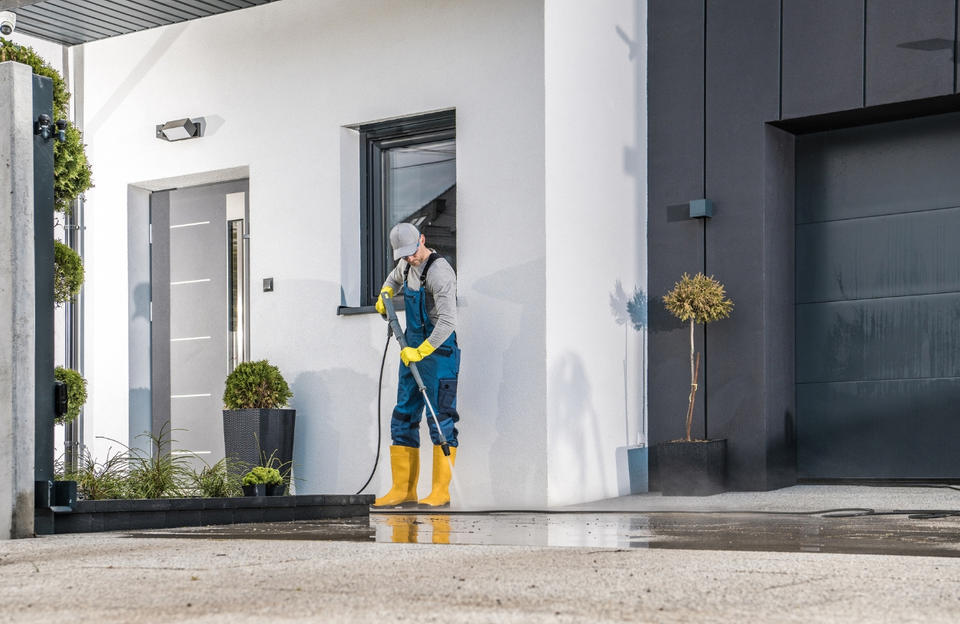
Professional pressure washing delivers the most visually dramatic exterior transformation available for a DFW driveway — the before and after of a professionally cleaned concrete surface is immediately obvious and genuinely impressive. What pressure washing doesn't deliver, on its own, is lasting protection. The clean surface that looks great the day after service is an unprotected surface that will begin accumulating the biological growth, staining, and deterioration that DFW's climate continuously deposits on outdoor concrete — starting from the moment the surface is clean.
Understanding what pressure washing alone accomplishes — and what additional steps complete a driveway maintenance service that lasts rather than just looking good until the first rain — is what separates a DFW homeowner who maintains their driveway effectively from one who pressure washes repeatedly without ever getting ahead of the deterioration cycle.
What Pressure Washing Does — and What It Doesn't
Professional pressure washing with appropriate pre-treatment accomplishes three specific things for a DFW driveway. It removes the accumulated biological growth, organic deposits, oil surface contamination, and atmospheric particulate that has built up on the surface. It kills the biological organisms that were producing the acids that chemically attack the concrete. And it creates a clean, open substrate that subsequent protective treatment can bond to correctly.
What pressure washing doesn't do is change the fundamental porosity of the concrete surface that makes those accumulations possible. A pressure-washed driveway is clean concrete — open pores, exposed aggregate, no protective barrier. The same open pores that were accumulating biological growth and oil contamination before cleaning are available to accumulate the same conditions again immediately after cleaning.
In DFW's climate, that re-accumulation starts quickly. Biological growth spores are constantly airborne — a clean concrete surface in spring biological growth conditions will begin to show early establishment within weeks. Oil from the first vehicle parked on the clean surface penetrates into the open concrete pores on contact. The first rain event after cleaning deposits pollen and organic material into the freshly opened pore structure.
The durability of a pressure washing result — how long the clean surface stays clean — is directly related to what happens to the surface after cleaning. Clean, sealed concrete stays cleaner significantly longer than clean, unsealed concrete.
Step One Beyond Pressure Washing: Targeted Pre-Treatment for Specific Contamination
Before discussing what to add after pressure washing, it's worth addressing what needs to happen before and during pressure washing for specific contamination types — because pressure washing without appropriate pre-treatment doesn't fully address what's in the concrete pores.
Oil and vehicle fluid contamination: Standard pressure washing redistributes oil on the surface without extracting what's bonded into the concrete pores. Alkaline degreaser pre-treatment applied and given dwell time before pressure washing breaks down petroleum compounds at the molecular level, allowing the pressure wash to extract them from the pores rather than just moving surface oil around. For DFW driveways with oil staining in vehicle parking positions, degreaser pre-treatment is the step that determines whether the oil contamination is actually addressed or just temporarily obscured.
Biological growth: Pressure washing removes visible biological growth from the surface but leaves the root structure of organisms that have penetrated into concrete pores. Biocidal pre-treatment kills the organisms at the root level before pressure washing removes the dead material — producing a surface where the growth mechanism has been eliminated rather than just the visible symptom. Without biocidal pre-treatment, biological growth on a DFW driveway in spring conditions returns within weeks of pressure washing because the root structure that survived the cleaning re-establishes visible colonies rapidly.
Mineral deposits: Hard water mineral deposits and rust staining from fertilizer or metal contact require acid-based pre-treatment to dissolve the calcium and iron compounds before pressure washing can effectively remove them. Pressure washing without acid pre-treatment moves the surface layer of mineral deposits while leaving the bonded mineral layer that acid would have dissolved — producing incomplete mineral removal that leaves discoloration and rough surface texture that accelerates re-accumulation.
These pre-treatments are what separate professional pressure washing that actually addresses what's on the surface from basic pressure washing that improves appearance temporarily without addressing the underlying conditions.
The Most Important Addition: Concrete Sealing After Pressure Washing
Concrete sealing after professional pressure washing is the addition that transforms a maintenance event from temporary improvement to lasting protection. The clean, pre-treated, pressure-washed surface is the ideal substrate for sealer application — and every hour that passes between cleaning and sealing is an hour the cleaned but unprotected surface is accumulating the conditions that sealing would have prevented.
How sealing extends the value of pressure washing: A sealed driveway maintains its post-cleaning appearance significantly longer than an unsealed one. The closed pores that sealing creates resist biological growth establishment, oil penetration, organic staining, and mineral deposit accumulation — the specific conditions that DFW's climate deposits on outdoor concrete continuously. A DFW homeowner who seals immediately after cleaning gets results that hold for months rather than degrading within weeks.
The timing that makes combined service efficient: Pressure washing and sealing need to be scheduled in the correct sequence with appropriate drying time between steps — and doing both in a single coordinated service visit eliminates the coordination overhead of scheduling two separate services and ensures the sealing happens at the optimal time after cleaning rather than after the clean surface has had time to re-accumulate contamination.
DFW Pressure Washing & Fence Staining LLC provides both services in a coordinated visit — pressure washing followed by appropriate drying time followed by sealing — so the combined service delivers the protection that pressure washing alone doesn't.
Crack Treatment: The Structural Addition That Prevents Bigger Problems
For DFW driveways with surface cracks — the hairline to moderate-width cracks that North Texas concrete develops from curing shrinkage, thermal cycling, and clay soil movement — crack treatment as part of or following the pressure washing service addresses the structural vulnerabilities that pressure washing reveals but doesn't fix.
Pressure washing a driveway with existing cracks cleans the crack surfaces and reveals the full extent of cracking that accumulated surface deposits were partially obscuring. The clean, visible crack system after pressure washing is the right moment to assess whether crack filling should be part of the current service — before sealing is applied.
Sealing over unfilled cracks seals moisture pathways into the concrete substrate rather than closing them. Water that enters through unfilled cracks after sealing is sealed against the concrete below the sealer rather than evaporating back through the surface — contributing to the freeze-thaw damage inside the crack that widens it in subsequent winter events.
Filling cracks before sealing closes the moisture entry that drives crack widening — and does so with the flexible filler material that accommodates continued minor movement without re-cracking. The sequence of crack filling followed by sealing delivers more durable protection than sealing alone on cracked concrete.
Joint Treatment: The Maintenance Step Most Homeowners Skip
Control joints — the deliberate cuts or formed lines in concrete driveways that manage cracking and thermal movement — have joint material that deteriorates over time. Sealant in joints that has compressed, crumbled, or been lost creates open pathways for water, organic material, and biological growth that the joint was designed to manage.
Cleaning and refilling deteriorated control joints as part of a comprehensive driveway maintenance service addresses the moisture entry that joint deterioration allows — specifically the pathway for freeze-thaw damage at joint edges that produces the chipping and stepped cracking characteristic of DFW driveways with deteriorated joints.
Joint sealant is applied after crack treatment and before the surface sealer — filling the joint cavity with flexible sealant that accommodates joint movement while closing the moisture pathway that deteriorated joint material had left open.
What the Complete Driveway Maintenance Service Looks Like
For DFW homeowners who want to get ahead of the deterioration cycle rather than just temporarily cleaning it, the complete driveway maintenance service involves these steps in this sequence:
Surface assessment identifying contamination types, crack conditions, joint condition, and existing sealer status — determining what each subsequent step needs to address.
Targeted pre-treatment for identified contamination — degreaser for oil, biocidal solution for biological growth, acid treatment for mineral deposits — applied and given appropriate dwell time before pressure washing begins.
Professional pressure washing that extracts the loosened contamination and creates the clean surface that subsequent steps build on.
Drying period — 24 to 48 hours in standard DFW conditions — allowing the concrete to return to the moisture content appropriate for sealant and sealer application.
Crack filling for any cracks identified during assessment — flexible polyurethane filler applied and allowed to cure before sealing.
Joint treatment for any deteriorated control joints — flexible sealant applied to cleaned joint cavities.
Concrete sealing — appropriate penetrating or topical sealer applied at correct coverage rate in appropriate temperature and humidity conditions.
This complete sequence transforms a temporary cleaning result into lasting protection — and does so in a single coordinated project rather than requiring multiple service visits across multiple weeks.
The Cost Comparison: Complete Service vs. Repeated Pressure Washing
For DFW homeowners evaluating whether the added steps beyond pressure washing are worth the additional investment, the comparison is between the complete service done once and the repeated pressure washing that incomplete maintenance requires.
A driveway that's cleaned and sealed maintains its condition for the duration of the sealing cycle — two to three years before resealing is warranted. A driveway that's cleaned without sealing returns to the accumulation cycle within weeks and may need cleaning again within a year before the same conditions have rebuilt to the level that motivated the original service.
Multiple annual cleaning-only services over a three-year period cost more in total than a single clean-and-seal service at the beginning of that period — and the sealed driveway is better protected throughout. The homeowner who adds sealing to each cleaning service pays somewhat more per service but pays for fewer services and maintains better surface condition than the homeowner who pressure washes annually without sealing.
Professional Complete Driveway Maintenance Across the DFW Metroplex
DFW Pressure Washing & Fence Staining LLC provides the complete driveway maintenance sequence — surface assessment, targeted pre-treatment, professional pressure washing, crack treatment, joint treatment, and concrete sealing — throughout the Dallas-Fort Worth area, including Kennedale, Arlington, Mansfield, Fort Worth, Grand Prairie, and surrounding communities.
Every driveway project starts with the assessment that determines what each step needs to address — so the service scope matches what the surface actually needs rather than applying standard protocol regardless of specific conditions. We coordinate all steps in the correct sequence within a single service relationship — so the homeowner isn't managing separate contractors for cleaning and sealing or scheduling follow-up services that don't happen.

Want to make sure your DFW driveway gets the complete maintenance service that delivers lasting results — not just a temporary clean that returns to the same conditions after the first rain? DFW Pressure Washing & Fence Staining LLC assesses every driveway surface and delivers the full sequence of pre-treatment, pressure washing, crack treatment, and sealing that makes the cleaning results last through the full protection cycle.
Get Your Free Estimate → dfwpressurewashing.net/contact-us
DFW Pressure Washing & Fence Staining LLC


