Blog
Wood Garage Door Staining in DFW: Why Your Most Visible Wood Surface Gets the Least Maintenance Attention
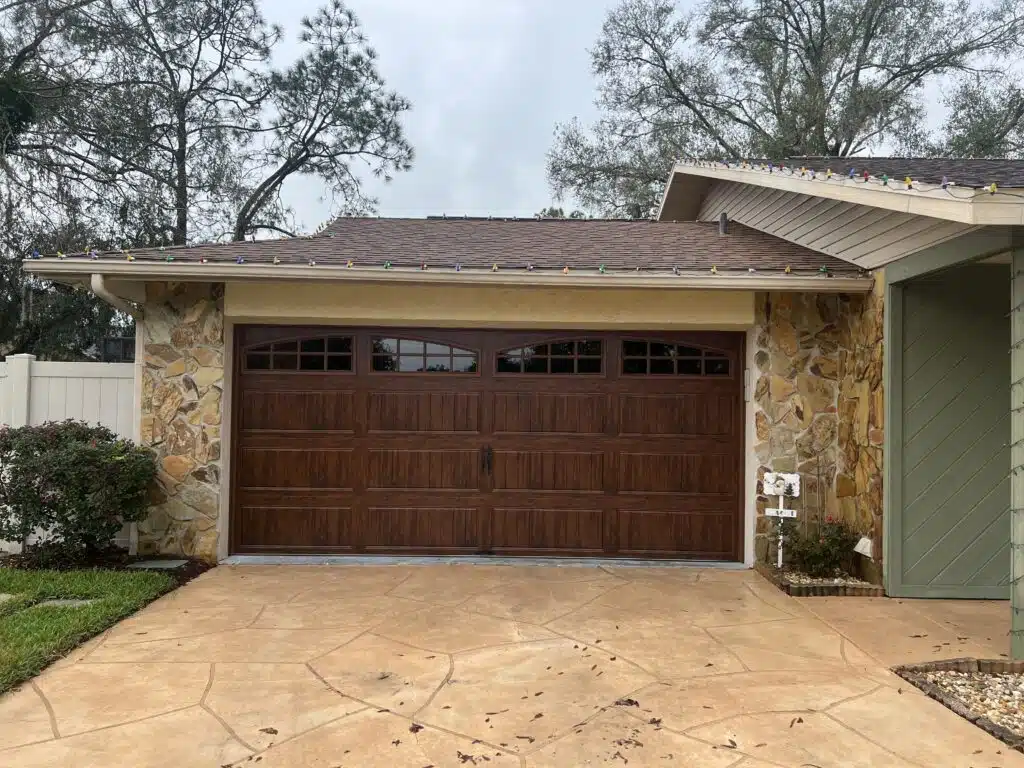
There's a specific paradox in how DFW homeowners approach exterior wood maintenance. The wood fence at the back of the property — visible primarily from the yard — gets staining conversations, maintenance attention, and service scheduling. The wood or wood-composite garage door on the front of the house — visible from the street to every neighbor, every visitor, and every potential buyer — gets almost none.
Wood garage doors are the most prominent single wood surface on most DFW homes from a curb appeal standpoint. They occupy a significant portion of the front facade, they're visible from the street at a distance where the fence isn't, and their condition communicates the maintenance standard of the property more immediately than almost any other exterior feature. Yet they're consistently among the most neglected wood surfaces in DFW exterior maintenance programs.
Understanding why wood garage doors need professional staining maintenance — and what makes their specific exposure conditions different from fence and deck staining — produces the complete exterior wood maintenance program that most DFW homeowners are currently missing.
What Wood Garage Doors Actually Face in DFW
The exposure conditions for a wood garage door in the Dallas-Fort Worth area combine elements from multiple surface categories in ways that make garage door staining more demanding than fence staining alone.
South and west-facing UV exposure:
Most DFW home designs place the garage on the front of the house, and the majority of DFW residential streets run east-west — which means a significant percentage of garage doors face south or west. South and west-facing garage doors in DFW receive the most intense direct UV exposure of any wood surface on the property — the same afternoon sun that depletes fence stain fastest on south and west-facing fence sections is hitting the garage door face directly for hours during the peak UV hours of DFW's summer.
This direct, sustained UV exposure depletes stain protection faster than most fence sections experience and causes the UV-related wood deterioration — lignin degradation, graying, surface checking — faster than protected fence sections in the same conditions.
Horizontal panel top surfaces:
Most wood garage doors have horizontal panel sections — the raised or recessed rectangular panels that create the traditional garage door aesthetic. These horizontal panel tops face the same moisture retention challenge as deck boards and pergola beam tops — they collect rain and hold it rather than shedding it the way vertical surfaces do.
In DFW's spring rain season, the horizontal tops of garage door panels may hold moisture for hours after each rain event. This extended moisture contact creates the wet-dry cycling stress that produces surface checking and deterioration — the same mechanism that makes horizontal surfaces deteriorate faster than vertical ones throughout this blog series.
Heat from direct sun on dark surfaces:
Wood garage doors in dark stain tones that face south or west in DFW can reach surface temperatures of 130°F to 150°F or higher during peak summer heat. These extreme surface temperatures accelerate oil oxidation in the stain — depleting the moisture repellency faster than moderate-temperature surfaces experience — and create the thermal stress that produces surface checking in wood that's rapidly cycling between extreme heat during the day and cooler temperatures at night.
Traffic vibration and mechanical stress:
Garage doors are mechanically operated — the opening and closing cycle creates vibration in the door panels that fence boards never experience. This mechanical stress is subtle but cumulative across thousands of operating cycles per year. The vibration creates micro-stresses at panel connections and in the wood fiber that contribute to the checking and separation that garage doors develop at panel joints over time.
Moisture from the garage interior:
Garages contain moisture sources that the exterior environment doesn't — vehicles that arrive wet, moisture from stored equipment and materials, and the humidity differential between the garage interior and the exterior that creates condensation on the door surface during temperature transitions. The interior face of a wood garage door faces moisture exposure that fence boards — which are open to airflow on both sides — don't experience.
How Wood Garage Door Deterioration Appears
The specific deterioration patterns that develop on wood garage doors without regular staining maintenance reflect their unique exposure conditions.
Panel face graying and surface checking:
The horizontal panel tops develop graying from UV exposure and surface checking from moisture cycling faster than the vertical stile and rail members of the door frame. This creates an uneven deterioration pattern — the panel sections look weathered while the surrounding framing looks somewhat better — that makes aging garage doors look worse than their overall age would suggest.
Panel joint separation:
The joints between horizontal panels and the stile and rail framing develop the slight separation that DFW's thermal cycling creates in unprotected wood. These separating joints allow moisture infiltration into the door structure and create the visual gap that makes a garage door look like it's falling apart even when the structural integrity is still sound.
Bottom rail deterioration:
The bottom rail of a wood garage door is the most vulnerable structural member — it's the closest to the ground, it absorbs splash from rain, it contacts the garage floor when the door closes, and it receives the most abrasion from the door's operating cycle. Bottom rail deterioration typically shows first on wood garage doors that haven't been maintained — the wood becomes soft, the paint or stain fails, and in advanced cases the bottom rail develops rot that compromises the door's structural integrity and its seal against the garage floor.
Hardware rust affecting wood around fasteners:
The springs, tracks, hinges, and hardware of garage door operation systems use metal components that rust in DFW's moisture cycle. Rust from hardware stains adjacent wood surfaces and the fastener penetrations where hardware attaches to the door create moisture entry points in the wood. Addressing rust at hardware locations and treating the wood around fastener penetrations is part of comprehensive garage door maintenance that standard fence staining guidance doesn't address.
Why Professional Staining Is More Valuable on Garage Doors Than Fences
The case for professional wood garage door staining is stronger than for fence staining in several specific ways.
Curb appeal impact per dollar invested:
The garage door is typically the largest single element of the front facade — on many DFW homes, the garage door occupies 30 to 40 percent of the visible front exterior. A freshly stained, well-maintained wood garage door is a dramatic curb appeal asset. A gray, deteriorating garage door is an equally dramatic curb appeal liability. The maintenance investment per square foot of stained surface produces more curb appeal return on a garage door than on an equivalent area of rear yard fence that's only visible from the backyard.
Real estate market visibility:
The garage door appears in every listing photograph of the front exterior. It's the first thing buyers see from the street on a showing. For DFW homeowners who are within a few years of selling their home, garage door condition is a pre-sale preparation consideration that has direct listing presentation implications — as covered in the pre-listing exterior cleaning blog.
Replacement cost avoided:
Quality wood garage door replacement — including the door, hardware, and installation — is a significant expense. Regular professional staining that extends the service life of an existing quality wood garage door defers this replacement cost at a fraction of the replacement cost per year of extended service life.
Product and Application Considerations for Garage Door Staining
The same oil-based penetrating stain appropriate for fences and decks applies to wood garage doors — with application adjustments for the panel construction and the specific exposure conditions of garage door surfaces.
Panel-by-panel application approach:
Garage door panels create shadow lines and recesses that standard single-direction spray application doesn't fully reach. Each panel face, the recessed panel interior, the top surface of each horizontal panel, and the stile and rail framing all need specific stain coverage. Professional application moves panel by panel, ensuring each surface element receives thorough coverage rather than applying stain in uniform passes that miss recessed areas and horizontal panel tops.
End grain attention at panel edges:
The end grain at panel edges — where the wood is cut perpendicular to the grain — is the highest moisture absorption location on any wood panel. End grain on garage door panels absorbs and releases moisture faster than face grain, creating the differential stress that produces checking at panel edges. Stain application that specifically addresses end grain surfaces at panel edges delivers the moisture protection where the checking risk is highest.
Bottom rail treatment:
The bottom rail deserves specific attention — both because of its vulnerability to deterioration and because its position near the ground creates moisture exposure that other door members don't face. Thorough bottom rail staining including the bottom face and end grain is part of comprehensive garage door staining that standard application sometimes misses.
Maintenance Cycle for Wood Garage Doors in DFW
The staining cycle for wood garage doors in DFW follows the same framework as other wood surfaces — water bead test assessment to determine when protection has depleted, professional cleaning before application, and quality oil-based stain at the coverage rate appropriate for the surface.
South and west-facing garage doors in DFW typically deplete stain protection faster than rear yard fence sections on the same property — the direct UV and surface temperature conditions deplete UV inhibitors faster than angled fence exposure. Assessing garage door stain condition at the 18-month point rather than the standard two to three year fence cycle catches depletion before it allows significant deterioration on this high-visibility surface.
Combining garage door staining with fence staining when both are due creates the same coordinated service efficiency described throughout this series — the same stain product, the same prep approach, and a single mobilization that addresses all wood surfaces on the property simultaneously.
Professional Wood Garage Door Staining Across the DFW Metroplex
DFW Pressure Washing & Fence Staining LLC provides professional wood staining for garage doors, fences, decks, and pergolas throughout the Dallas-Fort Worth area — including Kennedale, Arlington, Mansfield, Fort Worth, Grand Prairie, and surrounding communities.
Every garage door staining project includes panel-by-panel application technique that addresses horizontal panel tops, recessed panel interiors, end grain at panel edges, and bottom rail surfaces — not standard fence application technique applied to a door that has fundamentally different construction. Every project uses Wood Defender oil-based stains and is backed by a three-year limited warranty.

Want to make sure your DFW home's most visible wood surface — the garage door that's in every listing photo and visible from the street every day — is properly stained and protected against the UV, moisture, and thermal stress that make this surface deteriorate faster than your rear yard fence? DFW Pressure Washing & Fence Staining LLC provides garage door staining with the panel-specific technique and coverage that this high-visibility surface deserves.
Get Your Free Estimate → dfwpressurewashing.net/contact-us

DFW Pressure Washing & Fence Staining LLC


