Blog
Wood Staining for Cedar Pergolas in DFW: What Makes Overhead Structures Different From Fences
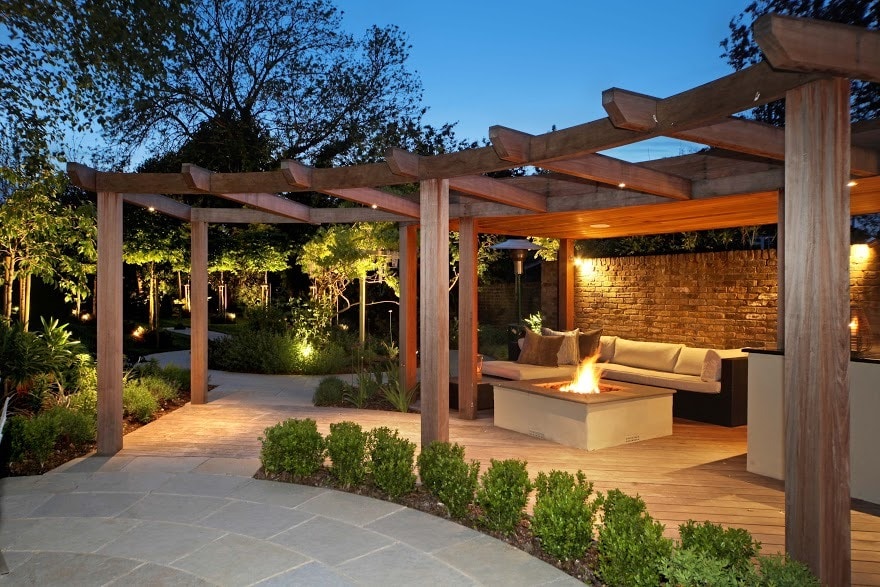
Cedar pergolas are one of the most invested-in outdoor features on DFW residential properties — and one of the most consistently under-maintained. The same homeowners who diligently track their fence staining cycle often overlook the pergola beams overhead until the wood has grayed, the surface is cracked, and the structure looks significantly older than it is.
The oversight isn't intentional. Pergola surfaces are overhead — out of the daily visual field that prompts maintenance awareness on fences and decks. And the assumption that pergola staining follows the same program as fence staining leads homeowners to schedule both on the same cycle without accounting for the specific ways that overhead wood structures deteriorate faster and require different maintenance attention than vertical fence surfaces.
Here's what makes cedar pergola staining specifically different from fence staining — and what professional application addresses that DIY and fence-centric maintenance programs consistently miss.
Why Pergola Wood Faces More Demanding Conditions Than Fence Boards
The fundamental difference between a cedar fence board and a cedar pergola beam is orientation — and orientation determines almost everything about how the wood interacts with DFW's climate and how quickly it deteriorates without protection.
Horizontal surfaces hold water rather than shedding it:
Fence boards are vertical. Rain that hits a fence board runs down the face and off the bottom edge — the contact time between water and wood is brief, and the wood dries relatively quickly after each rain event. Pergola beam tops are horizontal. Rain that falls on a pergola beam top stays on the beam top — the water sits in contact with the wood until it either evaporates or soaks in. The extended contact time dramatically increases moisture absorption per rain event compared to what a fence board experiences.
In DFW's spring, when rain events are frequent and temperatures are moderate, the top faces of pergola beams may stay wet for hours after each rain. Over an active spring rain season, this extended moisture contact subjects horizontal wood surfaces to far more cumulative moisture stress than vertical surfaces in the same location experience.
Horizontal surfaces receive direct UV impact:
Vertical fence boards receive angled UV — the sun hits the fence face at varying angles throughout the day depending on orientation, and only south and west-facing sections receive direct intense afternoon sun. Pergola beam tops receive direct UV impact from above — the same overhead UV that makes DFW summers brutal also falls directly on horizontal pergola surfaces throughout the peak UV hours of every summer day.
The combination of full-intensity UV from above and extended moisture contact from rain that sits rather than shedding creates a surface stress environment on pergola beam tops that is more demanding than what any fence board faces.
Structural connections create moisture traps:
The joinery in pergola structures — where rafters meet beams, where beams meet posts, where any two structural members connect — creates recesses and connection points that trap moisture and hold it against the wood surfaces inside the joint. Water that runs off the top of a beam into a rafter connection sits in that joint because there's nowhere for it to drain completely. The wood surfaces inside structural connections stay wet significantly longer than exposed surface wood after each rain event.
These connection zones are the highest rot risk locations in any pergola — and they're the locations that casual staining technique most consistently under-protects, because spray application that covers visible face grain surfaces doesn't reliably reach into structural connection recesses.
What Happens to Unstained Cedar Pergolas in DFW
The deterioration timeline for an unstained cedar pergola in the DFW climate is faster than most homeowners expect — and the specific failure patterns on horizontal surfaces differ from fence board deterioration in ways that make the damage more severe in a shorter time.
The checking pattern on horizontal beam tops:
Surface checking on horizontal pergola beam tops is more rapid and more pronounced than on fence boards because the wet-dry cycling that produces checking occurs more frequently and more extremely on horizontal surfaces. The sequence: rain soaks the beam top, the surface expands from moisture absorption, DFW's heat and sun dries the surface rapidly, the surface contracts, the differential between the wet interior and the dry surface creates tension — and when that tension exceeds the wood's tensile capacity, a surface check appears.
Repeat this cycle multiple times per week through DFW's spring, and then apply DFW's summer drought conditions that drive moisture out of the beam rapidly — the checking that develops on horizontal pergola beam tops in two years of unprotected DFW exposure would take five or more years to develop on a fence board in the same location.
The biological growth pattern on beam undersides:
The underside of pergola beams is shaded — protected from direct sun but exposed to the moisture that DFW's spring conditions create. This is ideal habitat for the mildew and algae that establish on DFW exterior wood surfaces. Beam undersides that never receive direct UV to naturally inhibit biological growth develop mildew colonies that spread across the beam face during DFW's favorable growth seasons.
The biological growth on beam undersides is often the first visible sign of pergola deterioration that homeowners notice — the dark discoloration that appears on the overhead structure when they're sitting under it. By the time the growth is obvious from below, it's been establishing for at least one full DFW spring season.
The structural connection deterioration:
Post bases and beam-to-post connections on pergolas face the most concentrated moisture exposure of any location in the structure. Water that runs off the pergola canopy collects and channels toward structural connection points during rain events. These connections are also typically shaded from the UV that would otherwise dry them quickly.
Unstained structural connection points on DFW pergolas develop rot faster than any other pergola location — sometimes within three to five years on structures where the connection points have never received stain protection. The rot that develops in these hidden connections compromises structural integrity silently — the connection looks sound from outside while the wood inside the joint has already deteriorated significantly.
Why Standard Fence Staining Technique Doesn't Fully Address Pergolas
The application technique appropriate for fence staining — systematic spray passes covering the fence face from one end to the other — works well for vertical surfaces where every board face is accessible from a consistent angle. Applied to a pergola without adjustment, this technique consistently under-protects the surfaces that make pergola staining different from fence staining.
Beam top coverage requires directed overhead application:
Spray application directed at pergola beams from the side covers the beam faces and undersides but doesn't reliably cover the beam tops — the horizontal surfaces that face the most demanding exposure conditions and need the most thorough stain coverage. Covering beam tops requires specifically directing spray upward and at angles that address the top face, or using a roller or brush to specifically apply stain to top surfaces that overhead spray can't reach uniformly.
Professional pergola staining technique specifically includes beam top coverage — not as an incidental result of general spray application but as a deliberate step in the application sequence. The beam tops that receive the most rain, the most UV from above, and the most severe checking stress get the most specific stain attention.
Structural connection coverage requires penetrating application:
The connection recesses between rafters and beams, between beams and posts, and at any structural joint need specific stain application that reaches the wood surfaces inside the connection rather than just the visible faces around it. Brush application that works stain into connection recesses — rather than relying on spray coverage that may not reach the interior surfaces of tight joints — is the appropriate technique for high-risk structural connection locations.
This back-brushing in connection recesses is the application step that most consistently distinguishes professional pergola staining from budget application — it takes more time and requires specific attention to locations that are harder to access than open beam faces, but it's the step that addresses the highest-risk deterioration locations on the structure.
Underside coverage in DFW's biological growth environment:
Beam undersides in DFW's climate need biocidal pre-treatment before staining more consistently than fence boards need it — the shaded, moisture-retaining conditions on beam undersides create more persistent biological growth than most fence sections face. Professional pergola staining includes specific biocidal pre-treatment on beam undersides as part of the prep sequence, ensuring that stain is applied to surfaces where biological growth has been killed at the root level rather than just cleaned off the visible surface.
The Right Staining Cycle for DFW Pergolas
The standard two to three year fence staining cycle is the starting point for pergola staining, but the specific surfaces on a pergola — particularly horizontal beam tops — may warrant closer monitoring within that cycle.
Beam tops may deplete faster than beam faces:
The water bead test applied specifically to pergola beam tops at the 18-month point — rather than waiting for the full two to three year cycle — reveals whether horizontal surface depletion is occurring faster than the overall structure's staining cycle. If beam tops show depleted protection at 18 months while beam faces and undersides still bead well, targeted restaining of the beam tops before the full cycle is complete is more cost-effective than allowing those surfaces to be unprotected for the remaining cycle period.
Structural connection points need specific assessment:
Press firmly on wood at structural connection points during annual spring inspection — the joints between rafters and beams, post tops under beam connections, and any location where wood interfaces with wood in the structure. Sound connection wood feels solid. Developing rot at connection points feels softer under pressure. Catching developing rot at structural connections early — before it compromises structural integrity — allows targeted treatment or repair before the damage warrants structural intervention.
Combined service timing with fence staining:
For DFW properties with both wood fencing and cedar pergolas, combining pergola staining with fence staining in a single service visit produces the efficiency of a single mobilization for both wood surfaces. Both the fence and the pergola receive the same preparation sequence, the same stain product, and the same application quality — and both are on the same maintenance schedule going forward, reducing the administrative overhead of managing separate staining cycles for different wood surfaces on the same property.
Choosing the Right Stain for Pergola Application
The same product recommendation that applies to fence staining — oil-based penetrating stain formulated for Texas climate conditions — applies to pergola staining with one additional consideration: the behavior of the product on horizontal surfaces.
Oil-based stain on horizontal surfaces needs to be managed for potential pooling in low spots and at structural connections. Application rate on horizontal beam tops should be calibrated to achieve thorough penetration without allowing excess product to pool before it absorbs — pooled stain on horizontal surfaces can create an uneven cured surface that's both cosmetically inconsistent and potentially more vulnerable to peeling if the pooled areas cure as a surface film rather than a penetrating treatment.
Back-brushing immediately after spray application on horizontal surfaces — working the stain into the wood surface before it has time to pool — distributes the product evenly and promotes penetration rather than surface-level curing. This technique produces more consistent coverage and more complete penetration than spray application alone on horizontal wood.
Professional Pergola Staining Across the DFW Metroplex
DFW Pressure Washing & Fence Staining LLC provides professional cedar pergola staining throughout the Dallas-Fort Worth area — including Kennedale, Arlington, Mansfield, Fort Worth, Grand Prairie, and surrounding communities.
Every pergola staining project includes specific beam top coverage, back-brushing at structural connections, biocidal pre-treatment for beam undersides, and the application technique that addresses the surfaces that standard fence staining approach consistently under-protects. We use Wood Defender oil-based stains formulated for Texas climate conditions, and every project is backed by a three-year limited warranty.
Pergola staining is most efficiently scheduled in combination with fence staining when both are due — producing a single service visit that addresses all wood surfaces on the property consistently and economically.

Want to make sure your DFW cedar pergola receives the specific staining technique that overhead wood structures require — with beam top coverage, structural connection protection, and the application quality that the most demanding surfaces on the structure actually need? DFW Pressure Washing & Fence Staining LLC applies pergola-specific technique to every overhead wood staining project — because the fence approach that misses beam tops and connection recesses leaves the highest-risk surfaces on the structure under-protected.
Get Your Free Estimate → dfwpressurewashing.net/contact-us
DFW Pressure Washing & Fence Staining LLC


