Blog
Wood Staining in High-Traffic Areas: Decks, Gates, and Fence Sections That Wear Faster in DFW
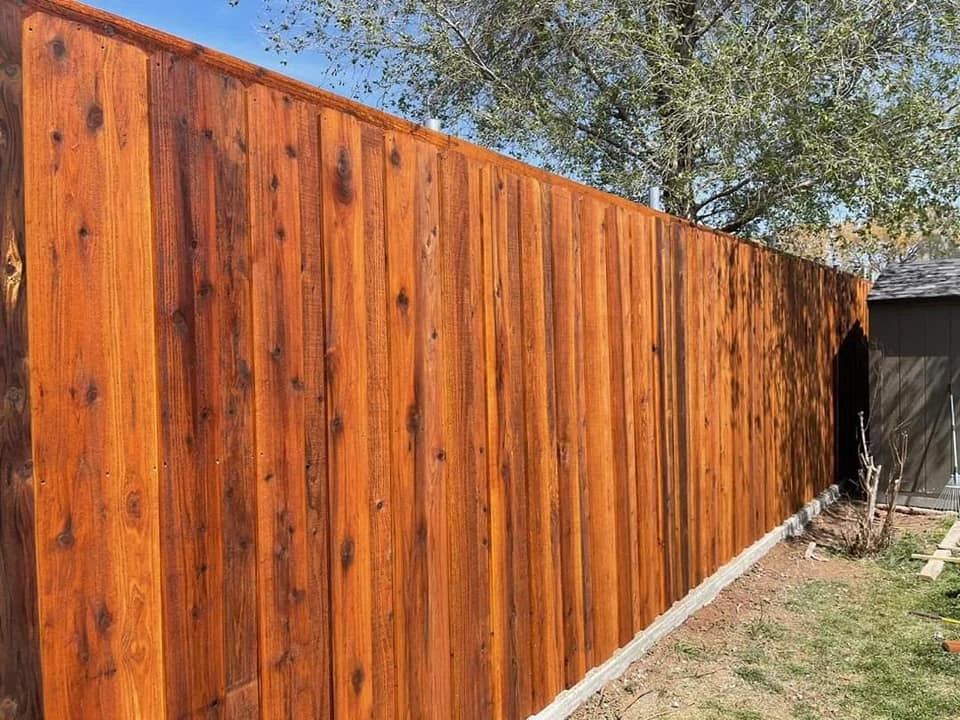
Most DFW homeowners think about wood staining as a uniform maintenance task — the whole fence gets stained, the whole deck gets treated, everything goes on the same two to three year schedule. The reality is that stain wears unevenly across any property, and the surfaces that see the most traffic, the most sun, and the most mechanical wear deplete their stain protection significantly faster than the rest of the wood on the property.
Understanding which specific surfaces wear faster — and why — helps DFW homeowners make smarter decisions about when to restain, where to focus attention between full staining cycles, and how to extend the overall protection of the wood on their property without staining everything on an accelerated schedule.
Why Stain Wears Unevenly Across a Property
Before getting into specific high-wear surfaces, it helps to understand the mechanisms that cause uneven stain depletion across different areas of the same property.
UV exposure variation: Sun angle and exposure duration vary dramatically across a property depending on orientation, shading from structures and trees, and the specific position of each fence section relative to the sun's path. South and west-facing fence sections receive the most intense and most prolonged direct sun in the DFW area — the afternoon sun that hits a west-facing fence section in July is at its most intense precisely when surface temperatures are highest. UV exposure is the primary mechanism of stain depletion on vertical surfaces, and sections with significantly more UV exposure deplete faster than shaded sections of the same fence.
Mechanical wear: Deck surfaces, gate faces, and fence sections near high-activity areas experience mechanical abrasion from foot traffic, furniture movement, and physical contact that accelerates surface stain wear beyond what UV and moisture alone would cause. Stain on a deck surface that's walked on daily wears differently from stain on a fence board that's never touched.
Moisture exposure variation: Sections of fence near irrigation heads, low spots where water pools after rain, and surfaces adjacent to water features receive more moisture cycling than other sections. Each wet-dry cycle stresses the stain bond with the wood and accelerates wear compared to sections that see only natural rainfall.
Horizontal versus vertical orientation: Horizontal wood surfaces — deck boards, pergola beam tops, gate cap rails — hold water rather than shedding it. Water that sits on a horizontal surface has extended contact time with the stain, and the combination of UV from above and moisture retention from below depletes horizontal surface stain faster than vertical surfaces in comparable conditions.
Deck Surfaces: The Highest-Wear Wood on Most DFW Properties
Deck boards are almost universally the fastest-wearing stained wood surface on a DFW property — and understanding why helps frame realistic expectations for deck staining longevity.
The deck surface takes a combination of UV exposure, foot traffic abrasion, moisture retention, and furniture wear that no other wood surface on the property faces. A deck that hosts outdoor entertaining through a DFW summer experiences all of these simultaneously — direct sun baking the surface during the day, foot traffic and furniture movement abrading the stain during use, rain events soaking the horizontal boards, and high temperatures accelerating every wear mechanism.
The practical result is that deck surfaces in the DFW climate often need restaining on a shorter cycle than vertical fence surfaces — sometimes 18 months to two years rather than the two to three year cycle that fence boards typically deliver. This isn't a product failure or an application problem — it's the predictable result of a surface that faces significantly more wear than a vertical fence board.
The areas of deck surface that wear fastest are the most-trafficked zones — the path from the door to the seating area, the area around the grill, and anywhere furniture legs sit in fixed positions. These areas experience more mechanical abrasion than the perimeter deck boards that rarely get walked on, and they show stain wear first.
Monitoring deck surface wear specifically — rather than treating the deck on the same cycle as the fence by default — allows more targeted restaining that addresses the deck when it needs it rather than defaulting to a uniform schedule that may be too early for the fence and too late for the deck.
Gates: The Mechanical Wear Factor That Accelerates Stain Depletion
Gates are the most mechanically stressed wood components on any fence installation, and that mechanical stress contributes to accelerated stain wear in ways that have nothing to do with UV or moisture.
Every time a gate is opened and closed, the faces and edges of the gate boards flex slightly as the gate swings on its hinges. That flex is imperceptible individually but cumulative across hundreds or thousands of open-close cycles per year. The micro-movement at the wood surface level abrades the stain bond progressively — not enough to be visible in any single cycle but enough to produce measurably faster stain wear than static fence boards that never flex.
Gate edges — particularly the latch edge and the hinge side where physical contact happens most — show the most accelerated wear. The stain on these surfaces gets abraded by repeated contact with the gate post, the latch hardware, and anything that touches the gate face during operation.
The top rail of gates is another high-wear zone. People often push or pull gates by the top rail, and the combination of hand contact, UV exposure on the horizontal top surface, and moisture retention on the horizontal face depletes top rail stain faster than the main gate panel faces.
Gates should be inspected for stain condition more frequently than the surrounding fence sections — and touched up or restained as needed even if the main fence panels haven't reached their full restaining cycle. A gate that's going bare while the fence is still protected is an entry point for moisture damage at exactly the location with the most mechanical movement stress.
South and West-Facing Fence Sections: The UV-Depleted Fast-Wear Zones
In the DFW Metroplex, south and west-facing fence sections consistently show stain wear faster than north and east-facing sections of the same fence — sometimes by a full season or more within a single staining cycle.
The mechanism is straightforward. South-facing sections receive direct sun throughout the middle of the day. West-facing sections receive the most intense afternoon sun during DFW's hottest months — the same sun that makes west-facing rooms hot and west-facing car interiors unbearable in July. UV exposure on these sections is significantly higher over the course of a year than on shaded or north-facing sections.
The practical implication for DFW homeowners is that a fence stained uniformly across all sections in spring may show adequate protection on north-facing sections into the third year while south and west-facing sections show clear stain depletion by the end of the second year. Waiting to restain the entire fence until the shaded sections need it means the sun-exposed sections have been underprotected for a full season.
Monitoring stain condition by section orientation — doing the water bead test on south and west-facing sections specifically at the 18-month to two-year point — allows targeted restaining of the high-wear sections before they've been underprotected long enough to accumulate UV and moisture damage.
Pergola and Patio Cover Beam Tops: Horizontal Surfaces With No Relief
Pergola beam tops and patio cover rafter tops are horizontal wood surfaces that face some of the most demanding conditions of any stained wood on a DFW property — and they're the surfaces most consistently overlooked during restaining projects.
The top face of a pergola beam receives direct rain impact rather than shedding water, holds that moisture in contact with the wood until it evaporates or drains, and simultaneously faces direct UV exposure from above. The wet-dry cycle on a horizontal beam top is more intense than on any vertical fence surface, and the UV exposure is direct rather than angled.
Stain on pergola beam tops depletes faster than on the vertical beam faces — often visibly so if you look closely. The top surface may show checking and gray weathering while the sides of the same beam still appear adequately stained. This differential wear is the reason that restaining horizontal structural elements on a slightly shorter cycle than vertical fence sections produces better long-term protection with less cumulative damage.
Fence Sections Near Irrigation: Moisture-Accelerated Wear Zones
Fence sections in the direct spray path of irrigation heads are high-wear staining zones for a different reason than sun-exposed sections — repeated moisture cycling rather than UV depletion is the primary wear mechanism.
Oil-based stain that's repeatedly wetted and dried — on the three to five times per week cycle of a typical DFW summer irrigation schedule — experiences more wet-dry stress cycles in a single summer than a non-irrigated fence section experiences across multiple years of normal weather exposure. Each cycle stresses the stain bond between product and wood fiber, and the cumulative effect is meaningfully faster wear than weather exposure alone would produce.
Homeowners who notice their fence stain wearing faster in specific sections — particularly near the corners of the yard where irrigation heads are often positioned — should check whether irrigation spray is the cause. Repositioning irrigation heads to avoid direct fence contact where possible is the most effective prevention. For sections where irrigation contact is unavoidable, planning for a slightly shorter restaining cycle in those specific sections is the practical management approach.
Practical Monitoring: The Between-Cycle Assessment
The most useful tool for managing uneven stain wear across a DFW property is a simple assessment process done annually — specifically at the 18-month point after the last staining cycle when high-wear surfaces are approaching the point where early restaining may be warranted.
The water bead test applied specifically to high-wear surfaces — deck boards in traffic zones, gate faces and top rails, south and west-facing fence sections, pergola beam tops — gives a clear picture of whether those surfaces still have adequate protection or whether targeted restaining before the full cycle is needed.
Targeted partial restaining — addressing the specific sections and surfaces that have depleted while the rest of the property remains adequately protected — is more cost-effective than waiting for the fastest-wearing surfaces to cause wood damage before restaining, and more economical than running the full property on an accelerated schedule just to keep up with the high-wear zones.
DFW Pressure Washing & Fence Staining LLC provides both full property staining and targeted partial restaining services throughout the Dallas-Fort Worth area. Every project includes a surface assessment that identifies wear patterns across the property and gives homeowners honest guidance about which surfaces need immediate attention and which can wait for the next full cycle.

Want to make sure the high-wear wood surfaces on your DFW property — deck, gates, south-facing fence sections — are monitored and restained before stain depletion allows wood damage to accumulate between full staining cycles? DFW Pressure Washing & Fence Staining LLC assesses stain condition across every surface during the property walkthrough and identifies exactly which areas need attention before the next full staining cycle.
Get Your Free Estimate → dfwpressurewashing.net/contact-us

DFW Pressure Washing & Fence Staining LLC


